




Economic Watch: Employment Gains Again, Factory Orders Jump
The U.S. economy continued adding more jobs in August but at a slightly slower pace, leading to expectations the Federal Reserve will punt on a possible interest rate hike later this month. A separate report shows factory orders rebounded in the biggest gain in nine months.

The U.S. economy continued adding more jobs in August but at a slightly slower pace, leading to expectations the Federal Reserve will punt on a possible interest rate hike later this month. A separate report shows factory orders rebounded in the biggest gain in nine months.
The Labor Department reported on Friday morning that 151,000 non-farm jobs were added. That's less than the 180,000 Wall Street was expecting, but it includes an additional 3,400 payroll positions in the for-hire trucking sector.
The overall figure compares to an average of 181,000 monthly jobs additions so far in 2016 and an average of 204,000 over the past 12 months. August also marks the 78th consecutive month of job growth.
The nation’s unemployment rate remained at 4.9% for the third straight month.
There were 14,900 jobs gains in the transportation and warehousing sector in August, which includes the trucking figure. Other significant job additions were recorded in the food service, social assistance, professional/technical and financial industry sectors.
The department also revised job growth numbers for June and July, but that resulted in only 1,000 fewer net jobs than it reported earlier.
The slowing in August employment growth was not unexpected given the outsized gains recorded over the previous two months. The pace of job creation is still sufficient to sustain overall economic growth, according to RBC Economics Assistant Chief Economist Paul Ferley.
“Recent expenditure data, including the July trade numbers, reported this morning [showing the U.S. trade deficit falling to $39.5 billion in July from $44.7 billion in June due to a 1.9% hike in exports], are pointing to third quarter gross domestic product (GDP) growth of 3.2%,” he said – far better than the anemic 1.1% rate in the second quarter.
“Indications of sustained above-potential growth and tightening labor markets are expected to eventually return the Federal Reserve to tightening mode,” Ferley said. “Our forecast assumes a first [interest rate] hike in the second quarter of next year, though upward surprises on growth or employment gains going forward presents the risk of the increase being brought forward to the end of 2016.”
Sounding a similar note is Stifel Fixed Income Chief Economist Lindsey Piegza, noting the report will no doubt give the Fed pause following recent talk of a possible interest rate hike after its first in years this past December.
“From that perspective, with a near 300,000 average pace in hiring around the time of liftoff [last December] compared to today’s 240,000 pace, the labor market has clearly lost, not gained, momentum,” she said. “Eight months ago the Fed pulled the trigger, raising rates for the first time in nine years, in anticipation of further improvement over the coming months. However, since then, the U.S. economy grew at a virtually stagnant, sub 1% pace on average January to June, the weakest first half since 2011.”
She said manufacturing has surprisingly slowed once again after modest summer improvement, and inflation remains surprisingly low, bleeding economic momentum from a one-year high at the start of the year.
“In other words, the data has failed to evolve as policy makers had expected, leaving the Federal Open Market Committee’s overly optimistic forecast still yet unmet and, furthermore, perpetuating the argument that based on the economic fundamentals, the Federal Reserve has little if any justification to raise rates near-term,” Piegza says.
Factory Orders Move Higher, Shipments Decline
Meantime, a full and separate report from the Commerce Department shows new orders for manufactured goods increased 1.9% in July, erasing the previous month’s 1.8% drop. That revised number was down from an earlier reported 2% gain but still a hopeful sign for the battered manufacturing sector. This is the biggest increase since October, but just below Wall Street expectations, and follows two consecutive months of declines.
Within this, durable goods orders also wiped out a June drop with July improving 4.4%, led by a 10.4% jump in new transportation orders.
New orders for non-defense capital goods excluding aircraft, a number seen as an indicator of future business investment (also known as core-capital goods), increased 1.5% in July instead of the 1.6% rise reported last month – still a healthy improvement.
In contrast, shipments of manufactured goods in July fell 0.2% following two straight monthly gains. Shipments of manufactured durable goods ticked up just 0.1%, down from a preliminary estimate of a 0.2% gain. Shipments of these core capital goods fell 0.5% in July, first reported as a 0.4% drop.
Tim Quinlan, senior economist for Wells Fargo Securities, said the report shows a manufacturing sector that is “struggling to get its footing,” with total factory orders up just 1.4% so far this year and down 1.2% in July from a year earlier.
While this report on manufacturing is slightly raising hopes the sector is improving, a report about August from the Institute for Supply Management (ISM) shows economic activity in the sector contracted in August following five months of growth. Another report was slightly more positive, but also noted a decline in new orders.
More Fleet Management

Platform Science Adds Dispatch and Safety Tools
Four additions to PS Fleet help fleets monitor loads, manage driver coaching, share truck locations and adjust video system settings.
Read More →
PrePass Intelligence Mines Fleet Bypass, Toll and Safety Data
PrePass Intelligence helps fleets measure bypass savings, flag potential toll overcharges, and spot suspicious transactions by combining data from separate systems.
Read More →
Motive Adds AI Agents for Fleet Operations
New tools automate follow-up on fleet data, from maintenance work orders to driver alerts, with two-way voice conversations planned for later this year.
Read More →
Can You Beat Our Trucking Trivia Challenge?
Test your truck knowledge with 19 trivia questions from Heavy Duty Trucking Exchange. Can you keep up with the fleet pros?
Read More →
BeyondTrucks Adds Rules Checks to Dispatch
New Compatibility Engine checks driver qualifications, equipment requirements and fleet policies before loads are dispatched.
Read More →
Diesel Prices Hijack Trucking’s Worry List
ATRI’s annual survey finds cautious optimism about freight, but diesel costs, litigation, and insurance continue to squeeze fleets. Drivers have different priorities on several issues.
Read More →
Nomination Deadline Extended for HDT Emerging Leaders
Just a few more days to nominate accomplished trucking fleet professionals under 40 who are making an impact and helping lead the industry forward for the HDT Emerging Leaders award. Deadline extended to October 20!
Read More →
What Will ATA’s New Leader Bring to Trucking's Table?
Incoming President and CEO Mark Colson’s record in Alabama offers clues about his priorities and approach following Chris Spear’s abrupt departure as the head of the American Trucking Associations.
Read More →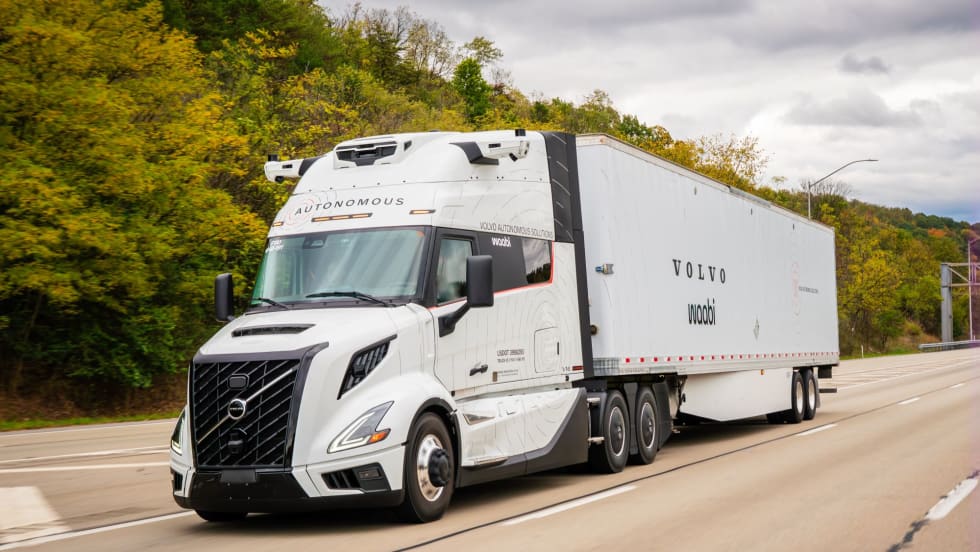
Volvo, Waabi Start Commercial Autonomous Operations in Texas
Volvo VNL Autonomous trucks, powered by the Waabi Driver, are hauling freight directly to third-party facilities for a customer in Texas.
Read More →
Samsara Launches Custom AI Agent Builder
Agent Studio lets fleets create AI tools for hours-of-service monitoring, reporting and driver support, including agents that communicate by phone.
Read More →