




Earnings Watch: ODFL, Heartland, P.A.M. See Lower Numbers
Trucking companies in both the less-than-truckload and truckload sectors reported lower second quarter profits on Thursday morning.


Trucking companies in both the less-than-truckload and truckload sectors reported lower second quarter profits on Thursday morning due in part to the sluggish economy during the period as well as downward pressure on freight rates.
ODFL Sees First Revenue Drop in Years
Less-than-truckload carrier Old Dominion Freight line (NASDAQ: ODFL) announced its earnings fell while also reporting its first year-over-year decline in revenue since 2009.
Net income dropped 4.9% to $81.4 million, or 98 cents per share, compared to $85.6 million, or $1 per share, in the 2015 quarter for the North Carolina-based fleet.
The fall in revenue was only slight, 0.9%, hitting $755.4 million as operating income slid 5.3% to $133.4 million.
According to David S. Congdon, vice chairman and CEO, quarterly revenue was negatively affected by reductions in both fuel surcharges and non-LTL revenue. “These factors, combined with a domestic economy that remained sluggish, resulted in our first quarterly year-over-year decline in revenue since the fourth quarter of 2009.”
The second quarter results show an 0.8% increase in LTL revenue per hundredweight that was partially offset by a 0.3% decrease in LTL tonnage per day, according to the company. Excluding fuel surcharges, LTL revenue per hundredweight increased 2.7% during the second quarter as the pricing environment remained relatively stable.
“We have not changed our pricing philosophy or commitment to price discipline, but changes to our weight per shipment and mix of freight continue to impact our yield metrics,” he said.
Despite this, Congdon described ODFL’s financial results for the second quarter as “solid, considering the challenging operating environment” and the company should not only be able to weather the current economic environment, but also has the capacity for future growth.
For the first half of the year, ODLF reported net income of $141.7 million, down 4.3% from a year earlier, while revenue inched higher by 0.3% to $1.46 billion.
Heartland Express Hit By Lower Freight Volume
Meantime, on the truckload side, Heartland Express Inc. (Nasdaq:HTLD) saw its profit fall to $16.4 million, or 20 cents per share, from $23.3 million, or 27 cents per share in the second quarter of last year.
Likewise, revenue declined to $160.8 million from $191.7 million for the Iowa-based fleet.
“Throughout the first half of 2016 we continued to experience downward pressure on freight rates due to the softness in freight volumes resulting from the available capacity in the industry,” said Michael Gerdin, CEO. “Typically, freight volumes improve during the second quarter as compared to the first three months of the year but that has not been our experience during 2016 as freight volumes didn't improve until mid-June.”
Heartland said operating revenues decreased 12.4% excluding fuel surcharge revenue, primarily due to lower miles driven due to softer freight volumes in the second quarter compared to the same period in 2015.
For the first six month months of 2016, the company recorded net income of $30.7 million, compared to $40.9 million in the same period of 2015 as earnings per share fell to 37 cents from 47 cents.
P.A.M Transportation Profit Lower Despite Higher Revenue
The results follow dry van carrier P.A.M. Transportation Services Inc. (NASDAQ:PTSI) reporting a steep decline in net income for the second quarter, totaling nearly $4 million, or 61 cents per share. That compares to $7.04 million or 94 cents per share in the 2015 second quarter.
The Arkansas company said the lower profit came as total revenue minus fuel surcharges increased 8.6% from a year ago to $98.9 million a year earlier, while fuel surcharge revenue fell 25.8% to $12.6 million. As a result, total revenue moved higher to $111.5 million from $108 million.
“During the second quarter of 2016, we continued to experience some weakness in the market for our services but were able to continue our positive trend of revenue growth,” said Daniel H. Cushman, president. “Our base revenue growth on a year-to-date basis is approximately 11% for our trucking division, resulting primarily from an increase in our overall fleet size and to growth in our dedicated and Mexico divisions.”
He noted fuel surcharge revenues continue to be lower on a year-over-year basis as fuel prices remained lower in 2016. “Our lower margins are not necessarily the result of less profitable freight selection but are primarily related to an increase in our normal operating costs, which cannot currently be passed on to customers, and to entry costs as we expand into new markets we wish to add to our service profile.”
Cushman also said the company saw in the second quarter tremendous downward rate pressure in the marketplace, which he said was both challenging but provided P.A.M with new opportunities.
“In the automotive sector, where we have a significant presence, we have seen shippers test the market for lower rates and have experienced rate drops as a result of new carriers entering that sector,” he said. “We knew that testing would also be happening in the retail and manufacturing sectors where there could be opportunities for us to gain market share.”
According to Cushman, as a result of the market tests, shippers in these sectors were also adding to their carrier base, which provided an opportunity for P.A.M. to gain entry. “The entry costs would come at a higher price due to increased driver costs, however, we wanted to maintain our current customer base and build around that base with more capacity. We believe this positions us for exponential improvement when the general freight market rebounds and capacity begins to tighten, but also provides us with the flexibility to downsize quickly should a freight recovery take longer than anticipated.”
During the first six months of this year, P.A.M. saw net income fall to $6.9 million from %12.4 million a year ago as revenue increased to $215.1 million from $207.5 million.
More Fleet Management
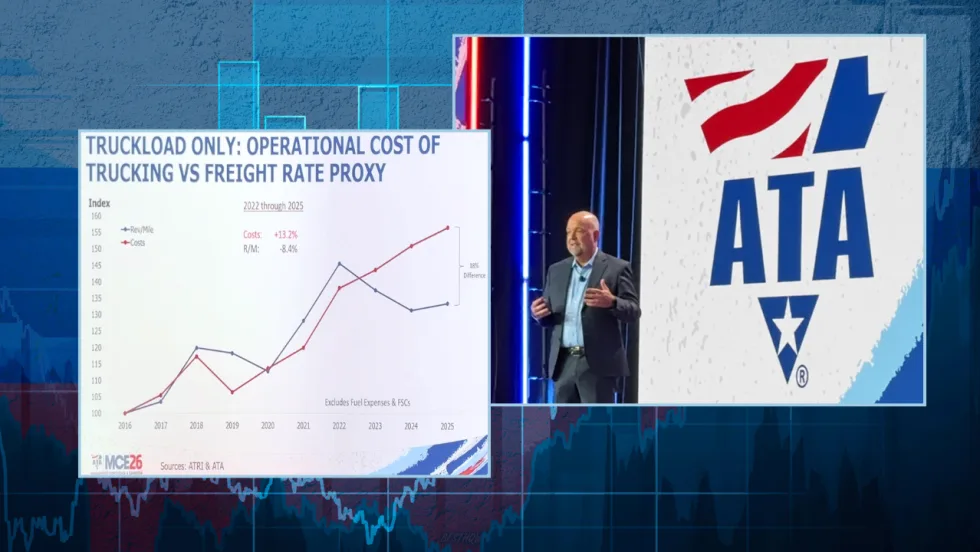
Why This Trucking Recovery Is Different
Freight demand remains sluggish, but rising costs and tougher enforcement have taken enough capacity out of the market to change the outlook for motor carriers.
Read More →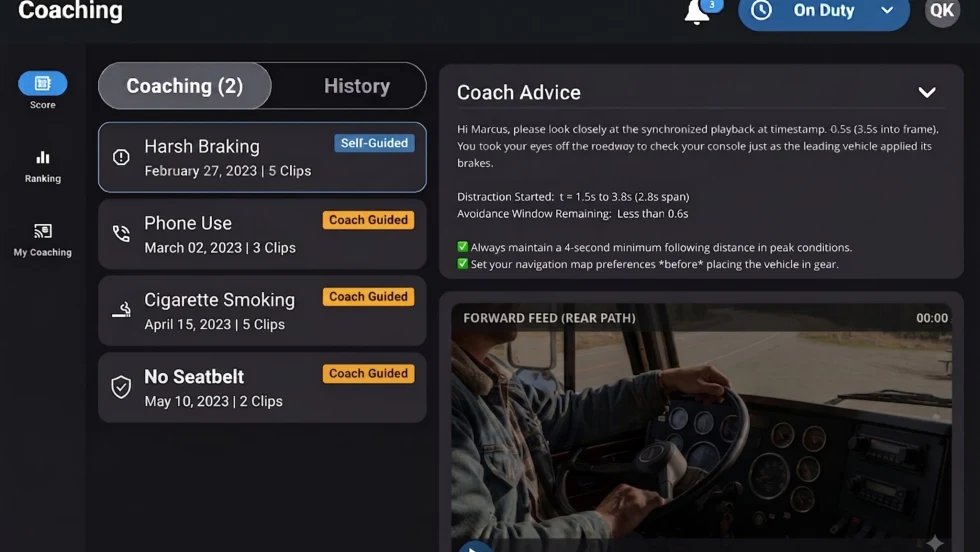
Platform Science Adds Dispatch and Safety Tools
Four additions to PS Fleet help fleets monitor loads, manage driver coaching, share truck locations and adjust video system settings.
Read More →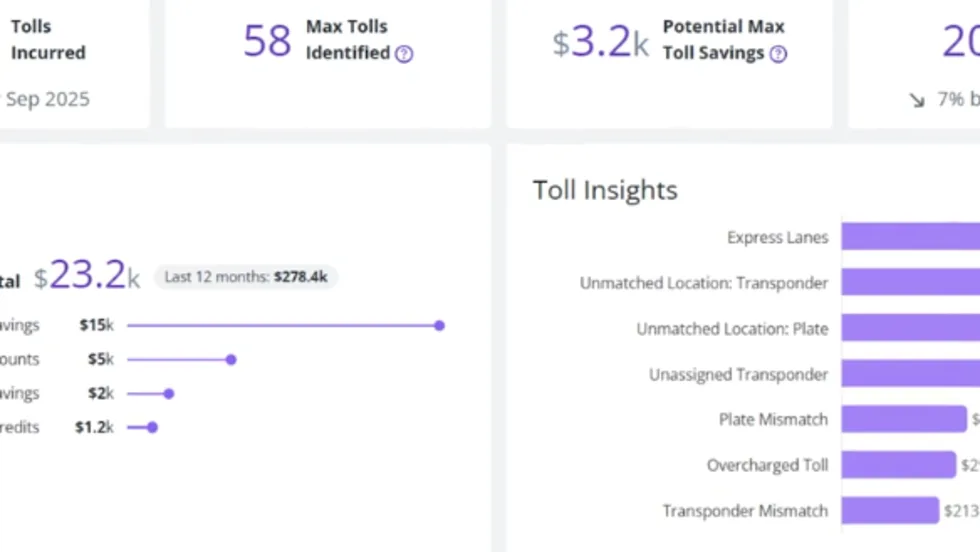
PrePass Intelligence Mines Fleet Bypass, Toll and Safety Data
PrePass Intelligence helps fleets measure bypass savings, flag potential toll overcharges, and spot suspicious transactions by combining data from separate systems.
Read More →
Motive Adds AI Agents for Fleet Operations
New tools automate follow-up on fleet data, from maintenance work orders to driver alerts, with two-way voice conversations planned for later this year.
Read More →
Can You Beat Our Trucking Trivia Challenge?
Test your truck knowledge with 19 trivia questions from Heavy Duty Trucking Exchange. Can you keep up with the fleet pros?
Read More →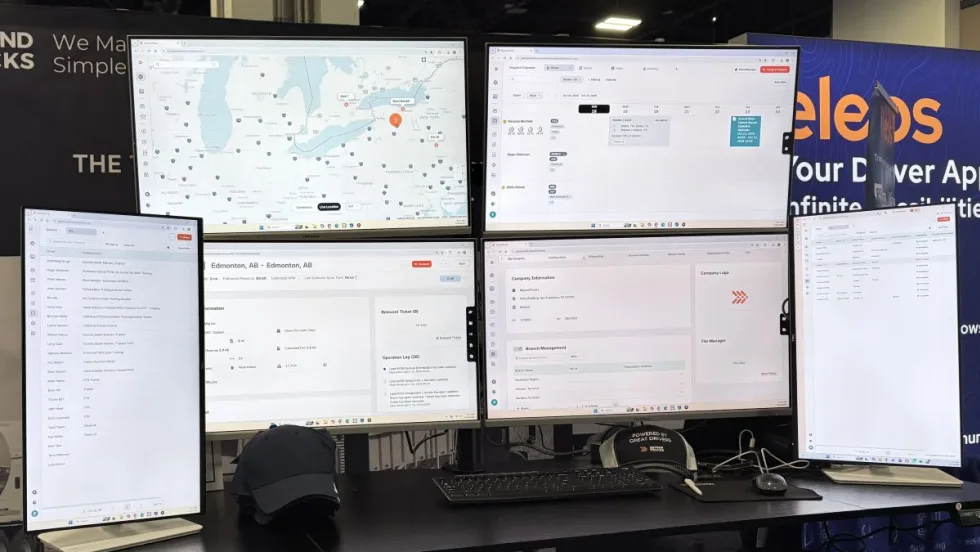
BeyondTrucks Adds Rules Checks to Dispatch
New Compatibility Engine checks driver qualifications, equipment requirements and fleet policies before loads are dispatched.
Read More →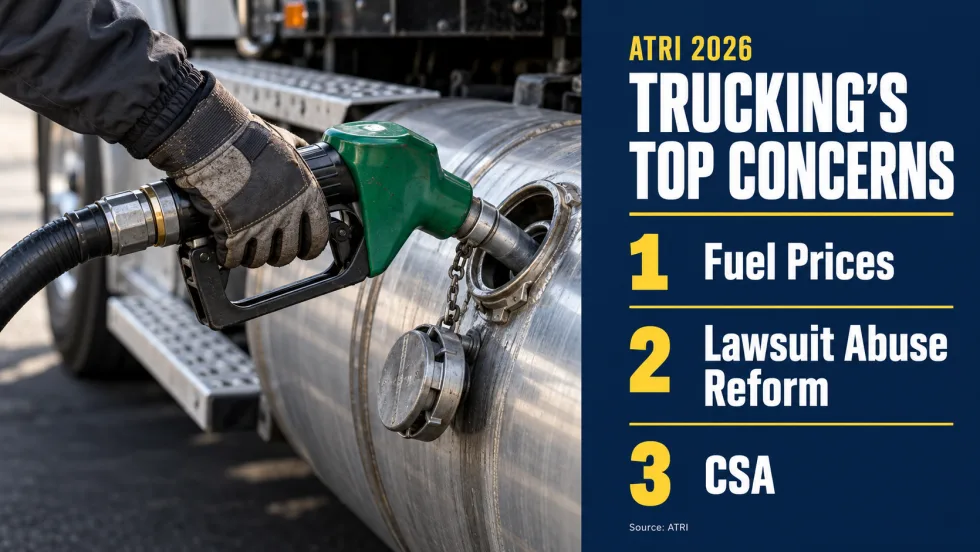
Diesel Prices Hijack Trucking’s Worry List
ATRI’s annual survey finds cautious optimism about freight, but diesel costs, litigation, and insurance continue to squeeze fleets. Drivers have different priorities on several issues.
Read More →
Nomination Deadline Extended for HDT Emerging Leaders
Just a few more days to nominate accomplished trucking fleet professionals under 40 who are making an impact and helping lead the industry forward for the HDT Emerging Leaders award. Deadline extended to October 20!
Read More →
What Will ATA’s New Leader Bring to Trucking's Table?
Incoming President and CEO Mark Colson’s record in Alabama offers clues about his priorities and approach following Chris Spear’s abrupt departure as the head of the American Trucking Associations.
Read More →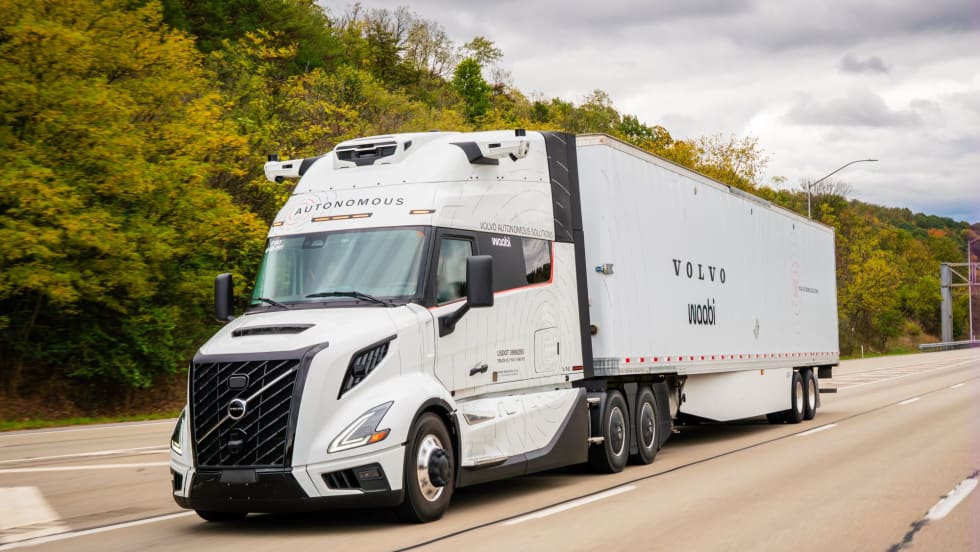
Volvo, Waabi Start Commercial Autonomous Operations in Texas
Volvo VNL Autonomous trucks, powered by the Waabi Driver, are hauling freight directly to third-party facilities for a customer in Texas.
Read More →