




Duke Energy to Open Truck Fleet Electrification Center
Daimler Truck North America will join Duke Energy as a founding participant of an electric truck program at a soon-to-be-built microgrid-integrated fleet electrification center in North Carolina.

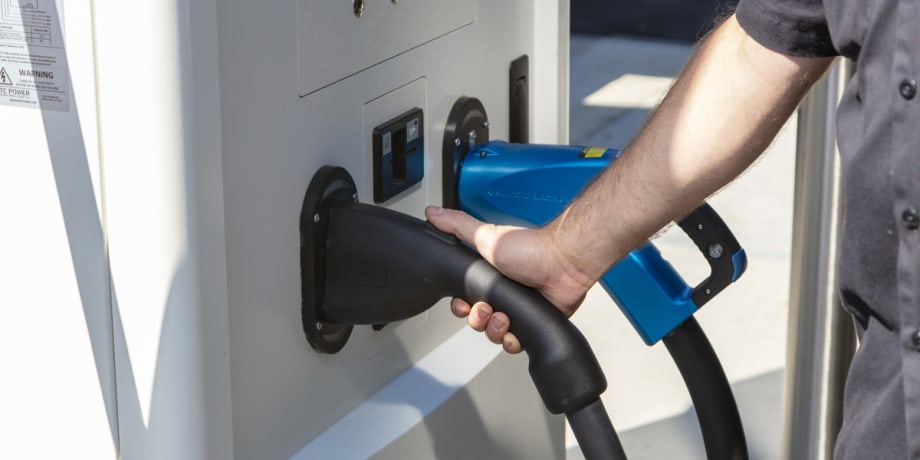
Duke Energy is building a facility that will develop, test and deploy light-, medium- and heavy-duty commercial electric vehicle fleets.
Photo: DTNA
Daimler Truck North America will join Duke Energy and Electrada as a founding participant of an electric truck program at a soon-to-be-built microgrid-integrated fleet electrification center in North Carolina.
Duke Energy, one of the largest energy holding companies in the U.S., is building a facility that will develop, test and deploy light-, medium- and heavy-duty commercial electric vehicle fleets. By the end of 2023, fleet operators will have access to a commercial-grade fleet charging depot, integrated with energy storage, solar and optimization software.
The site will be located at Duke Energy’s Mount Holly Technology and Innovation Center located adjacent to one of DTNA’s largest East Coast manufacturing facilities. The OEMs proximity to the site creates an opportunity to utilize the chargers at the site and also demonstrate charging technologies to customers visiting the plant in the future, Duke Energy officials said in a press release.
“This first-of-its-kind, microgrid-enabled fleet depot will be critical to advancing fleet electrification and building confidence with fleet owners,” said Jeff Allen, senior vice president of operations and specialty vehicles at DTNA.
The center will be able to be connected either to the Duke Energy grid, charging from the bulk electric system, or powered by 100% carbon-free resources through the microgrid located at Mount Holly. The project is one of the first electric fleet depots to offer a microgrid charging option.
“We are helping speed commercial fleet electrification across the Duke Energy footprint through innovations like this, while we electrify our own fleet,” said Harry Sideris, executive vice president of customer experience, solutions and services for Duke Energy.
Electrada Partners with Duke Energy
Duke Energy is teaming with Electrada, an electric fuel solutions company, as part of a larger fleet electrification collaboration. Electrada invests all required capital “behind the meter” on behalf of fleet owners and delivers charging to fleet electric vehicles through a performance contract, eliminating the complexity and risk that fleets face in transitioning to this new source of fuel, company officials said in a press release.
The Electrada model provides conversion for fleets that ensures grid integrity and removes electric fleet charging price volatility, according to the company. Electrada’s investment on the depot side allows Duke Energy to focus on distribution system performance to support the predictable addition of electric load over time.
Innovation Hub
In addition to fleet charging, the site will also function as an innovation hub, allowing Duke Energy to study charger use, performance, management and energy integration.
Testing various models of charging scenarios will enable energy load shaping, which can be used to ensure proper grid or microgrid distribution, Duke Energy officials said.
More Fuel Smarts

How Volvo Updated Its D13 for EPA 2027 [Watch]
Volvo’s updated D13 promises lower emissions without sacrificing performance or fuel economy. Take a closer look at what changed inside the engine in this HDT Spotlight video.
Read More →
Diesel Price Spike Shortens Payback for Natural Gas Trucks, Report Says
Energy Vision estimates fleets could recover the higher purchase price of an RNG-fueled Class 8 tractor in 1.3 to 2.8 years under current fuel-price scenarios.
Read More →
Calstart Becomes Catalyst Mobility, Reflecting Broader Focus
Calstart is now Catalyst Mobility, reflecting the nonprofit’s growing national role in clean transportation, including zero-emission trucks, infrastructure and incentive programs.
Read More →

Record Diesel Prices Squeeze Trucking Fleets
Average U.S. diesel prices have climbed to nearly $6 a gallon, surpassing the 2022 record as tight refinery capacity and Middle East disruptions keep fuel costs elevated.
Read More →
How Fuel Delivery Shapes Engine Performance
Fuel delivery depends on more than what happens at the injector. For fleet, maintenance and technical professionals, looking at the full path from pump to injector can provide useful context for understanding engine performance.
Read More →
East Coast Port Launches $45M Electric Truck Push
The Port Authority of New York and New Jersey announced millions in incentives for zero-emission drayage trucks, yard tractors, and new charging hubs near the port.
Read More →
California Bill Could Shed Light on Electric Truck Prices
Why do battery-electric Class 8 trucks remain so expensive? A California bill headed to Gov. Gavin Newsom would give fleets and state agencies more visibility into what manufacturers charge.
Read More →
Detroit Opens Orders for EPA 2027 Engines
Detroit isn’t starting from scratch to meet EPA 2027 diesel emissions standards. Its Gen 6 DD13 and DD15 engines keep much of today’s platform while updating the fuel and aftertreatment systems.
Read More →
Zero-Emission Truck Corridor Planned for West Coast
California, Oregon, Washington, British Columbia and Baja California are coordinating plans for truck charging and hydrogen fueling from Canada to Mexico.
Read More →
A Closer Look at Kenworth’s Electric T880E Vocational Truck [Video]
Learn more about Kenworth's T880E battery-electric vocational truck at the Paccar Technical Center, including its range, applications, upfitting considerations, and PTO options, in this HDT Spotlight video.
Read More →