




Driver Distraction Related to Truck Crashes
Driver distraction, from cell phone use to dispatching devices, was involved in 100 percent of commercial vehicles crashes in a recent study
Driver distraction, from cell phone use to dispatching devices, was involved in 100 percent of commercial vehicles crashes in a recent study.
In addition, driver distraction was involved in 81 percent of safety-critical events, which includes not only crashes but also other events such as lane deviations, according to a study on driver distraction in commercial vehicle operations conducted by the Virginia Tech Transportation Institute.
"Is distraction an issue? Absolutely," said Richard Hanowski, director of the center for truck and bus safety at Virginia Tech.
Hanowski, along with the Federal Motor Carrier Safety Administration, which sponsored the study, presented the findings and made recommendations to the trucking industry in a webinar Wednesday.
Using in-cab video taken from about 200 truck drivers and about 3 million miles of driving, the institute analyzed and measured the impact of driver distraction on crashes and other performance errors by looking at the types of tasks drivers were doing and what their eyes were focused on.
The study found that tasks such as text messaging and dialing while driving posed the most risk. Out of a span of six seconds, drivers' eyes were looking off of the forward roadway for about five seconds while texting in the middle of a critical event, the data showed. On average, drivers who were dialing a cell phone during a critical event took their eyes off the forward roadway for about four seconds at a time. Dispatching devices were also distracting during critical events, drawing drivers' eyes for about four seconds.
While text messaging and dialing were key distraction tasks, the act of talking or listening to devices actually had a protective effect. Talking actually reduced the risk because it helped drivers to stay alert, Hanowski said. "It was the dialing component of the cell phone, or the texting if you will, that was really where the risk was associated with," he said during the webinar.
The risks associated with driver distraction in trucks turned out to be more so than in previous studies involving cars. Perhaps this is because trucks are more difficult to maneuver, and cell phone text messaging has become more prevalent in recent years, Hanowski said. Either way, as technologies become more advanced and require more attention, "I expect that distraction-related crashes are only going to increase," he said.
Hanowski offered these recommendations to carriers when addressing the distraction issue:
* Implement education to emphasize the importance of having eyes forward and scanning the surroundings.
* Non high-tech activities, such as reading, writing and mapping, can also be risky distractions.
* Consider enforcing policies such as no texting or other use of in-vehicle devices.
* Encourage drivers to avoid manual dialing and the use of dispatching devices on the
road.
* Inform drivers that talking is permitted. It can help keep them alert.
* Look into dispatch devices that include Bluetooth capabilities, voice activation or lockout features.
* Conduct research on some of the other protective effects of certain tasks.
* Support regulation related to driver distraction, such as the text messaging ban or hands-free requirements.
For other driving tips, go to www.fmcsa.dot.gov/about/outreach/education/driverTips/index.htm.
To download a copy of the webinar presentation, visit www.fmcsa.dot.gov/facts-research/media/webinar-09-06-03-slides.pdf.
More Safety & Compliance
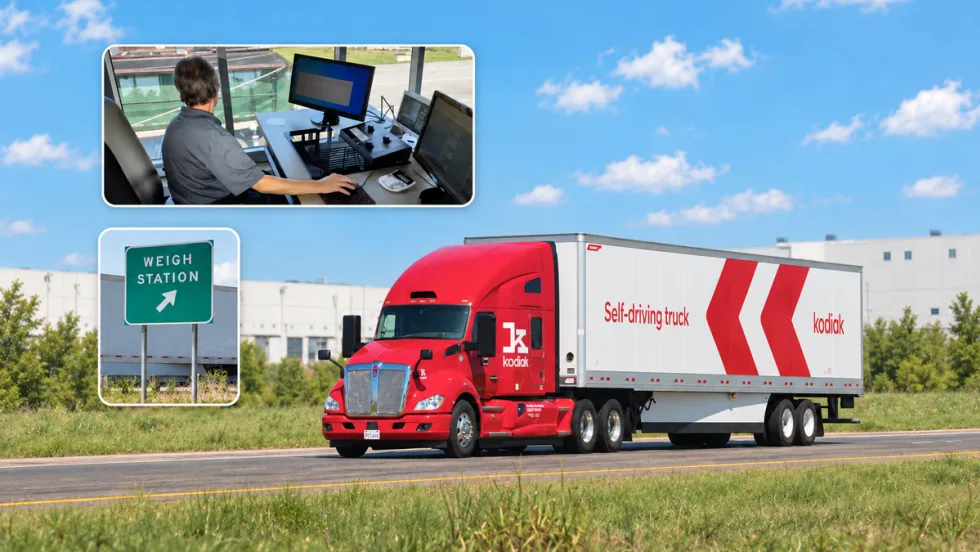
PrePass, Kodiak Connect Driverless Trucks to Roadside Enforcement
The system will allow enforcement agencies to verify Enhanced Inspection information and decide whether Kodiak’s autonomous trucks can bypass roadside screening sites.
Read More →
From One Generation to the Next: How Mentorship Builds Safer Truck Drivers
After three decades in trucking, Harold Perry shares what he's learned about driver safety, mentorship, and helping the next generation build confidence behind the wheel.
Read More →
FMCSA Pauses Biennial-Update Enforcement Amid Motus Transition
Carriers whose updates were due on or after June 1 have more time, while FMCSA works to stabilize its new registration system and warns of phishing sites impersonating its new carrier registration system, Motus.
Read More →
ZF Expands Commercial Vehicle Push in North America
ZF is expanding its North American commercial-vehicle presence with new transmission applications, electrification, trailer technology and autonomous-driving systems.
Read More →
Truck Drivers Need More Than Another Alert
Fleets have more visibility into truck health, safety events, and driver activity than ever. The next challenge is turning all that information into useful guidance for the person who has to decide what to do next.
Read More →
Tesla Wants a Self-Driving Semi. Are Cameras Enough?
Could Tesla’s camera-only autonomous driving technology work on an 80,000-pound Semi? In this commentary, HDT's Deborah Lockridge takes a look at Tesla, Cybercab, and how autonomous trucks see the road.
Read More →
What DOT’s Automated Vehicle Strategy Means for Trucking
The U.S. Department of Transportation issued a new automated-vehicle strategy that outlines plans for driverless-truck regulations, cross-state freight corridors, and federal safety standards.
Read More →
NYC Expands Speed, Pedestrian Safety Tech Across Fleet
New York City is expanding intelligent speed assistance and pedestrian-alert systems across its municipal fleet, moving the technologies from pilot programs into vehicle procurement and retrofit requirements.
Read More →
FMCSA Removes 110 Truck Driver Training Schools from Certified ELDT List
Federal regulators also are targeting more than 160 additional training providers and launching a nationwide audit of third-party CDL skills testers as part of a broader crackdown on trucking fraud.
Read More →
Beyond DOT Compliance: What Makes a Trucking Fleet Truly Safe?
A trucking fleet can follow every rule and still make unsafe decisions. The real test comes when safety conflicts with freight, productivity, or cost.
Read More →