





Study Suggests Cocaine Use More Prevalent than Marijuana Among Truck Drivers
DOT Proposes Oral-Fluid Testing for Drugs
The Department of Transportation is proposing oral fluid testing as an alternative to urine testing for the DOT-regulated drug and alcohol testing program.
February 28, 2022
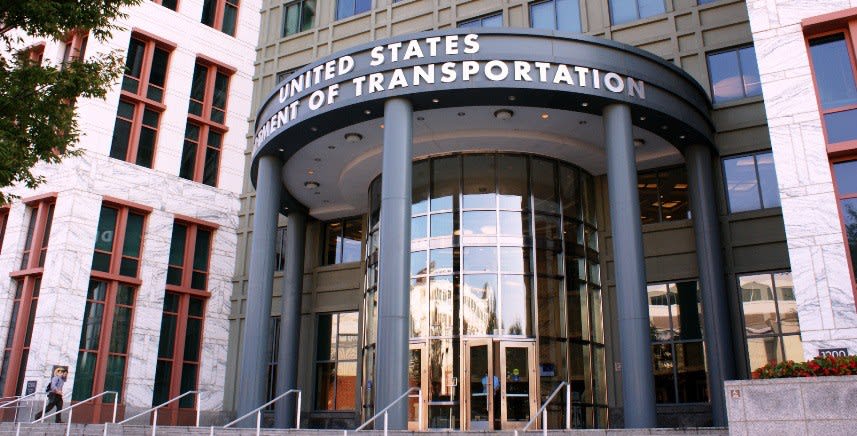
The Department of Transportation has proposed a rule allowing oral-fluid testing as an alternative to urine-testing for drugs and alcohol among safety-sensitive workers.
Photo: DOT
5 min to read
The Department of Transportation has published proposed rules to include oral fluid testing as an alternative to urine testing for the federal DOT-regulated drug and alcohol testing program.
According to the Notice of Proposed Rulemaking, this will give employers a choice that will help combat employee cheating on urine drug tests and provide a more economical, less intrusive means of achieving the safety goals of the program, which requires testing of safety-sensitive transportation workers such as truck drivers.
The proposal also includes other provisions to update the regulations and to harmonize, as needed, with the new Mandatory Guidelines for Federal Workplace Drug Testing Programs using Oral Fluid (or OFMG) established by the U.S. Department of Health and Human Services.
HHS determined that oral fluid testing conducted in accordance with its new guidelines provides ‘‘the same scientific and forensic supportability of drug test results as the Mandatory Guidelines for Federal Workplace Drug Testing Programs using Urine.” The OFMG final rule was published on Oct. 25, 2019 and became effective Jan. 1, 2020.
In proposing oral fluid testing, the DOT emphasized that it is not requiring employers to use oral fluid testing instead of urine testing, or for every test reason (e.g., pre-employment, random, etc.). Instead, it proposes to offer employers the flexibility in the type of specimen they collect.
That flexibility will provide several benefits, according to the proposal. For example, when an employer determines that a DOT post-accident or a reasonable cause/ suspicion test is needed, oral fluid collections could be done at the scene of the accident or the incident. The collection could be done by any oral fluid collector qualified under Part 40 — either an external contractor or a DOT-regulated company employee. There are fewer requirements for oral fluid collection sites. DOT says the availability of collectors and the reduced expectations for collection site requirements should facilitate prompt, less expensive collections for post-accident and reasonable cause/suspicion testing, but it would like comments on that.
Nor is the agency proposing to eliminate urine testing. There are different windows of detection that employers should consider when deciding whether to use a urine test or an oral fluid test as the preferred form of testing for any specific test reason, including the window of detection. Probably the largest difference in the testing window is for marijuana. The oral fluid testing window is only up to about 24 hours, according to DOT review of various scientific sources. For urine testing, it’s anywhere from 3-67 days.
If an employer is looking to detect recent drug use, (i.e., reasonable cause/suspicion, post-accident), the more immediate window of detection associated with oral fluid may be acceptable for the company. However, if an employer is looking to detect a pattern of intermittent drug use through pre-employment, random, return-to-duty, and follow-up testing, the delayed windows of detection in urine may be preferable.
The DOT is seeking comment on whether oral fluid or urine should be mandated, or prohibited, for certain test reasons, based on windows of detection.
Why Oral Fluid Testing?
The advantage of oral fluid collection, the DOT notes, is that it will be directly observed, as opposed to most urine collections, which are unobserved. While directly observed urine specimen collections have long been the most effective method for preventing individuals from cheating on their drug tests by substituting or adulterating their specimens, directly observed urine collection may only be done in certain circumstances due to employee privacy concerns (see 49 CFR 40.67). Unlike directly observed urine collections, an oral fluid collection is much less intrusive.
Another advantage, according to the DOT, is that oral-fluid testing is generally less expensive than urine testing. The proposal says an oral fluids test can cost $10 to $20 less than a urine testing (e.g., about $50 for a typical urine testing process, vs. about $35 for an oral fluid testing process, but it is seeking public comment on costs so it can affirm or adjust that cost
assumption.
The agency also is asking if DOT-regulated employers would continue to use external qualified collectors for oral fluid, or whether they would train their own company personnel to become qualified collectors for oral fluid testing. If companies train internal personnel instead of contracting with external providers, would this be due to costs, convenience or other reasons, and what would be the cost implications of the two approaches?
It also notes that there are potential cost savings in the “shy bladder” collection procedures and related medical examinations.
Long Time Coming
The DOT and HHS have been looking into alternative testing methods for years. In 2004, HHS asked for comments on directly observed alternative testing methods: oral fluid, hair, and sweat testing.
DOT explains in its new proposal that while the science supporting oral fluid testing did not meet the standards of HHS in 2004, science and research studies have now reached a point where HHS is able to determine that oral fluid testing is an appropriate alternative testing method for identifying illicit drug use in the Federal workplace.
Hair-testing, however, is still in limbo. A 2020 HHS proposal to set up standards for the use of hair testing for drugs was roundly criticized by hair-testing advocates in the trucking industry because it would have required another sample, such as urine or oral, as a backup.
In addition to the oral fluid provisions, the proposed rule also would allow direct observation of urine collections by any licensed or certified medical professional legally authorized to take part in a medical examination in the jurisdiction where the collection takes place. And it would allow Substance Abuse Professional (SAP) to conduct evaluations virtually.
Comments on the proposal must be submitted by March 30.
More Safety & Compliance

From One Generation to the Next: How Mentorship Builds Safer Truck Drivers
After three decades in trucking, Harold Perry shares what he's learned about driver safety, mentorship, and helping the next generation build confidence behind the wheel.
Read More →
FMCSA Pauses Biennial-Update Enforcement Amid Motus Transition
Carriers whose updates were due on or after June 1 have more time, while FMCSA works to stabilize its new registration system and warns of phishing sites impersonating its new carrier registration system, Motus.
Read More →
ZF Expands Commercial Vehicle Push in North America
ZF is expanding its North American commercial-vehicle presence with new transmission applications, electrification, trailer technology and autonomous-driving systems.
Read More →
Truck Drivers Need More Than Another Alert
Fleets have more visibility into truck health, safety events, and driver activity than ever. The next challenge is turning all that information into useful guidance for the person who has to decide what to do next.
Read More →
Tesla Wants a Self-Driving Semi. Are Cameras Enough?
Could Tesla’s camera-only autonomous driving technology work on an 80,000-pound Semi? In this commentary, HDT's Deborah Lockridge takes a look at Tesla, Cybercab, and how autonomous trucks see the road.
Read More →
What DOT’s Automated Vehicle Strategy Means for Trucking
The U.S. Department of Transportation issued a new automated-vehicle strategy that outlines plans for driverless-truck regulations, cross-state freight corridors, and federal safety standards.
Read More →
NYC Expands Speed, Pedestrian Safety Tech Across Fleet
New York City is expanding intelligent speed assistance and pedestrian-alert systems across its municipal fleet, moving the technologies from pilot programs into vehicle procurement and retrofit requirements.
Read More →
FMCSA Removes 110 Truck Driver Training Schools from Certified ELDT List
Federal regulators also are targeting more than 160 additional training providers and launching a nationwide audit of third-party CDL skills testers as part of a broader crackdown on trucking fraud.
Read More →
Beyond DOT Compliance: What Makes a Trucking Fleet Truly Safe?
A trucking fleet can follow every rule and still make unsafe decisions. The real test comes when safety conflicts with freight, productivity, or cost.
Read More →
Hours of Service Pilot Programs: FMCSA Readies for 2027 Rollout
Two pilot programs could eventually reshape hours-of-service rules, giving truck drivers options to pause their 14-hour clock or use longer split sleeper rest periods.
Read More →