




Diesel, Gasoline Prices Expected to Jump Less This Year
The outlook for national average on-highway diesel prices is for them to be higher this year and in 2019 than they were last year and in 2016, but they should at least be fairly stable during this time, according to the latest Short Term Energy Outlook from the U.S. Energy Department.

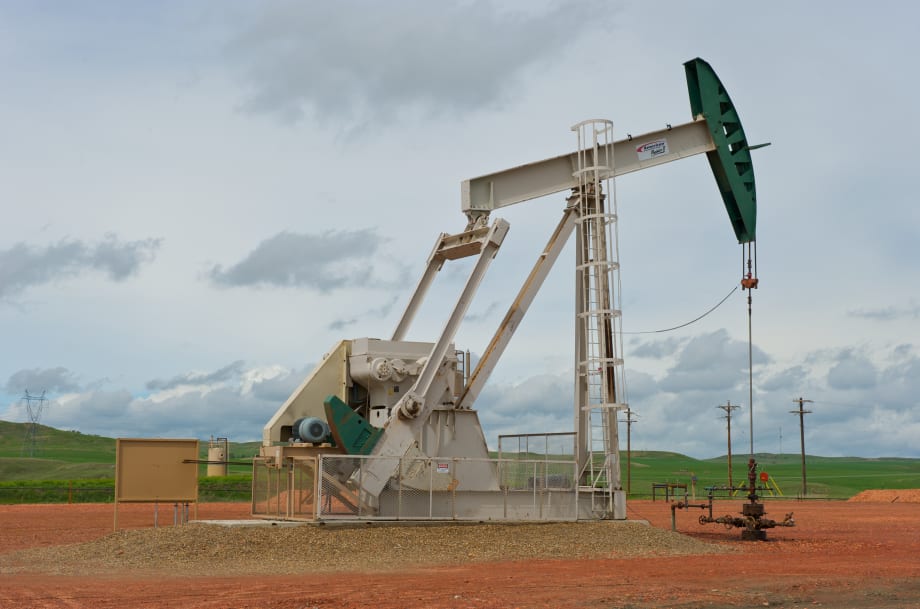
U.S. crude oil production is projected to hit record highs, but that won't stop diesel prices from rising. Photo: ConocoPhillips
U.S. crude oil production is projected to hit record highs, but that won't stop diesel prices from rising.Photo: ConocoPhillips
A federal outlook for national average on-highway diesel prices predicts they will be higher this year and in 2019 than they were last year and in 2016, but they should at least be fairly stable during this time, according to the latest Short Term Energy Outlook from the U.S. Energy Department.
It projects that trucking’s primary fuel will average $2.95 per gallon in 2018 and bump slightly higher to $3.01 per gallon in 2019. While that’s an expected 11.2% hike for this year over last, it would represent just a 2% increase in 2019 over 2018. However, it’s less than the 14.8% jump in the average diesel price in 2017 over 2016.
The currently weekly average in the U.S. for on-highway diesel is just under $3 per gallon. It is expected to average $2.97 in the first quarter of 2018 before dropping to $2.89 in the second quarter. The third quarter average is expected to rise to $2.94 before finishing up at $3 per gallon in the fourth quarter.
The quarterly average range for diesel in 2019 is expected to range from a low of $2.96 in the first quarter to a high of $3.08 in the fourth quarter.
The trend for gasoline is similar, but at lesser prices and with smaller hikes. Regular grade is expected to average $2.57 per gallon in 2018 and $2.58 per gallon in 2019. If such an increase happens this year, this would represent a 6.3% increase over 2017 and just a 0.4% gain in 2019 over 2018, far less than the 12.4% jump seen last year when compared to 2016.
Driving the price of both fuel higher will be slightly increased crude oil prices. Benchmark North Sea Brent crude oil spot prices averaged $64 per barrel in December, an almost $2 per barrel increase from the November average and the highest monthly average since November 2014. Brent crude oil prices averaged $54 per barrel in 2017 and are forecast to average $60 per barrel in 2018 and $61 per barrel in 2019. West Texas Intermediate crude oil spot prices are forecast to average $4 per barrel less than Brent prices in both 2018 and 2019.
The report also noted the slight increase in fuel and oil prices is expected as U.S. crude oil production is expected to keep moving higher.
The U.S. produced an estimated 9.3 million barrels per day in 2017, with an estimated average of 9.9 million barrels per day in December. U.S. crude oil production is forecast to increase to an average 10.3 million barrels per day in 2018, which would mark the highest annual average production in U.S. history, surpassing the previous record of 9.6 million barrels per day set in 1970.
The Energy Department has forecast production to increase to an average of 10.8 million per day in 2019 and to surpass 11 million barrels per day in November 2019.
Despite the increased production, one reason fuel prices likely won’t be moving lower this year or next is that worldwide consumption of petroleum and other liquid fuels grew by 1.4 million barrels per day in 2017, reaching an average of 98.4 million barrel per days for the year.
Although the rate of consumption growth slowed in 2017 compared with 2016, the department said it expects that worldwide consumption growth will average 1.7 million barrels per day in 2018 and almost 1.7 million barrels per day in 2019, driven by the countries in mainly in Asia, Africa and South America, while global oil inventories will rise just a fraction after falling slightly in 2017.
More Fleet Management

Color Match Smarter: Tools That Restore & Perform
For fleet managers and collision repair professionals keeping heavy-duty trucks on the road, getting the color right the first time isn't just about appearance — it's about efficiency, turnaround time, and bottom-line results. Discover how today's digital color tools are transforming the repair process from guesswork to precision.
Read More →
FMCSA Pauses Biennial-Update Enforcement Amid Motus Transition
Carriers whose updates were due on or after June 1 have more time, while FMCSA works to stabilize its new registration system and warns of phishing sites impersonating its new carrier registration system, Motus.
Read More →
2026 Blueprint for Countering Smarter Supply Chain Theft
Cargo theft is no longer just the cost of doing business. It's a multi-billion-dollar criminal enterprise exploiting vulnerabilities across your fleet, drivers, and supply chain.
Read More →


How Telematics Improves Visibility, Control, and Performance in Refrigerated Fleets
Explore how telematics help refrigerated fleets improve visibility, uptime, efficiency, compliance, and cargo protection across connected cold chain operations.
Read More →
What the U.S.-Canada Trade War Means for Trucking
Escalating U.S.-Canada tariffs could disrupt cross-border freight, reduce truck volumes, raise costs, and create new uncertainty for carriers on both sides of the border.
Read More →
What Are Trucking’s Top Concerns for 2026?
The American Transportation Research Institute wants to know what's worrying trucking fleet managers, drivers, and other stakeholders in its annual Industry Issues survey.
Read More →
American Trucking Associations Looks for a New Leader
ATA President and CEO Chris Spear abruptly left his job at the association on August 21, at a pivotal time for the trucking industry.
Read More →
Public Wi-Fi Cybersecurity Risks: How Truck Drivers and Fleets Can Protect Their Data
Public Wi-Fi can expose truck drivers and fleets to credential theft, malware, and other cyber threats. Here’s how to reduce the risk on the road.
Read More →
For Nicky Cupp, Fleet Innovation Starts With Frustration
HDT Truck Fleet Innovator Nicky Cupp turns everyday pain points at Fraley & Schilling into opportunities for better technology and smarter processes.
Read More →
Adam Buttgenbach’s Approach to Electric Trucks: Start With Where They Fit
HDT Truck Fleet Innovator Adam Buttgenbach helped PepsiCo build one of North America’s largest EV fleets by focusing on where electric trucks make operational sense.
Read More →