




Diesel Fuel Prices Down as Questions Rise About Crude Oil Supplies
Despite tensions in the Middle East, average diesel fuel prices last week dropped almost 2 cents from the week before, although they’re still 71 cents higher than a year earlier.

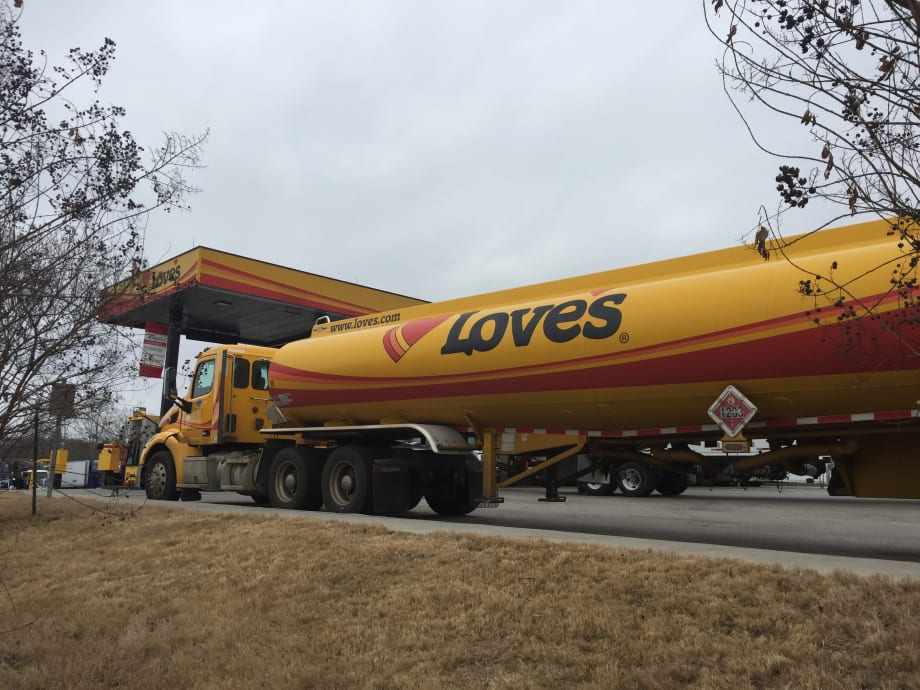
Diesel fuel prices this summer have moderated.
Photo by Deborah Lockridge
Despite tensions in the Middle East, average diesel fuel prices last week dropped almost 2 cents from the week before, although they’re still 71 cents higher than a year earlier.
The national average on-highway diesel retail price, as reported by the Department of Energy on July 23, was $3.22 per gallon.
Prices fell in all regions of the country, with the biggest drop in the Midwest, down 2.9 cents per gallon to $3.142. As usual, the highest prices were in California, at $3.943, down 2.5 cents from the previous week, and the lowest were in the Gulf Coast region, which slipped below the $3 mark to $2.993 per gallon.
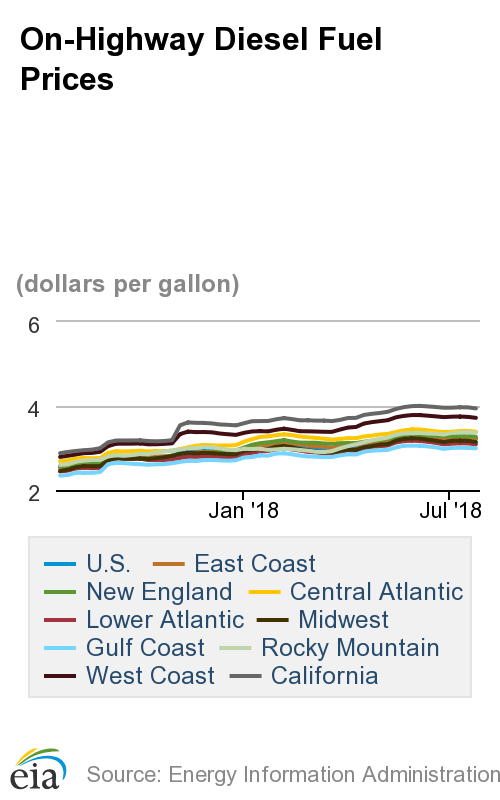
The national average price for regular gasoline was down 3.4 cents from a week ago to $2.831 per gallon. The price is 51.9 cents higher than a year ago.
Meanwhile, the headlines on crude oil prices are all over the place.
Tension between the United States and Iran raise concerns about disruptions to oil supply, with Iran even threatening to disrupt oil travel through the strait of Hormuz.
At the same time, right now there are concerns about oversupply, as crude supplies from Russia, Saudi Arabia and other members of the Organization of the Petroleum Exporting Countries have increased and some unscheduled production losses have eased.
CNBC reports that there are concerns that rising oil prices could trigger a recession; however, the boom in hydraulic fracturing in the U.S. could mitigate those effects. In fact, Tom Kloza with the Oil Price Information Service pointed out on Twitter last week that for the first time ever, U.S. crude production topped 11 million barrels per day and that "it will be much higher over the next 20 months."
More Fuel Smarts

How Volvo Updated Its D13 for EPA 2027 [Watch]
Volvo’s updated D13 promises lower emissions without sacrificing performance or fuel economy. Take a closer look at what changed inside the engine in this HDT Spotlight video.
Read More →
Diesel Price Spike Shortens Payback for Natural Gas Trucks, Report Says
Energy Vision estimates fleets could recover the higher purchase price of an RNG-fueled Class 8 tractor in 1.3 to 2.8 years under current fuel-price scenarios.
Read More →
Calstart Becomes Catalyst Mobility, Reflecting Broader Focus
Calstart is now Catalyst Mobility, reflecting the nonprofit’s growing national role in clean transportation, including zero-emission trucks, infrastructure and incentive programs.
Read More →

Record Diesel Prices Squeeze Trucking Fleets
Average U.S. diesel prices have climbed to nearly $6 a gallon, surpassing the 2022 record as tight refinery capacity and Middle East disruptions keep fuel costs elevated.
Read More →
How Fuel Delivery Shapes Engine Performance
Fuel delivery depends on more than what happens at the injector. For fleet, maintenance and technical professionals, looking at the full path from pump to injector can provide useful context for understanding engine performance.
Read More →
East Coast Port Launches $45M Electric Truck Push
The Port Authority of New York and New Jersey announced millions in incentives for zero-emission drayage trucks, yard tractors, and new charging hubs near the port.
Read More →
California Bill Could Shed Light on Electric Truck Prices
Why do battery-electric Class 8 trucks remain so expensive? A California bill headed to Gov. Gavin Newsom would give fleets and state agencies more visibility into what manufacturers charge.
Read More →
Detroit Opens Orders for EPA 2027 Engines
Detroit isn’t starting from scratch to meet EPA 2027 diesel emissions standards. Its Gen 6 DD13 and DD15 engines keep much of today’s platform while updating the fuel and aftertreatment systems.
Read More →
Zero-Emission Truck Corridor Planned for West Coast
California, Oregon, Washington, British Columbia and Baja California are coordinating plans for truck charging and hydrogen fueling from Canada to Mexico.
Read More →
A Closer Look at Kenworth’s Electric T880E Vocational Truck [Video]
Learn more about Kenworth's T880E battery-electric vocational truck at the Paccar Technical Center, including its range, applications, upfitting considerations, and PTO options, in this HDT Spotlight video.
Read More →