




Related: The 3D Force of Disruption
Daimler Trucks to Deliver 3D Printed Parts in Test Program
Daimler Trucks North America has announced will make its first delivery of plastic parts produced using 3D printing technology in the coming weeks as part of a pilot program.
by Staff
December 4, 2017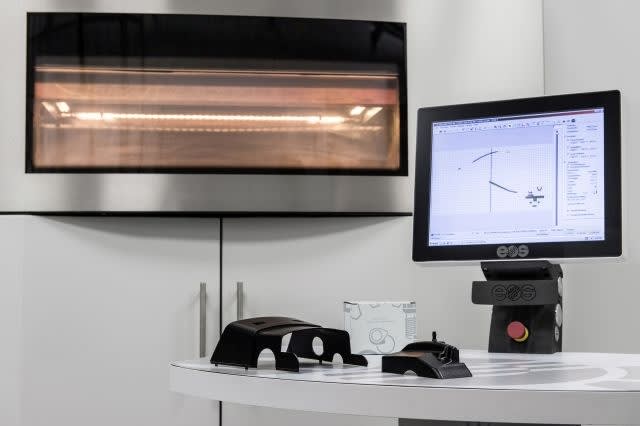
Mercedes-Benz Trucks already successfully produces 30 spare parts with the latest 3D SLS printing processes. Photo: Daimler
2 min to read
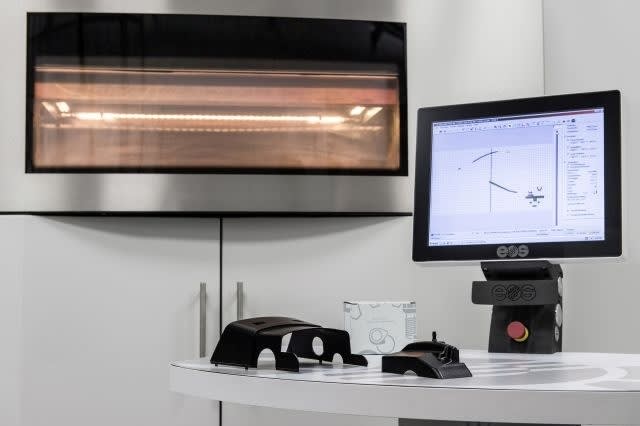
Mercedes-Benz Trucks already successfully produces 30 spare parts with the latest 3D SLS printing processes.Photo: Daimler
Daimler Trucks North America has announced will make its first delivery of plastic parts produced using 3D printing technology in the coming weeks as part of a pilot program.
During the pilot phase of the 3D printed parts program, DTNA will release a controlled quantity of 3D printed parts and will invite feedback from customers and technicians that receive them. The company will collect data on the parts performance and assess potential future demand for 3D printed parts.
DTNA sees 3D printing as an opportunity to better service customers, particularly those customers in need of parts that have been difficult to provide through traditional supply chain models, such as for older trucks or parts with low or intermittent demand.
To print the parts, DTNA partnered with the 3D printing service bureau, Technology House, which has over 20 years of experience in additive manufacturing. The companies have made the first parts available to customers with Selective Laser Sintering. The SLS process refers to layering powder in a print chamber and then “selectively” melting a pattern with lasers before adding the next layer. The 3D printed parts have been validated to meet durability requirements and many will appear no different to the untrained eye, according to DTNA. During the pilot phase, only parts such as nameplates, map pockets, and plastic covers will be printed and delivered.
Parts that are eligible for 3D printing are being stored in DTNA’s digital warehouse. This allows a part to be printed on demand with shorter lead times. Without the need to maintain tooling, these parts will remain available to customers when needed.
On-demand 3D printing also removes the need of holding physical inventory. Currently, the order process takes 2-4 weeks, but once the program is fully launched, parts will be able to be shipped in just a few days, according to DTNA. This capability has the potential to increase uptime for our customers who may otherwise experience long wait times for a hard-to-find part.
“Over the past five years, DTNA has made significant financial and intellectual investments in the supply chain network in order to deliver parts to our customers faster than ever before,” said Jay Johnson, general manager, aftermarket supply chain, Daimler Trucks North America. “What DTNA is launching today with 3D printing is only the beginning as we continue to develop this technology in our quest to be the benchmark for parts availability.”
More Equipment

How Volvo Updated Its D13 for EPA 2027 [Watch]
Volvo’s updated D13 promises lower emissions without sacrificing performance or fuel economy. Take a closer look at what changed inside the engine in this HDT Spotlight video.
Read More →
Michelin Tire Improves Efficiency and Durability for Regional Fleets
The Michelin X Multi Energy D2 is a regional haul drive tire engineered to help fleets improve fuel efficiency, durability and traction in demanding stop-and-go operations.
Read More →
ZF Expands Commercial Vehicle Push in North America
ZF is expanding its North American commercial-vehicle presence with new transmission applications, electrification, trailer technology and autonomous-driving systems.
Read More →
Tesla Wants a Self-Driving Semi. Are Cameras Enough?
Could Tesla’s camera-only autonomous driving technology work on an 80,000-pound Semi? In this commentary, HDT's Deborah Lockridge takes a look at Tesla, Cybercab, and how autonomous trucks see the road.
Read More →
Kodiak: Driverless Long-Haul Truck Launch on Track for 2026
Kodiak AI says its driverless long-haul safety case is 93% complete and it remains on track to begin commercial operations by year-end 2026.
Read More →
What DOT’s Automated Vehicle Strategy Means for Trucking
The U.S. Department of Transportation issued a new automated-vehicle strategy that outlines plans for driverless-truck regulations, cross-state freight corridors, and federal safety standards.
Read More →
East Coast Port Launches $45M Electric Truck Push
The Port Authority of New York and New Jersey announced millions in incentives for zero-emission drayage trucks, yard tractors, and new charging hubs near the port.
Read More →
PlusAI Going Public to Fund Autonomous Truck Launch
A SPAC deal could provide PlusAI with up to $300 million as it works toward a 2027 commercial launch of factory-built autonomous trucks.
Read More →
NHTSA Moves to Rewrite Truck Fuel-Economy Rules
The National Highway Traffic Safety Administration says it lacks authority to regulate medium- and heavy-duty truck engines separately from complete vehicles, but the existing standards have not yet been eliminated.
Read More →
Detroit Opens Orders for EPA 2027 Engines
Detroit isn’t starting from scratch to meet EPA 2027 diesel emissions standards. Its Gen 6 DD13 and DD15 engines keep much of today’s platform while updating the fuel and aftertreatment systems.
Read More →