




CVSA Vision: Safety Is More than Enforcement
The Commercial Vehicle Safety Alliance is best known as the outfit that issues those clearance stickers to trucks that pass a roadside inspection. That has been the alliance's core program since it was founded in 1980. But over the years it has developed safety policy expertise, and now it's preparing to step onto an even larger stage
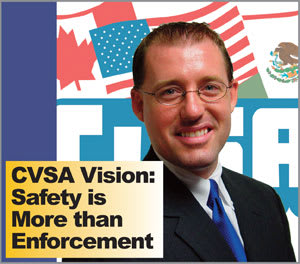
The Commercial Vehicle Safety Alliance is best known as the outfit that issues those clearance stickers to trucks that pass a roadside inspection. That has been the alliance's core program since it was founded in 1980. But over the years it has developed safety policy expertise, and now it's preparing to step onto an even larger stage.
"Over the past several years we have evolved to include safety advocacy," said Steve Keppler, who was named executive director last month after serving for a year as interim director. "I think we're seeing an evolution among our members of an understanding that safety is not just about enforcement."
"State government budgets in the U.S., Canada and Mexico are tight, and many of our members are having furloughs or layoffs, but the safety mandate is still there. I think we need to think differently about how we're going to fulfill that mandate, going forward."
Alliance members, who are meeting this week in Anaheim, Calif., include the North American police organizations that conduct truck safety inspections, the Federal Motor Carrier Safety Administration, trucking interests, industry suppliers and others.
Keppler said the Alliance remains committed to the inspection program and related activities, such as inspector certification, development and management of inspection procedures and out-of-service criteria. At the same time, though, Alliance members are recognizing that they have only so many resources and need some creative and innovative strategies to get to the mandate, Keppler said.
Engaging the Industry
On the agenda at the meeting will be discussion of ways to implement the alliance's new strategic plan and five-year financial plan.
"There's a whole host of things that we need to do, (including) partnerships with other people who share our goals of safety - not just with other government organizations and associations, but with industry," he said. "We're really trying to engage the industry on a whole host of things we're doing."
One example he cited is the alliance's work with an industry coalition that wants to win tax benefits for trucking companies that buy on-board safety systems.
Another example: The Alliance will be presenting its new Teens and Trucks program at the Department of Transportation's Distracted Driving Summit in Washington, D.C., this week. "When we looked at the crash data, we saw that 26 percent of fatalities involve people between the ages of 16 and 25," Keppler said.
On the Hill
One thing Keppler expects to do more of is making the rounds on Capitol Hill.
"I've spent more time on the Hill in the last eight or nine months than I have in my entire career," he said. "The credibility we have up there is critically important. We're being asked our views more and more. Our profile is growing and I think it's because of the credibility of the organization."
Keppler for example recently testified before the House Transportation and Infrastructure Committee on FMCSA's new truck safety regulatory system, CSA 2010.
CSA 2010 is high on the agenda at the Alliance's meeting this week - a team from FMCSA will be briefing members on changes in the system and plans for the rollout over the next couple of years.
Other agenda items include electronic onboard recorders - an Alliance task force is meeting with recorder suppliers to work in implementation issues - Intelligent Transportation Systems and cargo securement.
"To do our job effectively, whether it's the roadside inspection program or compliance reviews or safety audits or CSA 2010, we need the industry's input to make these effective," Keppler said.
"We need the industry to participate. Things are changing - technology, for example - and we need industry's input to help us understand how best to work together to inspect those items and whether or not they're working."
More Safety & Compliance

ZF Expands Commercial Vehicle Push in North America
ZF is expanding its North American commercial-vehicle presence with new transmission applications, electrification, trailer technology and autonomous-driving systems.
Read More →
Truck Drivers Need More Than Another Alert
Fleets have more visibility into truck health, safety events, and driver activity than ever. The next challenge is turning all that information into useful guidance for the person who has to decide what to do next.
Read More →
Tesla Wants a Self-Driving Semi. Are Cameras Enough?
Could Tesla’s camera-only autonomous driving technology work on an 80,000-pound Semi? In this commentary, HDT's Deborah Lockridge takes a look at Tesla, Cybercab, and how autonomous trucks see the road.
Read More →
What DOT’s Automated Vehicle Strategy Means for Trucking
The U.S. Department of Transportation issued a new automated-vehicle strategy that outlines plans for driverless-truck regulations, cross-state freight corridors, and federal safety standards.
Read More →
NYC Expands Speed, Pedestrian Safety Tech Across Fleet
New York City is expanding intelligent speed assistance and pedestrian-alert systems across its municipal fleet, moving the technologies from pilot programs into vehicle procurement and retrofit requirements.
Read More →
FMCSA Removes 110 Truck Driver Training Schools from Certified ELDT List
Federal regulators also are targeting more than 160 additional training providers and launching a nationwide audit of third-party CDL skills testers as part of a broader crackdown on trucking fraud.
Read More →
Beyond DOT Compliance: What Makes a Trucking Fleet Truly Safe?
A trucking fleet can follow every rule and still make unsafe decisions. The real test comes when safety conflicts with freight, productivity, or cost.
Read More →
Hours of Service Pilot Programs: FMCSA Readies for 2027 Rollout
Two pilot programs could eventually reshape hours-of-service rules, giving truck drivers options to pause their 14-hour clock or use longer split sleeper rest periods.
Read More →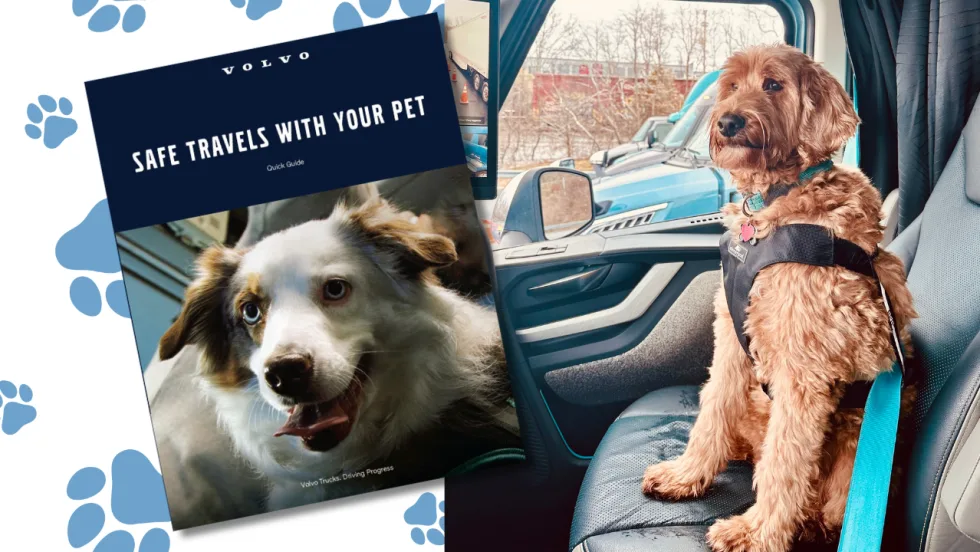
New Guide Offers Pet Safety Tips for Truck Drivers
Hundreds of thousands of pets travel in truck cabs. A new safety guide from Volvo Trucks and the Center for Pet Safety offers practical advice for truck drivers who bring dogs and cats along for the ride.
Read More →
Medical Cards, English Proficiency Reshape Roadcheck Violations
Medical-card violations jumped to the top of the driver out-of-service list during CVSA’s 2026 International Roadcheck, while English-language proficiency violations appeared among the leading violations for the first time.
Read More →