




CVSA Puts its Foot Down on Brakes
Beginning Aug. 26 and continuing through Sept. 1, the Commercial Vehicle Safety Alliance (CVSA) will carry out a program to promote commercial vehicle brake safety across North America. Throughout Brake Safety Week, CVSA-certified
Beginning Aug. 26 and continuing through Sept. 1, the Commercial Vehicle Safety Alliance (CVSA) will carry out a program to promote commercial vehicle brake safety across North America.
Throughout Brake Safety Week, CVSA-certified
inspectors and industry participants will conduct a variety of enforcement and educational activities emphasizing the importance of proper commercial vehicle and automobile brake inspection, maintenance and operation. CVSA initiated Brake Safety Week in 2005 as part of its Operation Air Brake Campaign.
"More than 3 million roadside commercial vehicle inspections are conducted annually throughout North America, and by far brakes make up the largest percentage of out-of-service violations cited during these inspections," said CVSA's Executive Director Stephen F. Campbell. "In order to encourage that more attention is being paid to this problem, Brake Safety Week focuses on both enforcement and education activities designed to enhance the safe operation of commercial vehicles."
Drivers will receive educational and other helpful information, such as the CVSA brochure "Have You Checked Your Brakes Today?" as well as CVSA's "Spot Check" brake adjustment indicators drivers can install to help measure if their brakes are in proper adjustment.
Brakes enable the vehicle to stop and are vital to its safe operation. They are complicated and contain many parts, all of which need constant inspection and attention to ensure proper operation and performance. There is much evidence that points to brakes continuing to be a significant safety concern.
• Results from a number of National Transportation Safety Board investigations into high-profile commercial vehicle crashes have revealed problems associated with brake operation, inspection and/or maintenance.
• Results from the recent Large Truck Crash Causation Study, sponsored by the United States Department of Transportation, indicated that brake problems were present at the time of the crash in 29.4 percent of the cases.
• Brakes make up the largest percentage, 56.6 percent, of vehicle out-of-service Violations cited in roadside inspections conducted during Roadcheck 2007.
• Nearly 9 percent of all brakes equipped with manual slack adjusters and four percent of all brakes equipped with automatic slack adjusters are placed out of service.
Brake Safety Week will involve numerous enforcement and educational activities all across North America. As an example, a number of truckstop locations in the Travel Centers of America, Petro Truck Stops, and AMBEST networks are providing educational and other brake-related services for their customers.
CVSA's recent launch of its "In the Safety Lane with CVSA" podcast will include a discussion with leading experts on commercial vehicle brake related issues. Visit www.cvsa.org, and click on the podcast icon to listen in.
More Safety & Compliance
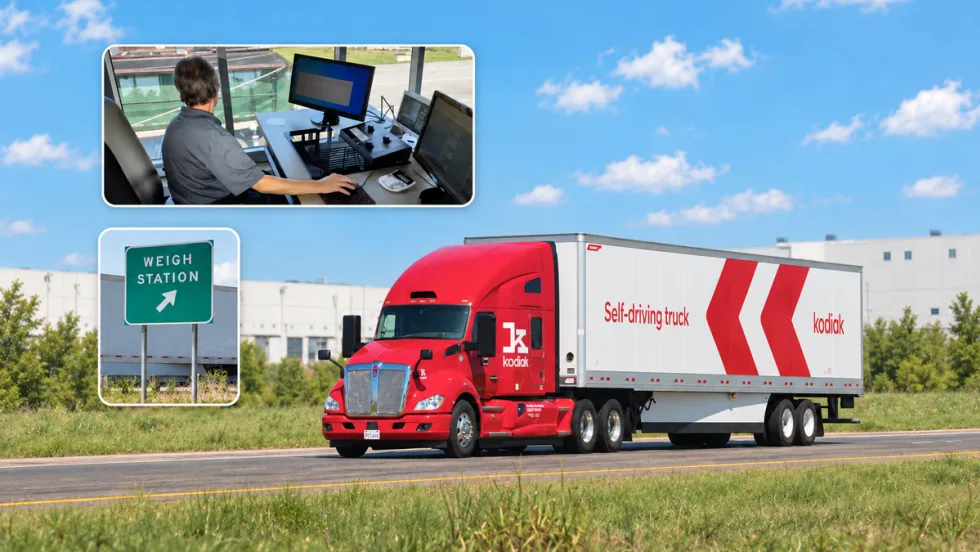
PrePass, Kodiak Connect Driverless Trucks to Roadside Enforcement
The system will allow enforcement agencies to verify Enhanced Inspection information and decide whether Kodiak’s autonomous trucks can bypass roadside screening sites.
Read More →
From One Generation to the Next: How Mentorship Builds Safer Truck Drivers
After three decades in trucking, Harold Perry shares what he's learned about driver safety, mentorship, and helping the next generation build confidence behind the wheel.
Read More →
FMCSA Pauses Biennial-Update Enforcement Amid Motus Transition
Carriers whose updates were due on or after June 1 have more time, while FMCSA works to stabilize its new registration system and warns of phishing sites impersonating its new carrier registration system, Motus.
Read More →
ZF Expands Commercial Vehicle Push in North America
ZF is expanding its North American commercial-vehicle presence with new transmission applications, electrification, trailer technology and autonomous-driving systems.
Read More →
Truck Drivers Need More Than Another Alert
Fleets have more visibility into truck health, safety events, and driver activity than ever. The next challenge is turning all that information into useful guidance for the person who has to decide what to do next.
Read More →
Tesla Wants a Self-Driving Semi. Are Cameras Enough?
Could Tesla’s camera-only autonomous driving technology work on an 80,000-pound Semi? In this commentary, HDT's Deborah Lockridge takes a look at Tesla, Cybercab, and how autonomous trucks see the road.
Read More →
What DOT’s Automated Vehicle Strategy Means for Trucking
The U.S. Department of Transportation issued a new automated-vehicle strategy that outlines plans for driverless-truck regulations, cross-state freight corridors, and federal safety standards.
Read More →
NYC Expands Speed, Pedestrian Safety Tech Across Fleet
New York City is expanding intelligent speed assistance and pedestrian-alert systems across its municipal fleet, moving the technologies from pilot programs into vehicle procurement and retrofit requirements.
Read More →
FMCSA Removes 110 Truck Driver Training Schools from Certified ELDT List
Federal regulators also are targeting more than 160 additional training providers and launching a nationwide audit of third-party CDL skills testers as part of a broader crackdown on trucking fraud.
Read More →
Beyond DOT Compliance: What Makes a Trucking Fleet Truly Safe?
A trucking fleet can follow every rule and still make unsafe decisions. The real test comes when safety conflicts with freight, productivity, or cost.
Read More →