




Cummins Launches Two-Stage Turbocharger
Cummins Turbo Technologies, a manufacturer of turbocharger technology, will officially launch its new two-stage turbocharger powering the 2016 Nissan TITAN XD.
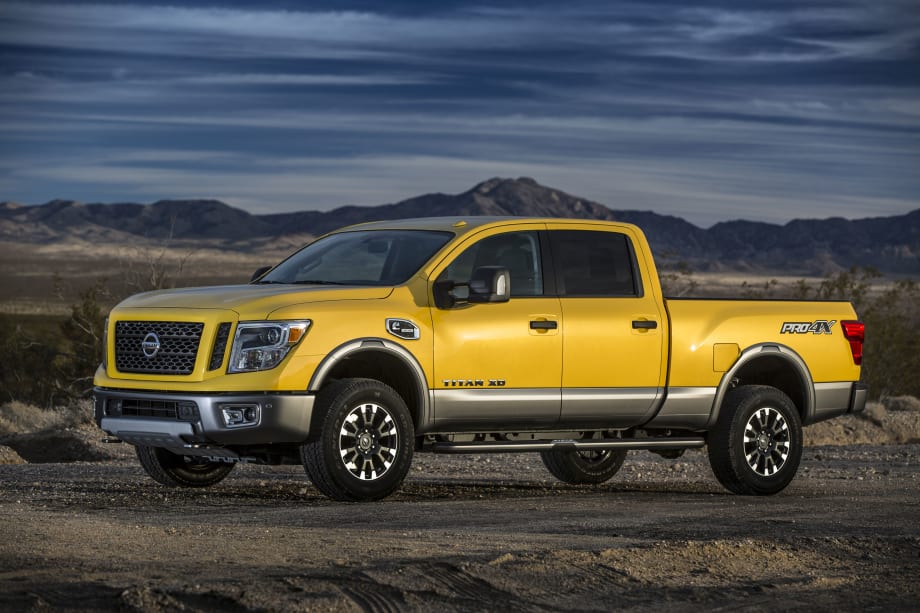
The MY-2016 Nissan Titan XD will be equipped with a Cummins 5.0L V-8 Turbo Diesel. Photo: Nissan
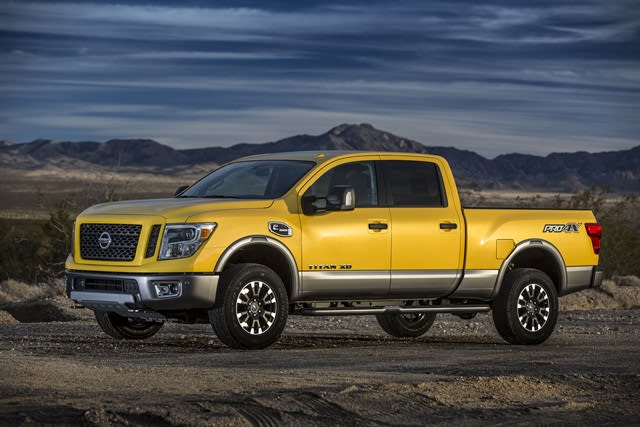
The MY-2016 Nissan Titan XD will be equipped with a Cummins 5.0L V-8 Turbo Diesel. Photo: Nissan
Cummins Turbo Technologies, a manufacturer of turbocharger technology, will officially launch its new two-stage turbocharger powering the 2016 Nissan TITAN XD this week during the Mid-America Trucking Show (MATS) in Louisville, Ky. The next-generation two-stage system with rotary turbine control (RTC) is Cummins is designed to deliver high efficiency, excellent driveability, and low emissions levels, according to the company.
This integrated technology was developed in partnership with Cummins Engine Business and Nissan specifically for use on the 2016 Nissan TITAN XD pickup truck.
This custom two-stage technology, developed at the company’s technical centers in Huddersfield, U.K., and Columbus, Ind., will be fitted to the Cummins 5.0L V-8 Turbo Diesel engine and showcased in tandem with the TITAN XD at the show. It will offer flexible architecture that efficiently integrates and packages two turbochargers in series to deliver high performance levels while still meeting the stringent emissions targets of the light-duty market, according to Cummins.
Sitting within Cummins Turbo Technologies’ specially modulated two-stage (M2) product range, the RTC technology, which is used to channel exhaust to the required areas for complete exhaust control capability, has four main operating modes:
High Pressure Two-Stage Turbo Mode – Minimizes turbo lag and enables a better vehicle transient performance.
Low Pressure Single Stage Turbo Mode – Enables higher power performance while ensuring smooth transparent mode transition without vehicle driveability impacts.
Wastegate Mode – Maximizes engine power output.
Regen Mode – Optimized after-treatment operating conditions for emissions control.
End users will benefit from more responsive and efficient power control, creating a seamless driving experience.
“Advances in air-handling technology and improved system integration continue to provide new turbocharging solutions that enable customers to achieve their emissions and efficiency targets without compromising engine performance. Highly efficient and highly durable, this pioneering technology offers a smart alternative to variable geometry,” said Jonathan Wood, Executive director – research and engineering. “Nissan is the first to benefit from the new technology. Working in partnership with the Cummins Engine Team and Nissan, we have developed a custom system solution that is tailored to the customer’s operational requirements.”
More Fuel Smarts

Trucking’s Diesel Squeeze Isn’t Letting Up
With diesel topping $6 a gallon nationally, ATA's Bob Costello explains why fleets should prepare for continued pressure at the pump.
Read More →
FlowBelow Redesigns Trailer AeroSlider to Cut Fuel Use
The lighter trailer aerodynamic system installs in less than 45 minutes, according to the company, with potential payback in under a year depending on fuel prices and trailer mileage.
Read More →
Why Diesel Price Relief Efforts May Fall Short
Diesel prices have eased from September’s record high, but doubts about additional Russian supply and limits on dyed-diesel tax relief mean trucking fleets still face expensive fuel. And prices could go higher.
Read More →
Why Small Fuel Savings Matter in Trucking
Can better fuel economy help pay for driver raises? In this podcast, GP Transco explains how small efficiency gains create room to reinvest in its people.
Read More →
How GP Transco Cuts Trucking Fuel Costs, a Tenth of a Gallon at a Time
What’s another tenth of a mile per gallon worth? GP Transco shares how equipment upgrades and driver coaching turn small gains into meaningful fuel savings.
Read More →
Electric Yard Tractors Move Beyond Pilots
Operating-cost savings have overtaken sustainability goals as the leading reason surveyed fleets are adopting battery-electric terminal tractors, according to new NACFE research.
Read More →
Geotab Links Fleet Card to Vehicle Data
The new card combines fuel discounts with telematics-based purchase controls. Geotab’s analysis also points to potential savings from choosing lower-priced fuel stops.
Read More →
Fleet Economics Shape Electric Truck Outlook
ACT Research expects costs, charging infrastructure, and technology improvements to drive zero-emission commercial vehicle adoption as federal regulations and incentives retreat.
Read More →
Wex Adds Cardless Fuel Payments for Over-the-Road Customers
A new fuel card feature for Wex customers offers convenience and security.
Read More →
New California Law Could Shed Light on Electric Truck Prices
Why do battery-electric Class 8 trucks remain so expensive? A California bill signed by Gov. Gavin Newsom would give fleets and state agencies more visibility into what manufacturers charge.
Read More →