




Cummins Celebrates 40 years in Jamestown, N.Y.
Cummins' Jamestown, N.Y., engine plant has been producing diesel engines for 40 years. Friday, Cummins celebrated the 40th anniversary of the facility. Current production at the 1-million-square-foot facility includes the ISX15 as well as the ISX12 and ISM diesel engines, along with the Cummins Westport ISX12 G spark-ignited natural gas engine.

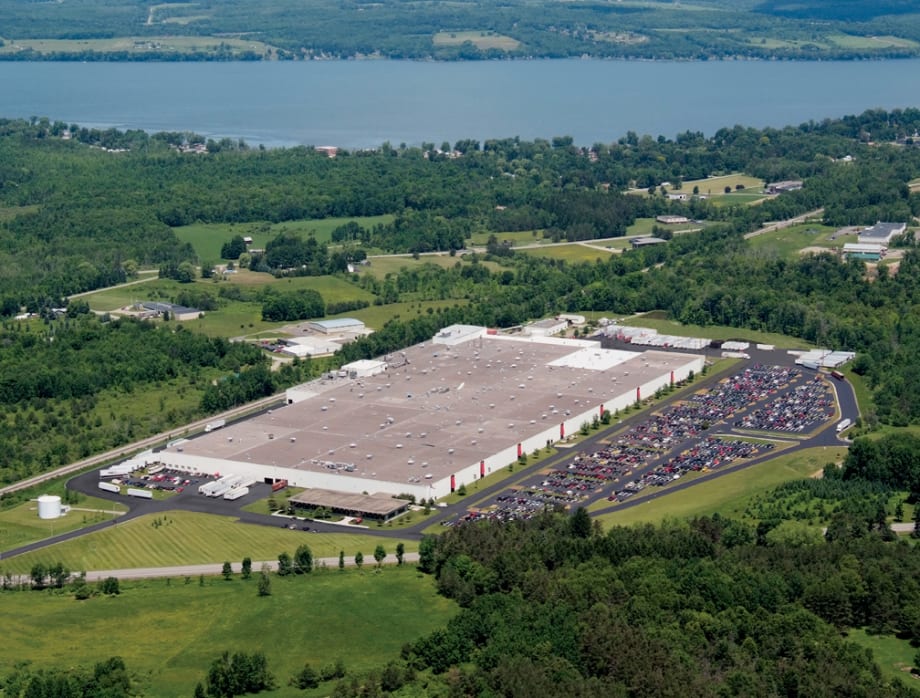
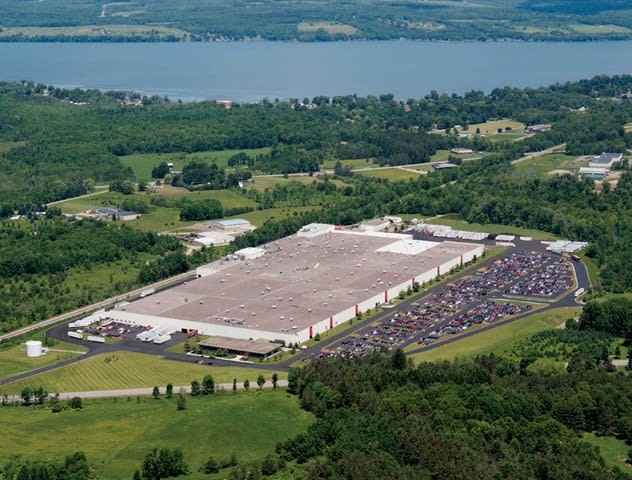
JAMESTOWN, N.Y. -- It was a combination of happenstance, foresight, vision and being in the right place at the right time that saw Cummins move into a former metalworking factory in Jamestown, N.Y. back in 1979. Today, the company is celebrating its 40th anniversary in the western New York city located roughly halfway between Buffalo, N.Y. and Erie, Penn.
Typically, more than 400 engines are built per day at JEP, and the plant produced its 1.5 millionth heavy-duty engine in the summer of 2013. Present for the celebration was the former president of Cummins Engine Business, Jim Kelly, who noted that the plant's current daily output is about twice what the plant produced in a week in its early days.
"We made about 65 engines per day back then," Kelly said. "The can-do attitude here in Jamestown has pushed us over 500 engines a day and made the Jamestown Engine Plant one of the most profitable in the Cummins chain."
Engines produced at JEP power numerous types of applications, from line-haul trucks to RVs and even fire trucks. In addition to these on-highway applications, JEP also produces the QSM and QSX engines that serve off-highway customers in construction, agriculture and marine applications.
“The Jamestown Engine Plant plays a critical role in our company’s ability to produce a broad range of diesel and natural gas engines for different customers around the world,” said Dave Crompton, president – Cummins Engine Business.
Cummins acquired the 1-million-square-foot facility in 1974, using it initially to manufacture engine components. The plant produced its first engine in 1979. Today, it builds on-highway engines, including the ISX15 as well as the ISX12 and ISM diesel engines. The ISX15 and ISX12 engines both serve the U.S. and Canadian markets, while the ISM is currently exported to Mexico. JEP also produces the Cummins Westport ISX12 G spark-ignited natural gas engine.
The plant also plays an important role in improving life in western New York. It’s the largest private employer in Chautauqua County and the largest contributor to the local United Way. JEP is also an active participant in Cummins Every Employee Every Community program, which allows employees to work at least four hours per year on a public-service project on company time.
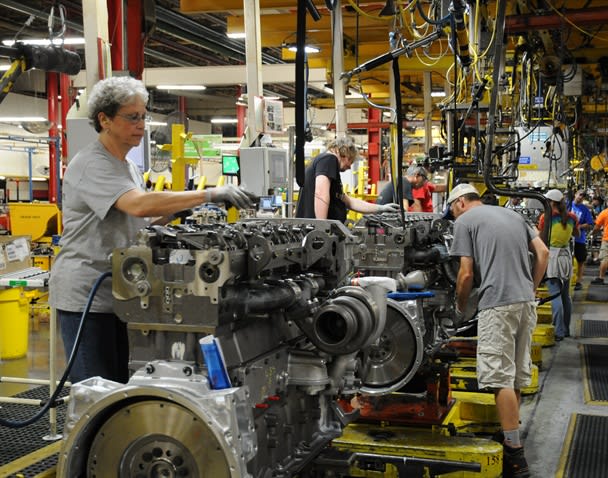
“We take Cummins' commitment to community service and improving the communities in which we live very seriously,” said Mike Abbate, JEP plant manager. “I’m tremendously proud of what our employees are doing inside and out of our plant to make western New York a better place to live.”
Crompton explained that “JEP was founded on a unique team-based system, which continues to be a competitive advantage for us, and it’s a quality our employees embrace. The highly skilled men and women at JEP and our plants around the world make innovation a reality.”
More Equipment

How Volvo Updated Its D13 for EPA 2027 [Watch]
Volvo’s updated D13 promises lower emissions without sacrificing performance or fuel economy. Take a closer look at what changed inside the engine in this HDT Spotlight video.
Read More →
Michelin Tire Improves Efficiency and Durability for Regional Fleets
The Michelin X Multi Energy D2 is a regional haul drive tire engineered to help fleets improve fuel efficiency, durability and traction in demanding stop-and-go operations.
Read More →
ZF Expands Commercial Vehicle Push in North America
ZF is expanding its North American commercial-vehicle presence with new transmission applications, electrification, trailer technology and autonomous-driving systems.
Read More →
Tesla Wants a Self-Driving Semi. Are Cameras Enough?
Could Tesla’s camera-only autonomous driving technology work on an 80,000-pound Semi? In this commentary, HDT's Deborah Lockridge takes a look at Tesla, Cybercab, and how autonomous trucks see the road.
Read More →
Kodiak: Driverless Long-Haul Truck Launch on Track for 2026
Kodiak AI says its driverless long-haul safety case is 93% complete and it remains on track to begin commercial operations by year-end 2026.
Read More →
What DOT’s Automated Vehicle Strategy Means for Trucking
The U.S. Department of Transportation issued a new automated-vehicle strategy that outlines plans for driverless-truck regulations, cross-state freight corridors, and federal safety standards.
Read More →
East Coast Port Launches $45M Electric Truck Push
The Port Authority of New York and New Jersey announced millions in incentives for zero-emission drayage trucks, yard tractors, and new charging hubs near the port.
Read More →
PlusAI Going Public to Fund Autonomous Truck Launch
A SPAC deal could provide PlusAI with up to $300 million as it works toward a 2027 commercial launch of factory-built autonomous trucks.
Read More →
NHTSA Moves to Rewrite Truck Fuel-Economy Rules
The National Highway Traffic Safety Administration says it lacks authority to regulate medium- and heavy-duty truck engines separately from complete vehicles, but the existing standards have not yet been eliminated.
Read More →
Detroit Opens Orders for EPA 2027 Engines
Detroit isn’t starting from scratch to meet EPA 2027 diesel emissions standards. Its Gen 6 DD13 and DD15 engines keep much of today’s platform while updating the fuel and aftertreatment systems.
Read More →