




Congress Passes Highway Bill; House Bill Would Block EOBR Mandate
The House and Senate passed the highway reauthorization bill Friday afternoon. The bill easily cleared both chambers: The House vote was 373-52, and the Senate vote was 74-19. It now goes to President Obama, who is expected to sign it
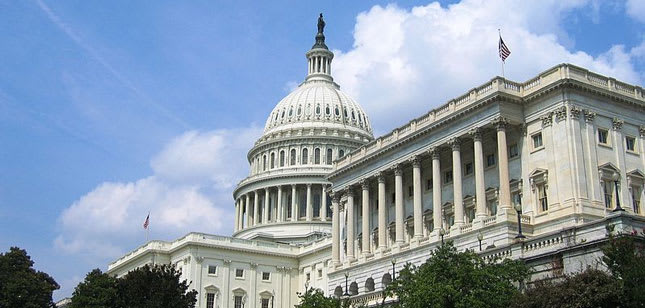
The House and Senate passed the highway reauthorization bill Friday afternoon. The bill easily cleared both chambers: The House vote was 373-52, and the Senate vote was 74-19. It now goes to President Obama, who is expected to sign it.
The bill holds transportation spending at current levels, authorizing $101.3 billion for highways and transit over the next 27 months.
Highway interests, including state transportation departments, get a modicum of stability out of the 27-month bill. They didn't get the traditional six-year bill, so important for long-term planning, but certainly two-plus years is much better than the short-term extension that would have been the result had the negotiators failed.
The agreement dodges the all-important question of how to secure long-term reinvestment in surface transportation - it does not touch the federal fuel tax - but it does continue the highway program at current funding levels. To get there, Congress had to overcome a push by conservative Republicans in the House to cut spending by about a third to levels that could be supported by the Highway Trust Fund alone, and the Senate had to cobble together a one-time package of funding transfers to make up the difference.
"This measure includes historic reforms - cutting red tape and consolidating or eliminating nearly 70 federal programs," said Transportation and Infrastructure Committee Chairman John Mica, R-Fla., in a statement.
"This bill will provide a major boost to our economy by putting Americans back to work building our nation's bridges and highways," he said.
"It has been a very long and winding road to get to this place," said Sen. Barbara Boxer, D-Calif., chairman of the Environment and Public Works Committee. "This sends a message to the people of America, and that is that we can work together."
The measure includes a number of trucking-specific provisions, such as a field study of the 34-hour restart rule, a study of truck size and weight limits, laying the groundwork for the first national freight policy, a study of the need for crashworthiness in trucks, funding for truck parking and others.
For a more detailed look at the highway bill's provisions, see:
6/29/2012 Agreement Sets New Course for Highway Program
EOBRs
The bill keeps a controversial requirement for electronic onboard recorders to track driver hours of service (something the Federal Motor Carrier Safety Administration is already working on.)
Yet even as the passage of the bill was announced, an amendment to block the EOBR mandate was being added to legislation in the House.
The amendment to the annual transportation funding appropriations bill is sponsored by U.S. Representatives Jeff Landry, R-LA and Nick Rahall, D-WV, and co-sponsored by Jaime Herrera Beutler, R-WA, Tom Graves, R-GA and Bill Huizenga, R-MI. It would strip funding from the electronic on-board recorder mandate included the conferenced highway bill negotiated last this week. As written in the bill, EOBRs would be capable of real-time tracking for monitoring of long-haul trucks and drivers.
The amendment would "prohibit the use of funds to be used to promulgate or implement any regulations that would mandate global positioning system (GPS) tracking, electronic on-board recording devices, or event data recorders in passenger or commercial motor vehicles."
The Owner Operator Independent Drivers Association hailed the amendment, saying EOBRs are the last thing a struggling trucking industry needs right now.
The American Trucking Associations, however, called it a step backward.
"Just one day after the House and Senate came together on a common sense compromise transportation bill that moves the cause of highway safety forward, adoption of this amendment is a step back," said ATA President and CEO Bill Graves in a statement.
"Though opponents of honest, fair and efficient enforcement of important safety rules have used this back door to thwart the will of Congress, we fully expect that the language of the conference report - agreed to by House and Senate leaders of both parties - will be the final word on the use of electronic logs and that DOT will quickly move to require this important safety technology on all trucks."
The House bill also includes an amendment to prohibit the use of funds from being used to implement Vehicle Miles Traveled or a distance-based user fee.
The bill has been sent to the Senate.
More Drivers

EEOC Sues Texas Trucking Company Over Driver Age Limits
The agency says Trancasa USA rejected applicants over 65 and applied tougher driving-record standards to those over 60.
Read More →
Nussbaum, Roehl Announce Second Driver Pay Increase This Year
This year has seen a swath of major truck driver pay increases as freight capacity has tightened.
Read More →
From One Generation to the Next: How Mentorship Builds Safer Truck Drivers
After three decades in trucking, Harold Perry shares what he's learned about driver safety, mentorship, and helping the next generation build confidence behind the wheel.
Read More →
Truck Drivers Need More Than Another Alert
Fleets have more visibility into truck health, safety events, and driver activity than ever. The next challenge is turning all that information into useful guidance for the person who has to decide what to do next.
Read More →
FMCSA Removes 110 Truck Driver Training Schools from Certified ELDT List
Federal regulators also are targeting more than 160 additional training providers and launching a nationwide audit of third-party CDL skills testers as part of a broader crackdown on trucking fraud.
Read More →
Hours of Service Pilot Programs: FMCSA Readies for 2027 Rollout
Two pilot programs could eventually reshape hours-of-service rules, giving truck drivers options to pause their 14-hour clock or use longer split sleeper rest periods.
Read More →
Medical Cards, English Proficiency Reshape Roadcheck Violations
Medical-card violations jumped to the top of the driver out-of-service list during CVSA’s 2026 International Roadcheck, while English-language proficiency violations appeared among the leading violations for the first time.
Read More →
Driver Trust Can Make or Break the Success of Fleet Safety Technology
New Teletrac Navman research suggests that onboarding, transparency about driver data, and positive feedback can play a significant role in how commercial drivers respond to safety and coaching technology.
Read More →
EEOC Sues KLLM Over Alleged Sex Discrimination in Driver Training
KLLM is facing a federal sex-discrimination lawsuit over policies the EEOC alleges put female truck driver trainees at a disadvantage.
Read More →
FMCSA Moves to Codify English Language Requirements for Commercial Drivers
By changing regulations on English-language proficiency requirements for commercial drivers, rather than relying on a guidance memo, the FMCSA said future administrations won't be able to walk back the Trump administration's stricter enforcement with just a memo.
Read More →