




Concrete Pumpers Seek Short-Haul Hours of Service Exemption
The Federal Motor Carrier Safety Administration has announced that the American Concrete Pumping Association has applied for an exemption from the requirement that short-haul drivers using the records of duty status (RODS) exception of the hours-of-service rule return to their normal work-reporting location within 12 hours of coming on duty.


The American Concrete Pumping Association is seeking an exemption so that concrete pump operators would be allowed to use the short-haul exception within the hours-of-service rule.
HDT File Image
The Federal Motor Carrier Safety Administration has announced that the American Concrete Pumping Association has applied for an exemption from the requirement that short-haul drivers using the records of duty status (RODS) exception of the hours-of-service rule return to their normal work-reporting location within 12 hours of coming on duty.
ACPA is requesting that concrete pump operators be allowed to use the short-haul exception but return to their work-reporting location within 14 hours instead of the usual 12 hours. The requested exemption would apply industry-wide to all concrete pump operators, concrete pumping companies, and drivers who operate concrete pumps.
Specifically, ACPA requests that concrete pump operators be treated the same as drivers operating ready-mixed concrete delivery vehicles are per federal law. Drivers of ready-mixed trucks may rely on the short-haul exception if they return to their work-reporting locations and are released from work within 14 consecutive hours.
According to FMCSA, in its petition, ACPA explained that:
Like ready-mixed concrete delivery trucks and asphalt pavement delivery trucks, concrete pumps work with a perishable product delivered on a just-in-time basis. Timing and scheduling are critical to ensure a high-quality result. Allowing concrete pump drivers to use the short-haul exception, but return to their reporting location within 14 hours instead of 12 hours, would harmonize the hours-of-service rules for drivers of concrete pumps with the rules for drivers of the vehicles that supply the concrete.
Only a small percentage of the concrete pump operator's time is spent driving. On average, concrete pump operators spend between 25-32% of their time driving during a shift, and average daily driving distances are 20-25 miles. A pump operator has plenty of rest time with breaks ranging from 33%-55% of their total time pumping. The majority of an operator's time is spent waiting on ready-mixed concrete.
A concrete pump cannot operate without a ready-mixed truck. Having conflicting requirements creates confusion on job sites. Clear and consistent requirements between the concrete pumps and the ready-mixed trucks will help ensure an equivalent level of safety on the job site. ACPA adds that concrete pumping and placement companies work in collaboration with ready-mixed companies. Scheduling local business contracts in compliance with State and Federal regulations is complicated, given that some concrete companies operate under different FMCSA rules.
FMCSA noted that ACPA contends that because of the concrete pump operators' training and preparation and numerous rest breaks, providing the additional two duty hours to concrete pump operators will have “no impact on the level of safety provided under the short-haul exception.”
The requested exemption is for five years, with opportunity for renewals.
Public comment on ACPA's application for exemption must be received on or before July 23, 2018.
Comments may be identified by Federal Docket Management System Number FMCSA-2018-0175 by any of the following methods:
Online:Federal eRulemaking Portal
Fax: 1-202-493-2251
Mail: Docket Management Facility, U.S. Department of Transportation, 1200 New Jersey Avenue SE, West Building, Ground Floor, Room W12-140, Washington, DC 20590-0001
Hand Delivery: West Building, Ground Floor, Room W12-140, 1200 New Jersey Avenue SE., between 9 a.m. and 5 p.m. E.T., Monday through Friday, except Federal holidays
Related: 2018 World of Concrete Show [Photos]
More Safety & Compliance
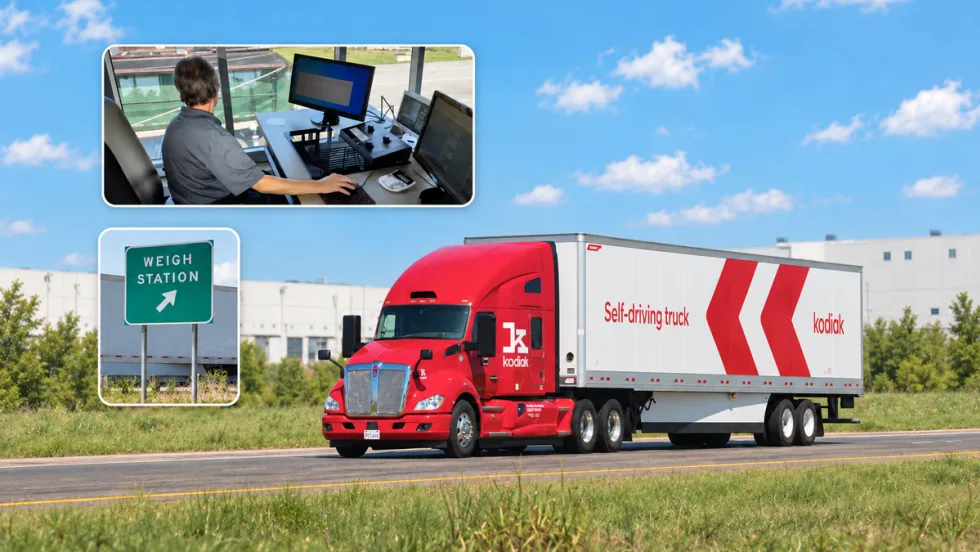
PrePass, Kodiak Connect Driverless Trucks to Roadside Enforcement
The system will allow enforcement agencies to verify Enhanced Inspection information and decide whether Kodiak’s autonomous trucks can bypass roadside screening sites.
Read More →
From One Generation to the Next: How Mentorship Builds Safer Truck Drivers
After three decades in trucking, Harold Perry shares what he's learned about driver safety, mentorship, and helping the next generation build confidence behind the wheel.
Read More →
FMCSA Pauses Biennial-Update Enforcement Amid Motus Transition
Carriers whose updates were due on or after June 1 have more time, while FMCSA works to stabilize its new registration system and warns of phishing sites impersonating its new carrier registration system, Motus.
Read More →
ZF Expands Commercial Vehicle Push in North America
ZF is expanding its North American commercial-vehicle presence with new transmission applications, electrification, trailer technology and autonomous-driving systems.
Read More →
Truck Drivers Need More Than Another Alert
Fleets have more visibility into truck health, safety events, and driver activity than ever. The next challenge is turning all that information into useful guidance for the person who has to decide what to do next.
Read More →
Tesla Wants a Self-Driving Semi. Are Cameras Enough?
Could Tesla’s camera-only autonomous driving technology work on an 80,000-pound Semi? In this commentary, HDT's Deborah Lockridge takes a look at Tesla, Cybercab, and how autonomous trucks see the road.
Read More →
What DOT’s Automated Vehicle Strategy Means for Trucking
The U.S. Department of Transportation issued a new automated-vehicle strategy that outlines plans for driverless-truck regulations, cross-state freight corridors, and federal safety standards.
Read More →
NYC Expands Speed, Pedestrian Safety Tech Across Fleet
New York City is expanding intelligent speed assistance and pedestrian-alert systems across its municipal fleet, moving the technologies from pilot programs into vehicle procurement and retrofit requirements.
Read More →
FMCSA Removes 110 Truck Driver Training Schools from Certified ELDT List
Federal regulators also are targeting more than 160 additional training providers and launching a nationwide audit of third-party CDL skills testers as part of a broader crackdown on trucking fraud.
Read More →
Beyond DOT Compliance: What Makes a Trucking Fleet Truly Safe?
A trucking fleet can follow every rule and still make unsafe decisions. The real test comes when safety conflicts with freight, productivity, or cost.
Read More →