




Caterpillar to End Cat Truck Program
"Remaining a viable competitor in this market would require significant additional investment to develop and launch a complete portfolio of trucks, and upon an updated review, we determined there was not a sufficient market opportunity to justify the investment," an official said.
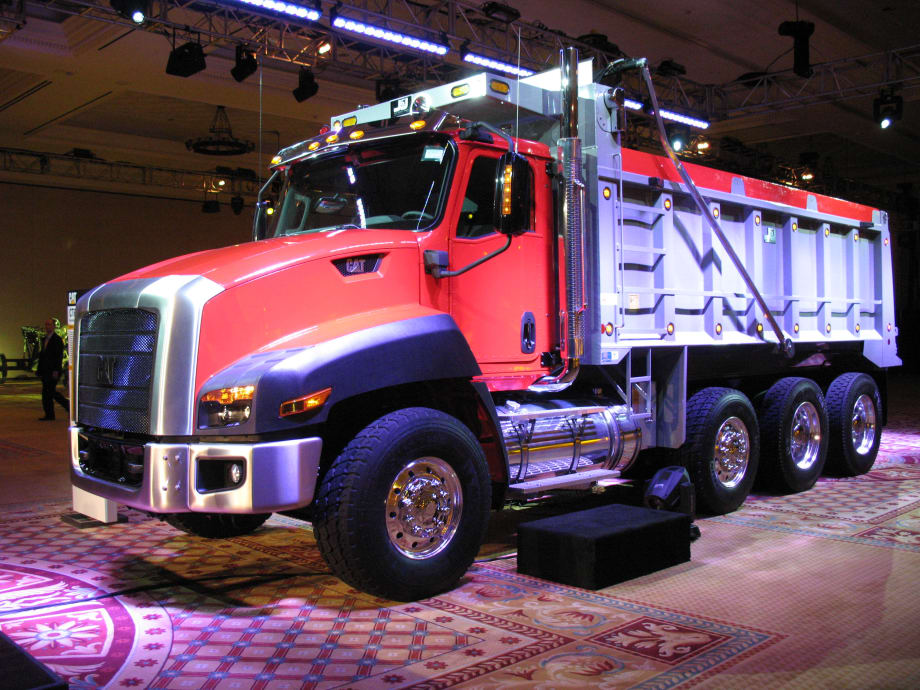
Cat introduced its CT-680 axle-back vocational truck in 2011, and subsequently added two axle-forward versions. Photo: Tom Berg
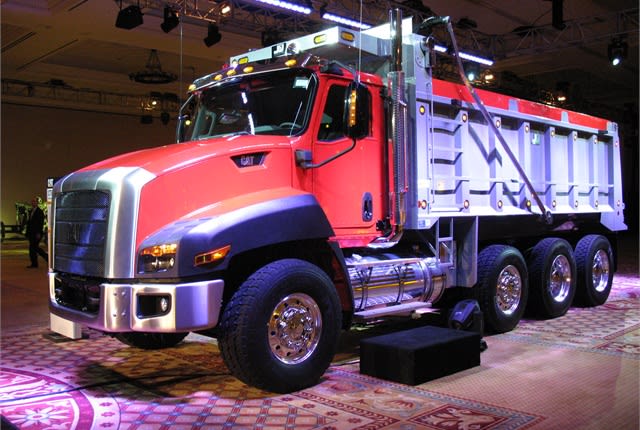
Cat introduced its CT-680 axle-back vocational truck in 2011, and subsequently added two axle-forward versions. Photo: Tom Berg
Caterpillar Inc. says it will discontinue production of its Cat Truck on-highway vocational trucks, blaming "the current business climate in the truck industry" for its withdrawal from the market.
“This is also in line with the company's ongoing restructuring to align its businesses with existing conditions,” the company said in a statement issued today. Those previously announced moves include personnel layoffs and cutbacks in production of its earth moving and material handling equipment.
“As a result of this action, the company will cease taking new orders for vocational trucks, although Caterpillar remains committed to existing truck customers and will support the existing trucks currently on the road,” the company said.
Caterpillar launched its first CT vocational truck in the North American market in 2011, working with Navistar on the product's design and build. It was based on the International PayStar and built under contract by Navistar, and now includes three variants.
Last year, Caterpillar announced its intention to begin independently designing and manufacturing its on-road vocational truck products at a plant in Victoria, Texas. That was to phase in this year.
Cat Trucks, designated CT, are premium products based on Navistar International's PayStar and use a Navistar-built 12.4-liter diesel. They are assembled at a Navistar plant in Saltillo, Mexico. CT sales volume remains low, annually totaling 1,100 to 1,200 units, a Navistar spokesman said last year.
Navistar meanwhile introduced an upscale version of its PayStar vocational truck, called HX, which resembles and would have competed with the Cat Truck series.
"Remaining a viable competitor in this market would require significant additional investment to develop and launch a complete portfolio of trucks, and upon an updated review, we determined there was not a sufficient market opportunity to justify the investment," said Ramin Younessi, vice president of Caterpillar's Industrial Power Systems Division.
"We have not yet started truck production in Victoria, and this decision allows us to exit this business before the transition occurs."
Canceling the CT program will impact approximately 70 positions, Cat said. The reductions will begin in March and will take place over a period of time.
More Equipment

How Volvo Updated Its D13 for EPA 2027 [Watch]
Volvo’s updated D13 promises lower emissions without sacrificing performance or fuel economy. Take a closer look at what changed inside the engine in this HDT Spotlight video.
Read More →
Michelin Tire Improves Efficiency and Durability for Regional Fleets
The Michelin X Multi Energy D2 is a regional haul drive tire engineered to help fleets improve fuel efficiency, durability and traction in demanding stop-and-go operations.
Read More →
ZF Expands Commercial Vehicle Push in North America
ZF is expanding its North American commercial-vehicle presence with new transmission applications, electrification, trailer technology and autonomous-driving systems.
Read More →
Tesla Wants a Self-Driving Semi. Are Cameras Enough?
Could Tesla’s camera-only autonomous driving technology work on an 80,000-pound Semi? In this commentary, HDT's Deborah Lockridge takes a look at Tesla, Cybercab, and how autonomous trucks see the road.
Read More →
Kodiak: Driverless Long-Haul Truck Launch on Track for 2026
Kodiak AI says its driverless long-haul safety case is 93% complete and it remains on track to begin commercial operations by year-end 2026.
Read More →
What DOT’s Automated Vehicle Strategy Means for Trucking
The U.S. Department of Transportation issued a new automated-vehicle strategy that outlines plans for driverless-truck regulations, cross-state freight corridors, and federal safety standards.
Read More →
East Coast Port Launches $45M Electric Truck Push
The Port Authority of New York and New Jersey announced millions in incentives for zero-emission drayage trucks, yard tractors, and new charging hubs near the port.
Read More →
PlusAI Going Public to Fund Autonomous Truck Launch
A SPAC deal could provide PlusAI with up to $300 million as it works toward a 2027 commercial launch of factory-built autonomous trucks.
Read More →
NHTSA Moves to Rewrite Truck Fuel-Economy Rules
The National Highway Traffic Safety Administration says it lacks authority to regulate medium- and heavy-duty truck engines separately from complete vehicles, but the existing standards have not yet been eliminated.
Read More →
Detroit Opens Orders for EPA 2027 Engines
Detroit isn’t starting from scratch to meet EPA 2027 diesel emissions standards. Its Gen 6 DD13 and DD15 engines keep much of today’s platform while updating the fuel and aftertreatment systems.
Read More →