




Carrier Transicold Program to Help Reefer Fleets Phase Out 3G
Carrier Transicold is introducing a program to help fleets upgrade telematics technology on refrigerated trucks and trailers.

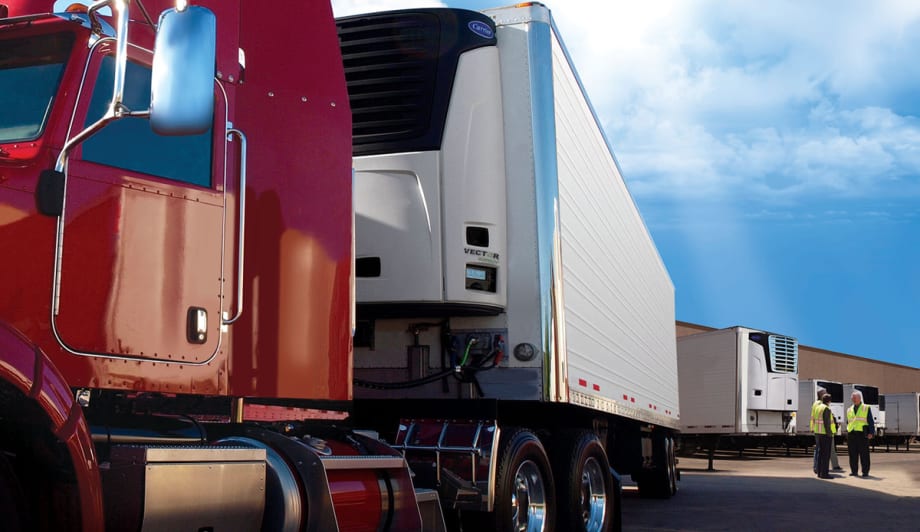
Carrier Transicold’s eSolutions platform and web-based interface provides visibility of cold chain assets via a centralized data stream that shows trailer temperatures, location and movement.
Photo: Carrier Transicold
As North American wireless carriers move to phase out 3G service, Carrier Transicold is introducing a program to help trucking fleets upgrade telematics technology on refrigerated trucks and trailers.
The company’s new eSolutions bundled subscriptions packages equipment fees and airtime service into a “competitive and predictable” monthly plan fee. There are three- and five-year contract options.
“Regardless of the 3G telematics equipment currently being used on a fleet’s Carrier Transicold refrigeration units, fleet managers now have the advantage of upgrading to our eSolutions 4G LTE equipment without a major capital investment up front,” said David Brondum, director of telematics at Carrier Transicold, in a press release. “A bundled subscription ensures reliable equipment performance with full warranty support for the life of the contract, and it provides protection against obsolescence as cellular networks sunset earlier technologies in favor of newer generation telecommunications.”
Hardware includes the transceiver module, antenna and wiring harness as well as optional peripheral components such as fuel sensors, temperature probes and door switches, as required by specific fleet needs. Three airtime service plans are available: monitor; two-way monitor and control; and monitor and enhanced control, adding capabilities for data downloads, remote software updates and adjustments to Carrier Transicold IntelliSet control configurations.
Carrier Transicold’s eSolutions platform and web-based interface provides visibility of cold chain assets via a centralized data stream that shows trailer temperatures, location and movement. The platform can also enable remote control of refrigeration units along with other features to optimize refrigeration equipment usage, improve fleet efficiency and help manage service and maintenance.
More Equipment

How Volvo Updated Its D13 for EPA 2027 [Watch]
Volvo’s updated D13 promises lower emissions without sacrificing performance or fuel economy. Take a closer look at what changed inside the engine in this HDT Spotlight video.
Read More →
Michelin Tire Improves Efficiency and Durability for Regional Fleets
The Michelin X Multi Energy D2 is a regional haul drive tire engineered to help fleets improve fuel efficiency, durability and traction in demanding stop-and-go operations.
Read More →
ZF Expands Commercial Vehicle Push in North America
ZF is expanding its North American commercial-vehicle presence with new transmission applications, electrification, trailer technology and autonomous-driving systems.
Read More →
Tesla Wants a Self-Driving Semi. Are Cameras Enough?
Could Tesla’s camera-only autonomous driving technology work on an 80,000-pound Semi? In this commentary, HDT's Deborah Lockridge takes a look at Tesla, Cybercab, and how autonomous trucks see the road.
Read More →
Kodiak: Driverless Long-Haul Truck Launch on Track for 2026
Kodiak AI says its driverless long-haul safety case is 93% complete and it remains on track to begin commercial operations by year-end 2026.
Read More →
What DOT’s Automated Vehicle Strategy Means for Trucking
The U.S. Department of Transportation issued a new automated-vehicle strategy that outlines plans for driverless-truck regulations, cross-state freight corridors, and federal safety standards.
Read More →
East Coast Port Launches $45M Electric Truck Push
The Port Authority of New York and New Jersey announced millions in incentives for zero-emission drayage trucks, yard tractors, and new charging hubs near the port.
Read More →
PlusAI Going Public to Fund Autonomous Truck Launch
A SPAC deal could provide PlusAI with up to $300 million as it works toward a 2027 commercial launch of factory-built autonomous trucks.
Read More →
NHTSA Moves to Rewrite Truck Fuel-Economy Rules
The National Highway Traffic Safety Administration says it lacks authority to regulate medium- and heavy-duty truck engines separately from complete vehicles, but the existing standards have not yet been eliminated.
Read More →
Detroit Opens Orders for EPA 2027 Engines
Detroit isn’t starting from scratch to meet EPA 2027 diesel emissions standards. Its Gen 6 DD13 and DD15 engines keep much of today’s platform while updating the fuel and aftertreatment systems.
Read More →