




CARB Deadlines Looms For Trucks and Buses
The California Air Resources Board is reminding truck and bus owners to check now to see if their vehicle fleets are among those that will have new rules to follow as of Jan. 1, 2013. As the new year begins, heavy-duty trucks and buses (more than 26,000 pounds gross vehicle weight rating) with 2000 - 2004 model year engines will likely need diesel soot filter

The California Air Resources Board is reminding truck and bus owners to check now to see if their vehicle fleets are among those that will have new rules to follow as of Jan. 1, 2013.
As the new year begins, heavy-duty trucks and buses (more than 26,000 pounds gross vehicle weight rating) with 2000 - 2004 model year engines will likely need diesel soot filters
as required by the state's Truck and Bus Regulation.
The rule is part of California's Diesel Risk Reduction Plan, which includes a suite of regulations designed to reduce harmful diesel emissions from a wide variety of sources. In 2011, similar requirements took effect for 1996 - 1999 model year engines.
There are exceptions, which include low-mileage or emergency vehicles, etc.
However, the majority of registered trucks and buses in this vehicle category will need to take steps to comply with the regulation.
"Our efforts to reach out to the trucking industry have yielded positive results," said CARB's Enforcement Division Chief James Ryden. "We have enforcement and compliance assistance teams all over the state who regularly inspect vehicles and educate owners, and recently, we've been pleased to note a compliance rate of more than 80%."
Ryden specifically cited "Gear Up for Clean Truck Month" in August, where teams of CARB and California Highway Patrol officers stepped up enforcement efforts and inspected more than 4,000 trucks at 40 different locations, including CHP weigh stations, random roadside areas, distribution centers, fleet facilities, truck stops and other sites where trucks and buses are present.
Business owners should note that non-compliant vehicles (including out-of-state vehicles) may not be legally operated in California. Penalties start at a minimum of $1,000 per violation per month and will increase significantly over time.
In addition, non-compliance can result in a Department of Motor Vehicle registration block on your truck or bus, and/or having your vehicle impounded by CHP until it is in compliance. For more information on possible penalties, see the "Enforcement" link at Truck Stop/Enforcement at http://www.arb.ca.gov/msprog/truckstop/azregs/enforcement.htm.
Other new diesel-related rules besides the Truck and Bus Regulation will be enforced starting Jan. 1, 2013. Vehicle owners may want to take note of this information in order to place equipment orders and prepare for compliance. Deadlines coming up quickly for diesel vehicles include:
Dec. 31, 2012:
Transport Refrigeration Units with 2005 model year engines must be replaced with Ultra-Low-Emission TRUs.
Jan. 1, 2013:
Under the Truck and Bus regulation, diesel truck and bus fleets must either install diesel soot filters (or upgrade equipment) on trucks with 2002 - 2004 model year engines or meet phase-in option requirements.
For vehicles covered under the Drayage Truck Regulation, 2005 - 2006 engine model year trucks greater than 33,000 lbs. gross vehicle weight rating must have diesel soot filters.
Tractor-Trailer Greenhouse Gas regulation:
- Owners of fleets with 20 or fewer affected trailers must register if they want to use a compliance option that will allow them up to four additional years to participate in the Small Fleet Compliance Plan.
- Low-rolling resistance tires are required for 2010 model year and older tractors that pull 53 foot-long box-type trailers.
- SmartWay aerodynamic requirements must be met by all 53-foot or longer box-type trailers not using a phase-in option.
To make sure you and your fleet are ready for 2013, call 1-866-6-DIESEL (1-866-634-3735), or visit http://www.arb.ca.gov/msprog/truckstop/truckstop.htm for more information.
More Drivers

Nussbaum, Roehl Announce Second Driver Pay Increase This Year
This year has seen a swath of major truck driver pay increases as freight capacity has tightened.
Read More →
From One Generation to the Next: How Mentorship Builds Safer Truck Drivers
After three decades in trucking, Harold Perry shares what he's learned about driver safety, mentorship, and helping the next generation build confidence behind the wheel.
Read More →
Truck Drivers Need More Than Another Alert
Fleets have more visibility into truck health, safety events, and driver activity than ever. The next challenge is turning all that information into useful guidance for the person who has to decide what to do next.
Read More →
FMCSA Removes 110 Truck Driver Training Schools from Certified ELDT List
Federal regulators also are targeting more than 160 additional training providers and launching a nationwide audit of third-party CDL skills testers as part of a broader crackdown on trucking fraud.
Read More →
Hours of Service Pilot Programs: FMCSA Readies for 2027 Rollout
Two pilot programs could eventually reshape hours-of-service rules, giving truck drivers options to pause their 14-hour clock or use longer split sleeper rest periods.
Read More →
Medical Cards, English Proficiency Reshape Roadcheck Violations
Medical-card violations jumped to the top of the driver out-of-service list during CVSA’s 2026 International Roadcheck, while English-language proficiency violations appeared among the leading violations for the first time.
Read More →
Driver Trust Can Make or Break the Success of Fleet Safety Technology
New Teletrac Navman research suggests that onboarding, transparency about driver data, and positive feedback can play a significant role in how commercial drivers respond to safety and coaching technology.
Read More →
EEOC Sues KLLM Over Alleged Sex Discrimination in Driver Training
KLLM is facing a federal sex-discrimination lawsuit over policies the EEOC alleges put female truck driver trainees at a disadvantage.
Read More →
FMCSA Moves to Codify English Language Requirements for Commercial Drivers
By changing regulations on English-language proficiency requirements for commercial drivers, rather than relying on a guidance memo, the FMCSA said future administrations won't be able to walk back the Trump administration's stricter enforcement with just a memo.
Read More →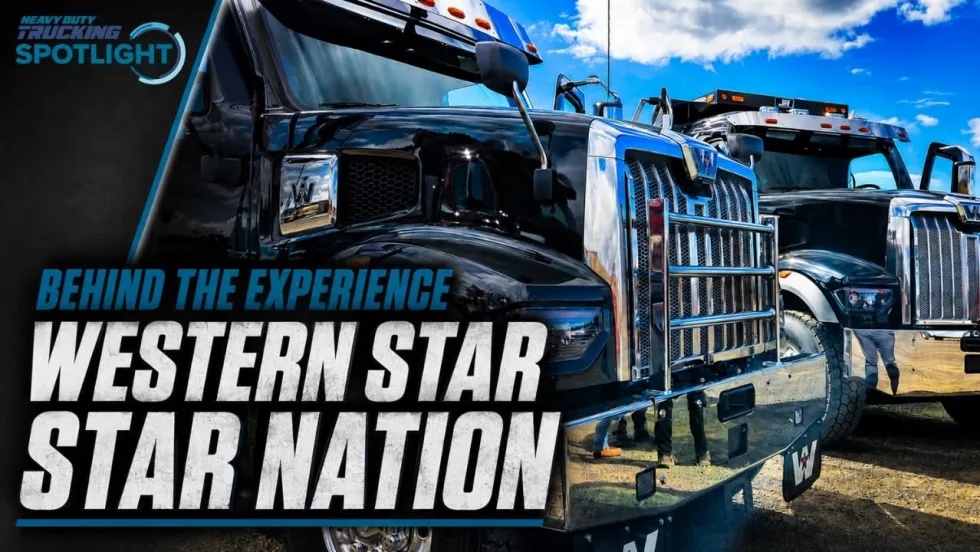
Drivers Put Western Star Trucks to the Test at Star Nation Experience
Watch to get an inside look at the Western Star trucks, technology, and community behind the Star Nation Experience 2026!
Read More →