




Canadian Truckers Say Canada-US Border Agreement Helps Create 21st Century Border
The Canadian Trucking Alliance is hailing the Canada-US border agreement announced recently by President Barack Obama and Canadian Prime Minister Stephen Harper
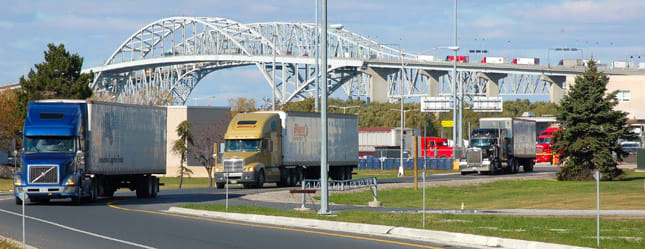
The Canada-US Border Perimeter Security Agreement thins the border without sacrificing security.
The Canadian Trucking Alliance is hailing the Canada-US border agreement announced recently by President Barack Obama and Canadian Prime Minister Stephen Harper.
The CTA says the agreement is an historic achievement that takes meaningful steps to bringing the Canada-US border into the 21st century.
"This is a great day for the trucking industry and the trade community in both countries," says David Bradley, president CTA. "The leaders and the governments of both great nations are to be commended. The action plans effectively balance security and trade imperatives while restoring a meaningful return on investment in the trusted trader programs and creating the opportunity for a more efficient and productive border."
Key benefits for the trucking industry of the Canada-U.S. Joint Action Plan on cross-border trade and security announcement include:
- Mutual Recognition of Trusted Trader Programs -- The Alliance also applauds the Perimeter Action Plan's mutual recognition of the two main "trusted trader" risk assessment programs -- the U.S. Customs-Trade Partnership Against Terrorism (C-TPAT) and the Canada Border Services Agency's' Partners In Protection (PIP). CTA had been urging greater flexibility in how each program determines carrier and shipper access to FAST lanes into Canada. Currently, companies must apply to both programs separately, despite the fact that the information required is identical.
"Given the high level of harmonization between the two programs already, it made sense to move toward a more streamlined process including a single application via automated enrollment system, expanding benefits so more products are eligible for FAST lane access for trusted shippers," says Bradley. "Also, the move towards full harmonization enables carriers in either program to take advantage of the benefits of the other."
- FAST Cards -- Governments will examine ways to allow FAST cards to meet requirements of other security programs, involving CBSA, CBP and other government agencies.
- Pre-Inspection -- Another intriguing border provision could reduce the number of customs inspections for truck freight moving across the Canada-U.S. border. A pilot slated for launch at the Port of Montreal will introduce an 'inspect once, accept twice' concept, where freight arriving at the North American border will only be inspected by one Customs agency but will be accepted by both countries.
- Pre-Clearance -- USCBP will implement a pre-clearance pilot at a land border by Sept. 2012, quite possibly the Peace Bridge, where infrastructure limitations contribute to traffic congestion. Facilities at the Peace Bridge would allow trucks to be pre-cleared on the Canadian side of the border by CBP prior to entering the U.S. CTA has historically cautioned against any initiative that would see trucks stopping twice where currently there is only one stop, however the Alliance looks forward to working with governments and local port officials on this initiative to ensure optimum efficiencies are achieved.
- Border Crossing Fees -- Governments have committed to conduct an inventory and assessment that examines the rationale and impact for the multitude of border crossing fees, including such irritants as the APHIS fees.
- RFID -- Border infrastructure means more than just building roads and bridges. CTA is pleased that funding has been identified for Radio Frequency Identification (RFID), and anticipates that under the review of trusted trader facilities it could lead to expansion of FAST lanes and RFID technology for commercial lanes.
- Wood Packaging Material -- The action plan commits to finding ways to ensure that inspection of pallets and other packaging materials is done away from the border and does not disrupt border operations.
Over the past several months, CTA consulted extensively with both agencies responsible for drafting the Action Plan -- the Beyond the Border Working Group and the Canada-US Regulatory Cooperation Council -- proposing a number of measures the Alliance felt would improve trade facilitation and reduce unnecessary regulatory barriers.
"The announcement today delivers in several tangible ways," says Bradley, "and creates a pathway to further cooperation.
"Of all the announcements made today, perhaps the greatest bang for our buck in the Action Plan is the harmonization between Canada and the U.S. on the data requirements for in transit goods movement which temporarily travel through one of the two countries."
Canada's rules allow the movement of goods in-transit by American carriers, but following 9-11, security rules were implemented and the U.S. essentially killed Canadian carriers' ability to transport domestic loads through the U.S. by requiring full customs documentation. Restoring carriers' ability to move in-transit means more efficient trade, lower costs and faster truck transit times for Canadian carriers moving domestic goods through the U.S.
To restore competitive balance, the U.S. government has effectively agreed to harmonize its current rules with Canada. The alternative would have been for Canada to mirror the U.S. policy, putting an end to the practice and effectively eliminating the efficiencies altogether.
"We're happy to see it didn't come to that," says Bradley. "CTA has been seeking U.S. harmonization with Canadian rules for years, and now the Perimeter Action Plan has delivered."
One of CTA's proposed regulatory measures was the modernization of the rules governing the repositioning of foreign empty trailers. While this was not part of the action plan announced today, Bradley says he is encouraged that the issue remains on the table.
"The commitment to performance measurements and reporting publicly on progress on the Action Plan is a clear indication that this is the beginning of a process of improvements, not the end," says Bradley. "We will continue to work closely with the officials leading Canada's team on these outstanding initiatives," says Bradley.
"In the meantime, we are pleased to have been actively engaged throughout the process and appreciate that the decision-makers on both sides of the border listened to our concerns and suggestions."
More Equipment

PlusAI Going Public to Fund Autonomous Truck Launch
A SPAC deal could provide PlusAI with up to $300 million as it works toward a 2027 commercial launch of factory-built autonomous trucks.
Read More →
NHTSA Moves to Rewrite Truck Fuel-Economy Rules
The National Highway Traffic Safety Administration says it lacks authority to regulate medium- and heavy-duty truck engines separately from complete vehicles, but the existing standards have not yet been eliminated.
Read More →
Detroit Opens Orders for EPA 2027 Engines
Detroit isn’t starting from scratch to meet EPA 2027 diesel emissions standards. Its Gen 6 DD13 and DD15 engines keep much of today’s platform while updating the fuel and aftertreatment systems.
Read More →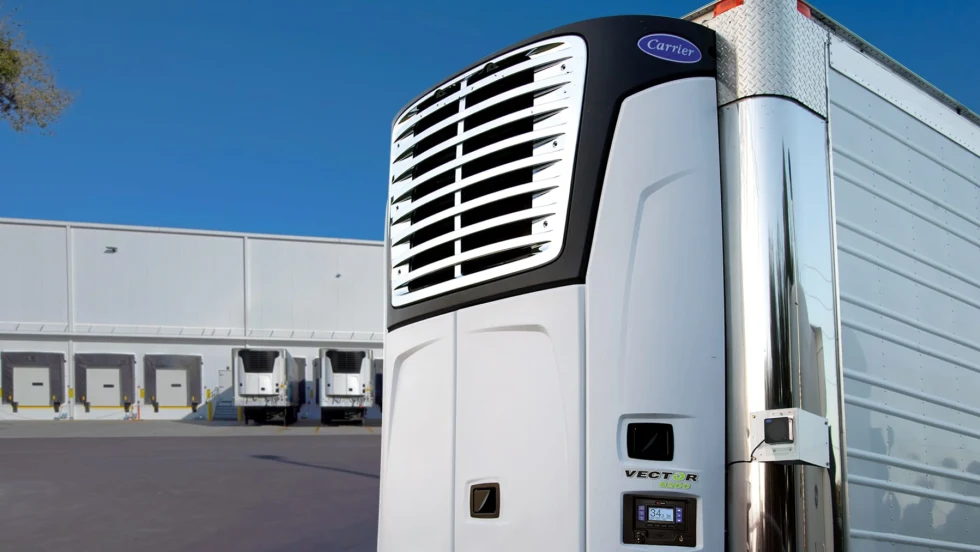
Carrier Transicold Adds All-Electric TRU for Stationary Cold Storage
Carrier Transicold’s new Vector 8200 all-electric transport refrigeration unit gives fleets a diesel-free option for temporary refrigerated and frozen trailer storage.
Read More →
A Closer Look at Kenworth’s Electric T880E Vocational Truck [Video]
Learn more about Kenworth's T880E battery-electric vocational truck at the Paccar Technical Center, including its range, applications, upfitting considerations, and PTO options, in this HDT Spotlight video.
Read More →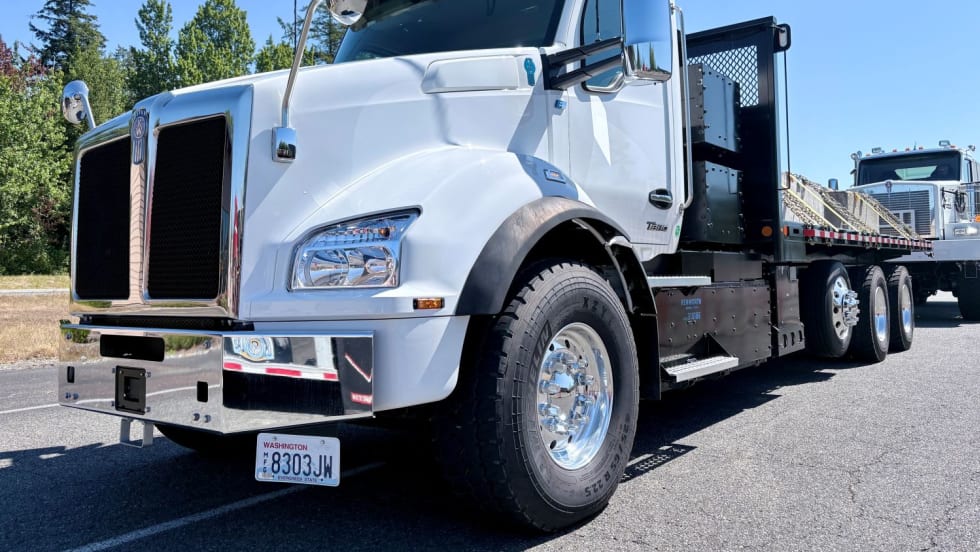
Kenworth T880E Brings EV Power to Vocational Trucks
A closer look at the Kenworth T880E’s range, charging, powertrain and upfit options — and where fleets are showing the most interest.
Read More →
What the U.S.-Canada Trade War Means for Trucking
Escalating U.S.-Canada tariffs could disrupt cross-border freight, reduce truck volumes, raise costs, and create new uncertainty for carriers on both sides of the border.
Read More →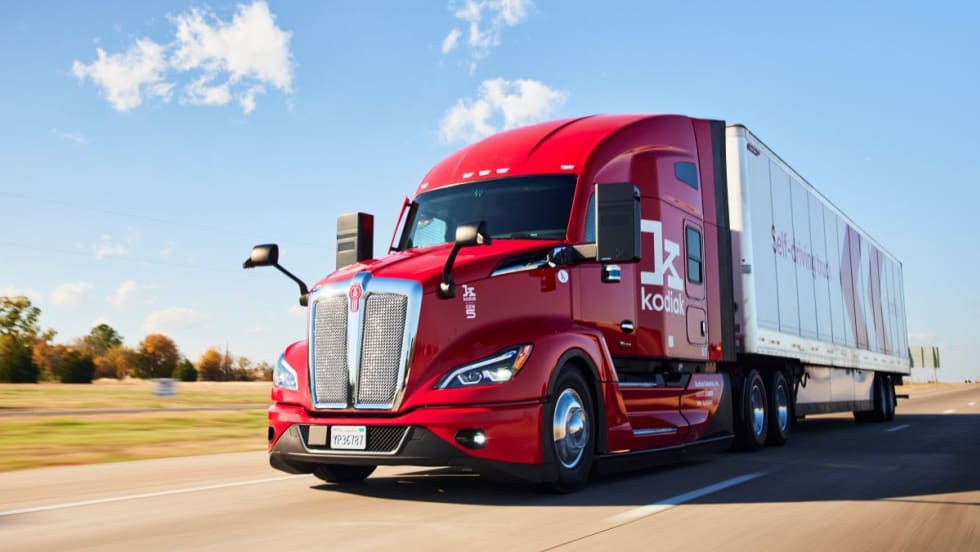
Autonomous Truck Testing Moves Ahead in California as Teamsters Challenge Rules
California has begun permitting heavy-duty autonomous truck testing, with Aurora and Kodiak among the first to receive approval, as the Teamsters sue the DMV over the new regulations.
Read More →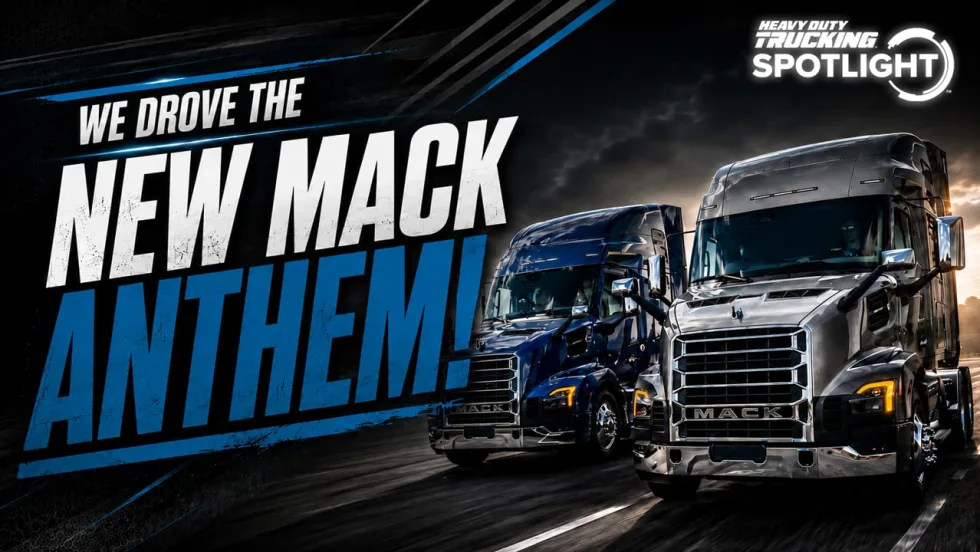
Behind the Wheel of the New Mack Anthem [Video]
HDT takes the new Mack Anthem around Mack’s Pennsylvania test track to see how its driver-focused design, technology, visibility and handling perform from behind the wheel.
Read More →
DTNA Plans New U.S. Truck Plant as Manufacturing Footprint Shifts
Daimler Truck North America is evaluating sites for a new assembly plant expected to open in 2029 while winding down operations at its longtime Portland manufacturing facility.
Read More →