




Canada Rolls Out eManifest
As the November 1 deadline looms for all Canada-bound loads to comply with Canada's eManifest program, the Canada Border Services Agency is urging carriers to get up to speed with the program before the new requirements go into effect
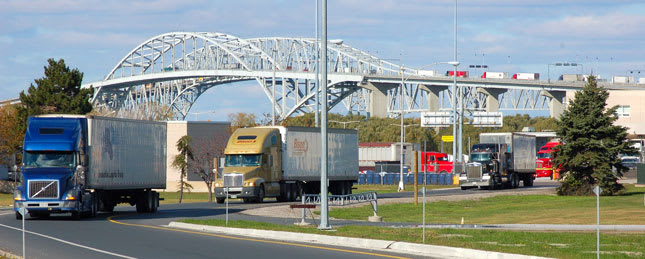
As the November 1 deadline looms for all Canada-bound loads to comply with Canada's eManifest program, the Canada Border Services Agency is urging carriers to get up to speed with the program before the new requirements go into effect.
CBSA says there will be a period of informed compliance in effect until May 2013. During this six-month period, carriers will not be denied entry to Canada or find themselves subject to penalties for reasons associated with eManifest non-compliance. Instead, they will be informed of the requirement to transmit advance highway cargo and conveyance data.
"With the implementation of eManifest, highway carriers transporting goods into Canada are required to transmit cargo and conveyance data electronically to the CBSA prior to arrival," explains Richard Rancourt, CBSA eManifest project officer. "The cargo and conveyance data must be received and validated by CBSA a minimum of one hour before the shipment arrives at the border."
eManifest is the third phase of the Advance Commercial Information program, an electronic data and information management program which has been under development since the 9/11 terrorist attacks on U.S. The goal of the program, according to Rancourt, is to strengthen border security while reducing wait times for trucks hauling low-risk cargo.
The program enables border officials to examine more complete and accurate information about shipments imported to Canada, early in the process while goods are in transit. The new system will to help border services officers process shipments of commercial goods more efficiently and effectively, so that when they arrive at the border, clearance delays are minimized or eliminated, while security protocols are maintained and enhanced.
During the past two years, the CBSA has encouraged early and voluntary use of the ACI eManifest system, and several large fleets, both American and Canadian, have been early adopters of the system. Rancourt reports that the agency has received positive feedback from carriers and truckers who signed up early.
"Many experienced expedited clearance," he said.
With the implementation of eManifest, carriers will be required to have a valid carrier code with up-to-date company information in order to conduct business with CBSA, regardless of how often they cross the Canadian border with commercial goods. Carriers who cross the border on a regular basis will already have this four-character unique identifier, but carriers and independent owner-operators that cross the border once or twice a year should be aware that CBSA no longer accepts the "77YY" temporary carrier code.
CBSA has developed a user-friendly, no-cost ACI eManifest portal primarily for small- to medium-sized enterprises to ease the transition from paper electronic reporting, and there is a growing list of third-party providers standing by to help fleets of all sizes obtain accounts and submit eManifest data.
High-volume carriers are encouraged to explore EDI options to connect directly to CBSA, Rancourt suggests, especially if they have the IT resources within their organization. Fleets considering this method must first apply to become an EDI client, and compatibility testing with CBSA's eManifest Technical Support Unit could take two to three months to complete.
"The agency offers various options for carriers to transmit cargo and conveyance data," says Rancourt, but using either the eManifest portal or an EDI method, and with or without a third-party service provider, is an individual business decision.
For several months, CBSA has targeted its outreach activities to the top 500 carriers that represent approximately 75% of all highway releases. Many large fleets and customs brokers are already filing much of their documentation electronically, but what about the small to mid-sized fleets? Will there be pandemonium at the Canadian border on November 1, as thousands of trucks arrive at the border oblivious to the new requirements?
CBSA thinks not. "We're making every effort to prepare for implementation of the new requirements," says Rancout. "Our goal is to deliver a reliable and predictable system with tangible benefits to the trade community."
With the implementation of eManifest, the CBSA must receive and validate highway carriers' electronic cargo and conveyance data a minimum of one hour before shipments arrive at the border. This checklist will help you prepare for eManifest requirements.
1. Ensure you have a valid CBSA-issued carrier code with your current company contact information
2. Choose a transmission option for pre-arrival reporting:
* The Internet-based eManifest Portal, www.cbsa-asfc.gc.ca/prog/manif/portal-portail-eng.html, primarily for small- to medium-sized businesses; or
* Electronic Data Interchange (EDI) methods. To transmit your eManifest data using an EDI method, you must apply to become an EDI client. A list of EDI software/service providers who have already completed testing of their software/service with the CBSA is available on the CBSA website, www.cbsa.gc.ca.
3. Consult the ACI eManifest Highway Electronic Commerce Client Requirements Document for eManifest Portal or EDI for technical information about submitting, changing, deleting and amending advance highway cargo and conveyance information
Go to the eManifest section of the CBSA website regularly for the most up-to-date information
Subscribe to the CBSA RSS news feed to be notified of important eManifest updates
E-mail and telephone support is available:
For general eManifest information, call the Border Information Service toll-free within Canada: 1-800-461-9999; outside Canada: 1-204-983-3500 or 1-506-636-5064
For e-mail support on eManifest policy and processes, as well as eManifest Portal Shared Secret applications, contact the Help Desk at eManifest-manifestelectronique@cbsa-asfc.gc.ca
For detailed technical support, contact the eManifest Technical Support Unit by e-mail at: TSU.UST@cbsa-asfc.gc.ca or by phone at: 1-888-957-7224 and press 2 (toll-free within Canada and the U.S)
More Equipment

What the U.S.-Canada Trade War Means for Trucking
Escalating U.S.-Canada tariffs could disrupt cross-border freight, reduce truck volumes, raise costs, and create new uncertainty for carriers on both sides of the border.
Read More →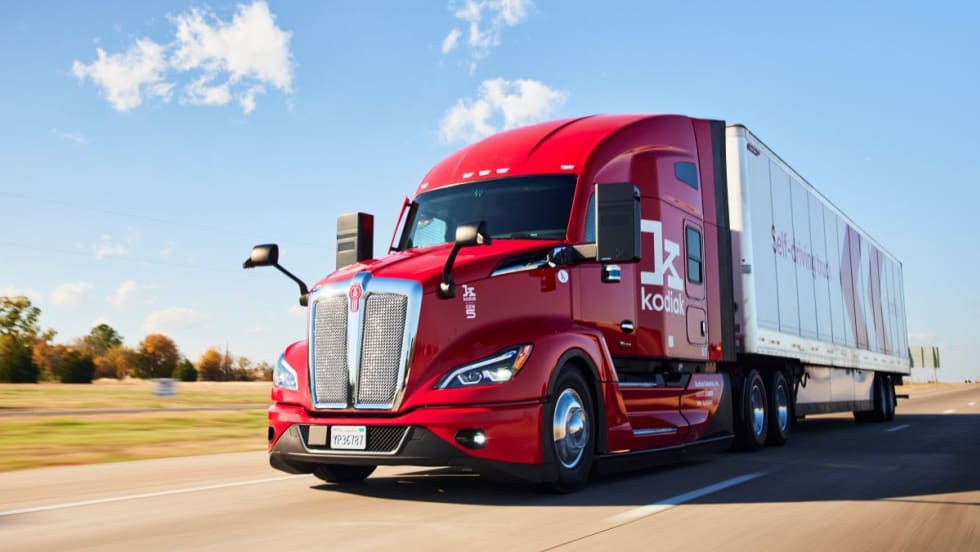
Autonomous Truck Testing Moves Ahead in California as Teamsters Challenge Rules
California has begun permitting heavy-duty autonomous truck testing, with Aurora and Kodiak among the first to receive approval, as the Teamsters sue the DMV over the new regulations.
Read More →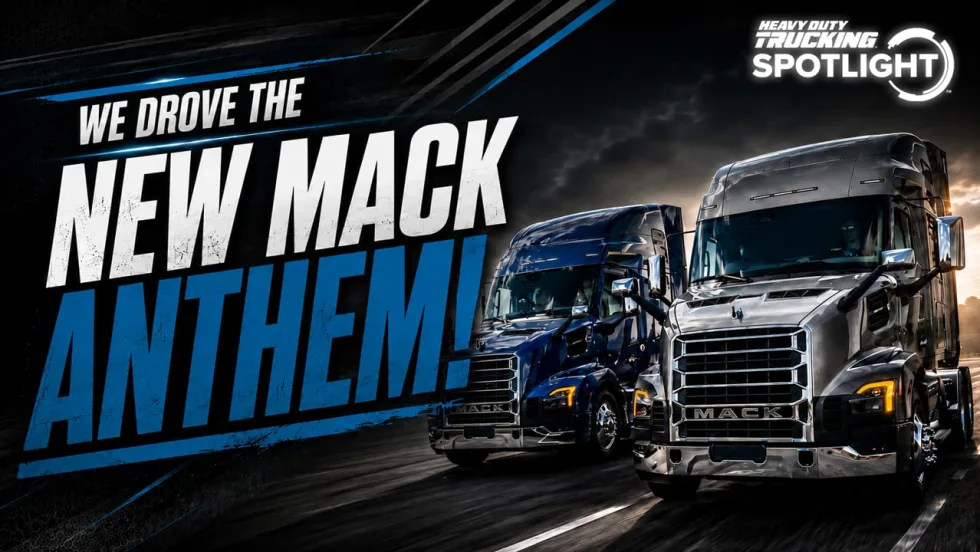
Behind the Wheel of the New Mack Anthem [Video]
HDT takes the new Mack Anthem around Mack’s Pennsylvania test track to see how its driver-focused design, technology, visibility and handling perform from behind the wheel.
Read More →
DTNA Plans New U.S. Truck Plant as Manufacturing Footprint Shifts
Daimler Truck North America is evaluating sites for a new assembly plant expected to open in 2029 while winding down operations at its longtime Portland manufacturing facility.
Read More →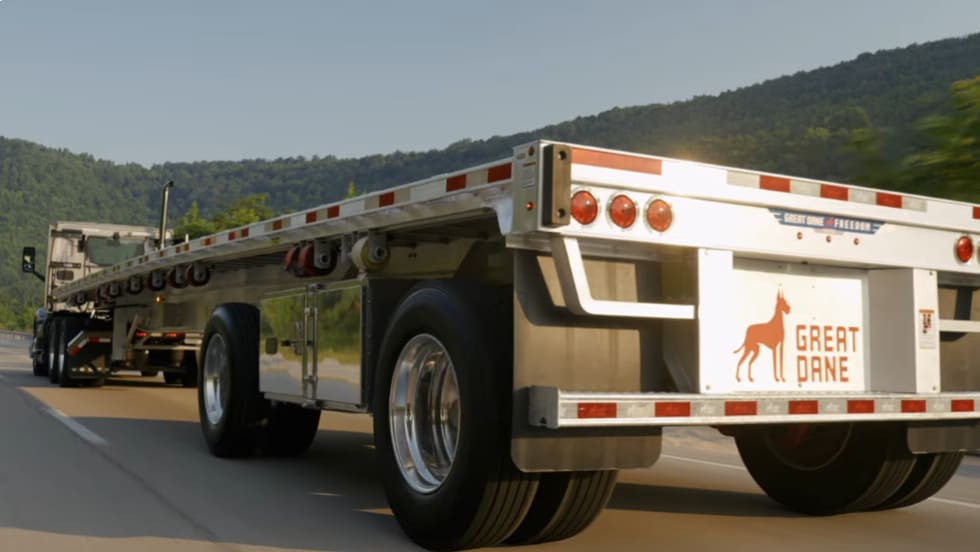
Great Dane Flatbed Trailer Offers Light Weight and Strength
Freedom Ultra is designed for a wide range of open-deck applications, including building materials, lumber, machinery, steel products, industrial freight, and coil hauling.
Read More →
What It's Like Inside this Custom 2025 Peterbilt 589?
Take a driver's-eye tour of this customized 2025 Peterbilt 589 in this video, as longtime driver Ingrid Brown explains its features, compares it to previous models, and shares plenty of personality along the way.
Read More →
Drivers Put Western Star Trucks to the Test at Star Nation Experience
Watch to get an inside look at the Western Star trucks, technology, and community behind the Star Nation Experience 2026!
Read More →
Atlas Expands Kodiak Driverless Truck Fleet in Permian Basin
Atlas Energy Solutions is expanding autonomous frac sand hauling in the Permian Basin with a second load-out location and plans for 100 driverless trucks by mid-2027.
Read More →
Putting Mack’s Command Steer to the Test
A test drive of Mack’s Command Steer active steering system evaluates how it can make truck driving easier and less tiring.
Read More →
Mack, Volvo Expand DEF Derate Software Updates
The updated software gives Mack and Volvo truck owners more time to address DEF-related issues before the engine derates or the vehicle goes into reduced-speed inducement, following new EPA guidance.
Read More →