




Canada Issues Reminder on "Cabotage" Rules
The Canada Border Services Agency has issued a new Customs Notice on the point-to-point movement of domestic freight in Canada by tractor-trailers owned by foreign-based motor carriers, commonly referred to as cabotage
The Canada Border Services Agency has issued a new Customs Notice on the point-to-point movement of domestic freight in Canada by tractor-trailers owned by foreign-based motor carriers, commonly referred to as cabotage.
Both Canada and the United States have nearly identical cabotage rules and only permit such movements in very narrowly defined circumstances. Customs Notice 11-014, available here, was issued on August 25.
The notice does not signal a change in the rules, which have been in place for well over a decade and were the product of joint discussions between the Canadian and U.S. governments and their respective trucking industries. However, the notice is a reminder of what the rules are and perhaps signals that CBSA will be paying closer attention to the activities of foreign carrier operations in Canada.
The Agency has indicated it will conduct post-release compliance verifications and issue sanctions against violators. It has been a long-standing belief by many Canadian carriers that enforcement of the cabotage rules by government agencies has been far more aggressive in the United States than it has been in Canada.
Publication of the notice was welcomed by the Canadian Trucking Alliance.
"The rules are, quite frankly, very complicated, on both sides of the border, so whatever can be done to improve the level of understanding about them is a step in the right direction," said Canadian Trucking Alliance President David Bradley. "It is also extremely important that there be a level playing field for carriers based in both the United States and Canada and that is only achievable if everyone plays by the rules."
However, Bradley was quick to point out that CTA is of the view that there is a need for a joint approach to modernizing the cabotage rules in both countries. Bradley indicated that he hopes that President Obama's focus on increasing U.S. exports, the current round of Canada-U.S. negotiations on a perimeter security agreement, and greater regulatory harmonization might get the ball rolling.
The rules governing trucking cabotage are set out in federal legislation known as the Customs Tariff, under which the domestic movement of goods by foreign trucking equipment is generally forbidden, except when the move is "incidental to the international traffic of the imported or exported goods." Customs Notice 11-014 clarifies the meaning of "incidental" as follows:
* Only one incidental (domestic) move is permitted per international trip.
* The move must follow a route consistent with the international route of the imported or exported goods.
* Domestic goods can be carried as part of a re-positioning move, but only if the vehicle is en route to pick up a scheduled load for export from Canada, and the drop off point of the goods is in a direct line to the pick-up of the export load.
It is also important to understand that the clarification issued by CBSA only covers trucking equipment. Foreign drivers, who fall under the authority of Citizenship and Immigration Canada, are forbidden from making point-to-point domestic moves unless they have a temporary work permit.
More Equipment
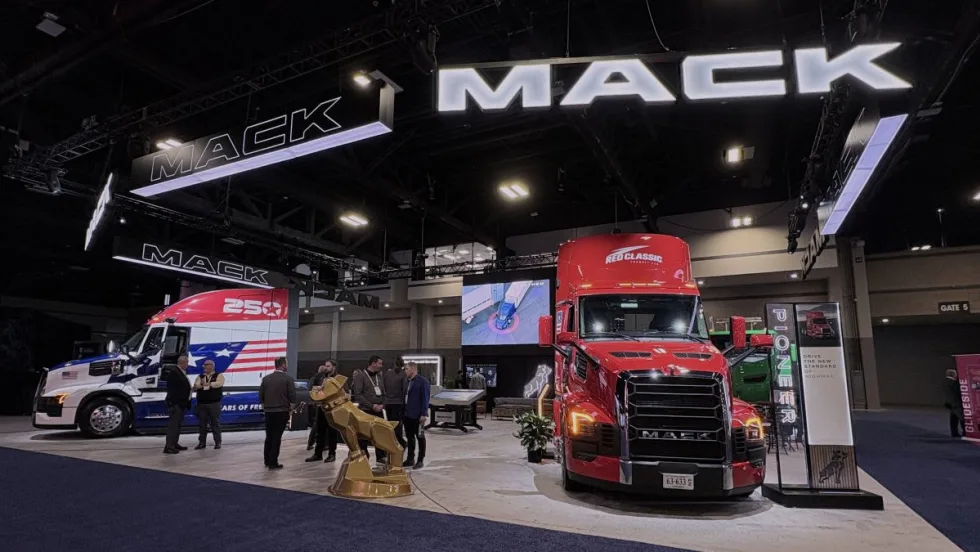
Trucks at ATA's 2026 MC&E in Charlotte, North Carolina [Photos]
From rigs decked out in patriotic America's 250 paint schemes to autonomous trucks and more, check out these photos from ATA's 2026 Management Conference & Exhibition.
Read More →
Help HDT Find Trucking’s Top Products
Have you come across a new product that could make a difference for trucking fleets? Nominate it for HDT’s 2027 Top 20 Products Awards by November 9.
Read More →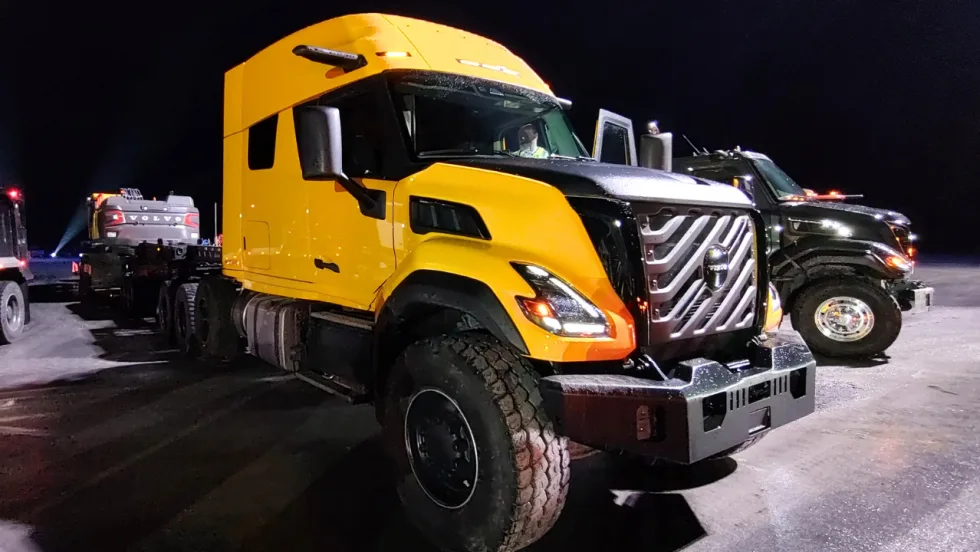
Volvo Unveils New VNX Heavy-Haul and Vocational Truck
Volvo Trucks has launched the VNX, a new vocational truck also available as a tractor in day cab and two sleeper configurations, with one heavy-haul model. The Volvo VNX is powered by Volvo's D13 platform, which delivers up to 540 horsepower and 1,950 pound-feet of torque and is EPA 2027-compliant.
Read More →
How GP Transco Cuts Trucking Fuel Costs, a Tenth of a Gallon at a Time
What’s another tenth of a mile per gallon worth? GP Transco shares how equipment upgrades and driver coaching turn small gains into meaningful fuel savings.
Read More →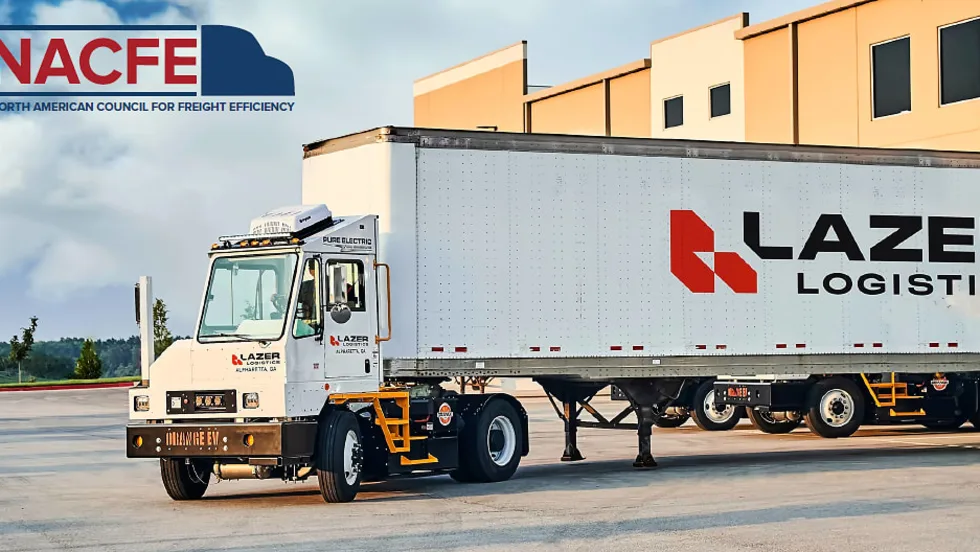
Electric Yard Tractors Move Beyond Pilots
Operating-cost savings have overtaken sustainability goals as the leading reason surveyed fleets are adopting battery-electric terminal tractors, according to new NACFE research.
Read More →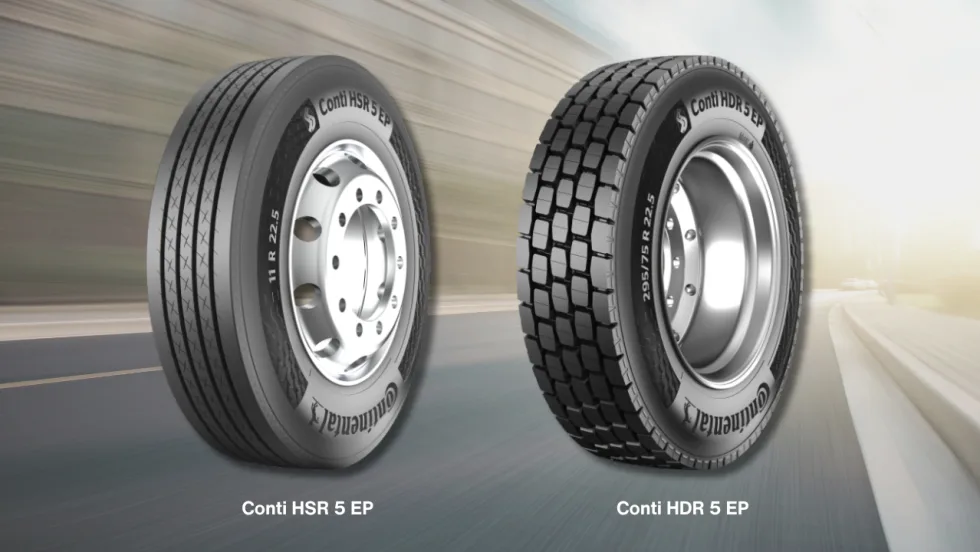
Continental Introduces New Regional Truck Tires
Continental says its new Generation 5 steer and drive tires for regional operations offer longer tread life, with estimated mileage gains of 22% and 19%, respectively.
Read More →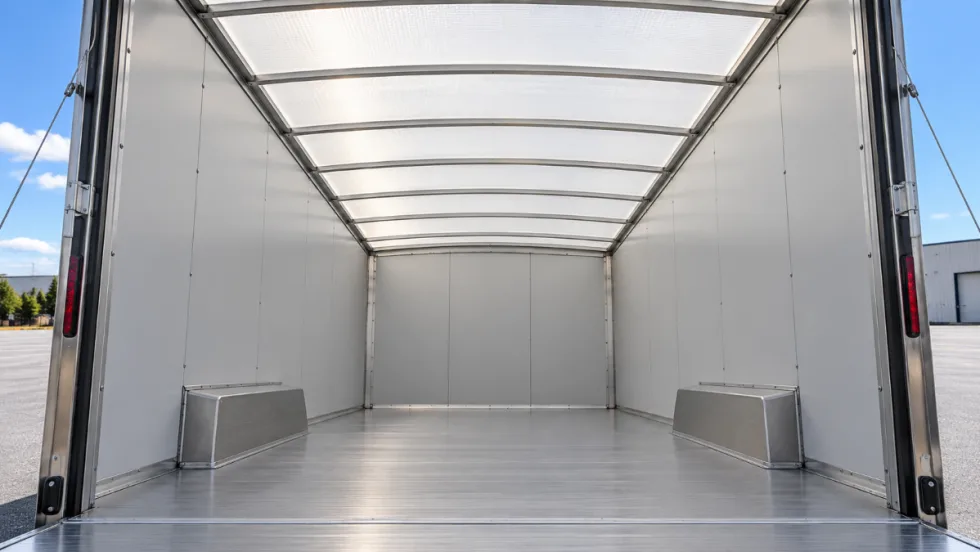
Tekmodo Introduces CargoBright Brand for Translucent Trailer Roofs
CargoBright is designed to diffuse daylight across the cargo area while performing as a working vehicle roof.
Read More →
Fleet Economics Shape Electric Truck Outlook
ACT Research expects costs, charging infrastructure, and technology improvements to drive zero-emission commercial vehicle adoption as federal regulations and incentives retreat.
Read More →
Kodiak Targets Dallas–Houston for Driverless Trucks
The company says its autonomous trucks are completing the I-45 run without a safety observer taking control. It plans to remove the observer by the end of 2026.
Read More →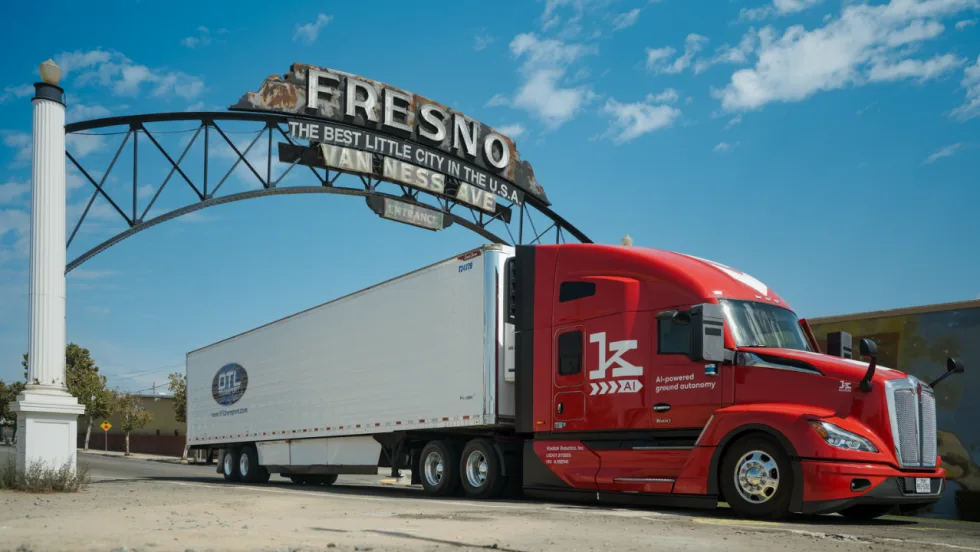
Kodiak Hauls Produce in California Autonomous Truck Pilot
Kodiak AI and DTL Transport have begun hauling produce between Fresno and Los Angeles under California’s new rules for testing heavy-duty autonomous trucks. A safety driver remains behind the wheel.
Read More →