




California Governor Takes Steps to Address Port Backlogs
What can be done about the supply-chain crisis and the backlogs at West Coast ports? As California’s governor follows President Biden’s example in taking action to try to address the issue, no one can agree on how to fix it.

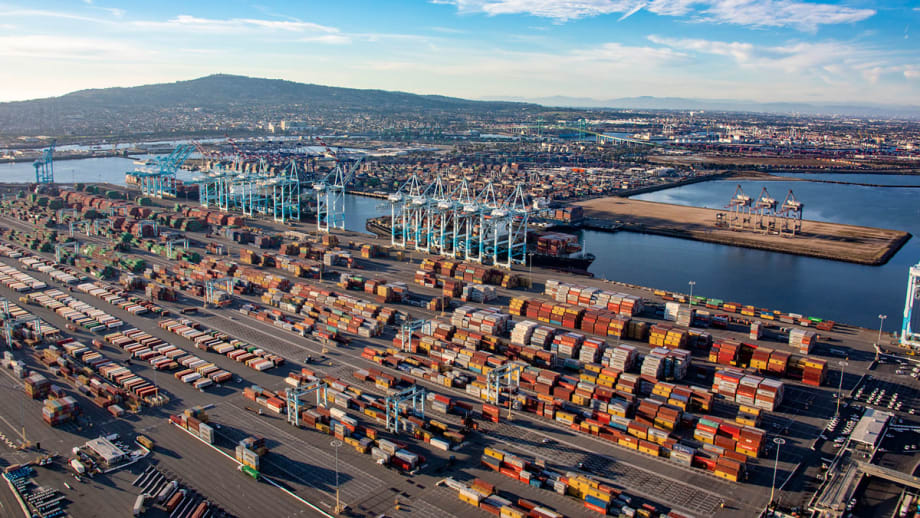
Southern California trucking groups say the situation at the ports is caused by long-term problems, not only by the current crush of imports to meet soaring consumer demand.
Photo: File photo, Port of Los Angeles
What can be done about the supply-chain crisis and the backlogs at West Coast ports? As California’s governor follows President Biden’s example in taking action to try to address the issue, no one can agree on how to fix it.
The Ports of Los Angeles and Long Beach are so crowded that record numbers of container ships remain stuck at sea, leading to warnings of disappointing Christmas season with goods stuck in containers, either at sea or in warehouses or in the piles of containers on the docks.
There are so many containers backed up and warehouses are so full that local residents aren’t happy as trucks and cargo containers are finding their way onto nearby residential streets, according to media reports. Residents complain they can’t get in and out of their driveways, and one container recently came loose as the truck turned a corner and crushed a car.
On Oct. 13, President Biden announced measures to keep the ports open 24 hours a day, but many have said that barely scratches the surface of the problem.
CNN reports that although the Port of Los Angeles is ready to operate around the clock, the privately owned terminals are still not open from 3 a.m. to 8 a.m. because there are no businesses that want to pick up their containers during those hours.
State Efforts
On Oct. 20, California Gov. Gavin Newsom issued an executive order trying to address the issues. It directs state agencies to identify state-owned properties and other locations that could be available to address short-term storage needs once goods are unloaded from ships. And it orders the state Department of Transportation, in partnership with the California State
Transportation Agency, to identify priority freight routes to be considered for a temporary exemption to current gross vehicle limits to allow for trucks to carry additional goods.
Longer term, the executive order also moves to address educational programs and training for port workers and others in the supply chain.
The order directs California’s Labor and Workforce Development Agency to use “existing resources to identify potential high road training partnerships to increase education, career technical education, job training, and workforce development opportunities for port workers and other workers across the supply chain.”
And it directs the Department of Finance to work with state agencies to develop longer-term solutions that support port operations and goods movement for consideration in the Jan. 10 Governor’s Budget, which may include port and transportation infrastructure improvements, electrification of the goods movement system from port to delivery, and workforce development.
The California Trucking Association commended the Newsom administration for focusing on freeing up state land to store empty containers and encouraging the equipment providers and local governments to work with the governor to get empty containers off of chassis.
“There is much more work to be done to address the effects of this global crisis,” said Shawn Yadon, the association’s chief executive, “including mitigating the enormous costs congestion has placed on truckers and California importers and exporters, adding regulatory flexibility to account for manufacturing and parts shortages, and the disastrous impact enforcing AB5 would have if CTA’s petition to the U.S. Supreme Court is denied right before Christmas.”
(AB5 is a new law that would make it largely impossible to use the traditional trucking owner-operator model in the state.)
In an interview with Fox Business, Yadon talked about the driver shortage, a continuing problem that has only gotten worse during the pandemic.
He stressed that that the solution to the supply chain crisis "has to be from every stakeholder" in the chain, which includes the trucks, ships, port terminal operators, the labor at docks, warehouses and distribution centers, and said regulatory relief is needed.
"I think we are in a situation in California where a state of emergency related to the ports is certainly something that should be considered," he argued, noting that CTA "joined with well over a dozen other business organizations and associations in California seeking that type of regulatory relief."
Health, climate, equity and labor groups “are appalled that industry would ask to delay or pause regulations that protect workers and frontline communities,” according to an email sent to HDT on behalf of groups such as the American Lung Association in California and the People’s Collective for Environmental Justice. “Low wages, COVID outbreaks at distribution centers, demand and supply trends linked to the pandemic are to blame for chaos at the ports, not policies that protect workers and health. This tactic is no different than when industry tried to delay the development of the Advanced Clean Truck standard due to the pandemic even though it wouldn't go into effect for years.”
What More Can Biden Do?
The latest announcement from the White House is the most recent in a string of efforts to address supply chain issue. Shortly after he took office, he ordered a 100-day review looking into ways to strengthen critical supply chains.
In August, Biden named a “port czar” (officially ports envoy), former DOT Deputy Secretary John Porcari, to the Biden-Harris Administration Supply Chain Disruptions Task Force that was established in June. Transportation Secretary Pete Buttigieg leads the Task Force focus on ports and trucking issues.
According to published reports, the White House has even considered using the National Guard to help unload cargo or drive trucks, a suggestion from Consumer Brands Association CEO Geoff Freeman. While reports say it’s unlikely, the Biden Administration’s willingness to even consider it is a sign of the seriousness of the problem.
How Long Will it Last?
The crush of goods coming into the port is due to pent-up demand following the pandemic, and no matter what measures are put into place, most believe the supply-chain challenges will last well into 2022.
Gene Seroka, executive director of the Port of Los Angeles, told CNN that it won’t slow down until at least February. “We've been buying more than ever as American consumers and the retailers have really tried their best to keep up with demand,” he said. “The second quarter of next year is going to be focused on replenishing this inventory.”
Because of that, Seroka expects the expanded schedule will have to continue into next summer, not just for the 90-day period announced by Biden at the White House supply chain summit, CNN reports.
More Fleet Management

Color Match Smarter: Tools That Restore & Perform
For fleet managers and collision repair professionals keeping heavy-duty trucks on the road, getting the color right the first time isn't just about appearance — it's about efficiency, turnaround time, and bottom-line results. Discover how today's digital color tools are transforming the repair process from guesswork to precision.
Read More →
FMCSA Pauses Biennial-Update Enforcement Amid Motus Transition
Carriers whose updates were due on or after June 1 have more time, while FMCSA works to stabilize its new registration system and warns of phishing sites impersonating its new carrier registration system, Motus.
Read More →
2026 Blueprint for Countering Smarter Supply Chain Theft
Cargo theft is no longer just the cost of doing business. It's a multi-billion-dollar criminal enterprise exploiting vulnerabilities across your fleet, drivers, and supply chain.
Read More →


How Telematics Improves Visibility, Control, and Performance in Refrigerated Fleets
Explore how telematics help refrigerated fleets improve visibility, uptime, efficiency, compliance, and cargo protection across connected cold chain operations.
Read More →
What the U.S.-Canada Trade War Means for Trucking
Escalating U.S.-Canada tariffs could disrupt cross-border freight, reduce truck volumes, raise costs, and create new uncertainty for carriers on both sides of the border.
Read More →
What Are Trucking’s Top Concerns for 2026?
The American Transportation Research Institute wants to know what's worrying trucking fleet managers, drivers, and other stakeholders in its annual Industry Issues survey.
Read More →
American Trucking Associations Looks for a New Leader
ATA President and CEO Chris Spear abruptly left his job at the association on August 21, at a pivotal time for the trucking industry.
Read More →
Public Wi-Fi Cybersecurity Risks: How Truck Drivers and Fleets Can Protect Their Data
Public Wi-Fi can expose truck drivers and fleets to credential theft, malware, and other cyber threats. Here’s how to reduce the risk on the road.
Read More →
For Nicky Cupp, Fleet Innovation Starts With Frustration
HDT Truck Fleet Innovator Nicky Cupp turns everyday pain points at Fraley & Schilling into opportunities for better technology and smarter processes.
Read More →
Adam Buttgenbach’s Approach to Electric Trucks: Start With Where They Fit
HDT Truck Fleet Innovator Adam Buttgenbach helped PepsiCo build one of North America’s largest EV fleets by focusing on where electric trucks make operational sense.
Read More →