




Brake Safety Week Set for August
Commercial Vehicle Safety Alliance’s Brake Safety Week from Aug. 21-27 will focus on capturing data on brake hose/tubing chafing violations.

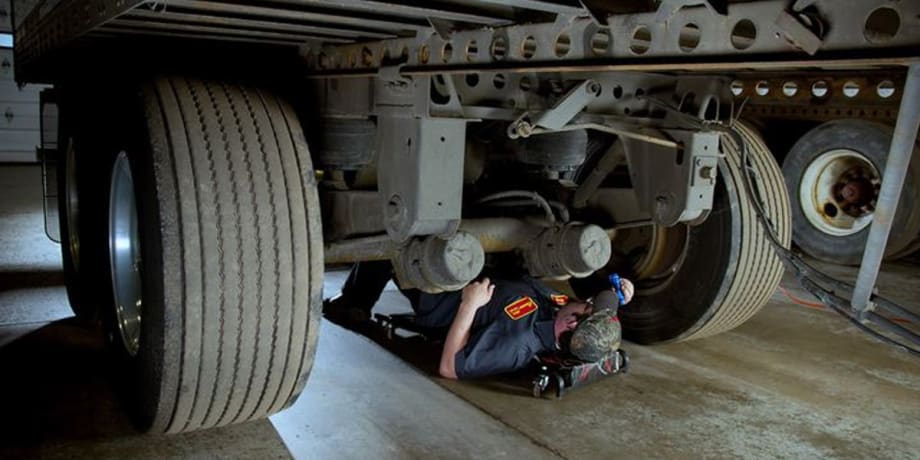
Commercial Vehicle Safety Alliance’s Brake Safety Week from Aug. 21-27 will focus on capturing data on brake hose/tubing chafing violations.
Photo: Saf-Holland
Commercial Vehicle Safety Alliance’s Brake Safety Week, an annual commercial motor vehicle brake-safety inspection, enforcement and education initiative, will run from Aug. 21 to Aug. 27.
During Brake Safety Week, inspectors will conduct their usual North American Standard Level I and V Inspections and capture and report brake-related data to CVSA. The results will be released in the fall.
Brake-related violations comprise the largest percentage of all out-of-service vehicle violations cited during roadside inspections, and according to last year’s three-day International Roadcheck data, brake systems and brake adjustment violations accounted for 38.9% of all vehicle out-of-service violations, the most of any category of vehicle violations.
To address this, CVSA’s Brake Safety Week seeks to:
Identify and remove commercial motor vehicles with critical vehicle inspection violation items identified in the North American Standard Out-of-Service Criteria from roadways.
Conduct inspections and identify and acknowledge commercial motor vehicles that do not have critical vehicle inspection violations by affixing those vehicles with a CVSA decal.
Encourage proactive vehicle maintenance in advance of the week.
Highlight the hard work and commitment to safety by inspectors, drivers and motor carriers.
Remind drivers and motor carriers about the importance of proper brake maintenance and vehicle pre-trip and post-trip inspections.
Provide an opportunity for outreach and educational brake-safety efforts by inspectors.
During the brake portion of a vehicle inspection, inspectors will look for missing, non-functioning, loose, contaminated or cracked parts on the brake system, and non-manufactured holes (such as rust holes and holes created by rubbing or friction) and broken springs in the spring brake housing section of the parking brake. They will listen for audible air leaks around brake components and lines, and ensure the air system maintains air pressure between 90-100 psi (620-690 kPa).
Inspectors will also check for S-cam flip-over and measure pushrod travel. They will check that slack adjusters are the same length (from center of S-cam to center of clevis pin) and the air chambers on each axle are the same size. They will also inspect required brake-system warning devices, such as ABS malfunction lamp(s) and low air-pressure warning devices. In addition, inspectors will ensure the breakaway system is operable on the trailer, and inspect the tractor protection system, including the bleed-back system on the trailer.
In addition to reporting total inspections and brake-related out-of-service violations, inspectors will also capture and provide data on brake hose/tubing chafing violations – the focus area for this year's Brake Safety Week.
“Poorly maintained brake systems can reduce the braking capacity and stopping distance of large trucks and motorcoaches, which poses a serious risk to driver and public safety,” said CVSA President John Broers, who is captain with the South Dakota Highway Patrol. “In those split-second emergency situations, the proper functionality of the brake systems on large commercial motor vehicles is crucial.”
More Maintenance

Color Match Smarter: Tools That Restore & Perform
For fleet managers and collision repair professionals keeping heavy-duty trucks on the road, getting the color right the first time isn't just about appearance — it's about efficiency, turnaround time, and bottom-line results. Discover how today's digital color tools are transforming the repair process from guesswork to precision.
Read More →
Wrong Repair Prompts Recall of Freightliner, Western Star 4x2 Trucks
DTNA is recalling more than 2,400 trucks that received an incompatible software fix instead of the hardware repair required to address brake valve corrosion.
Read More →
Truck Drivers Need More Than Another Alert
Fleets have more visibility into truck health, safety events, and driver activity than ever. The next challenge is turning all that information into useful guidance for the person who has to decide what to do next.
Read More →
The Maintenance Checks Trucking Fleets Should Prioritize Before Fall Freight Picks Up
Making it through August isn’t the same as being ready for the next several months of operation. Find out what systems may have suffered from summer heat and need to be checked out before fall.
Read More →
What Three Fleets Are Doing Differently When Buying Truck Parts in 2026
With freight improving but costs still climbing, fleet maintenance executives explain how they're balancing price, quality, and supplier relationships.
Read More →
Paccar Recalls 2027 Trucks Built This Summer for Possible Electrical Problem
The nearly 6,000 Kenworth and Peterbilt trucks in the recall could potentially lose engine power, among other things.
Read More →
Will API PC-12 Oil Change Trucking Fleet Maintenance?
The new API PC-12 heavy-duty engine oil category reflects the changing demands of modern diesel engines. But fleets like Foodliner are looking to getting their own data before making decisions on adopting the new oils and questions such as extending oil drain intervals.
Read More →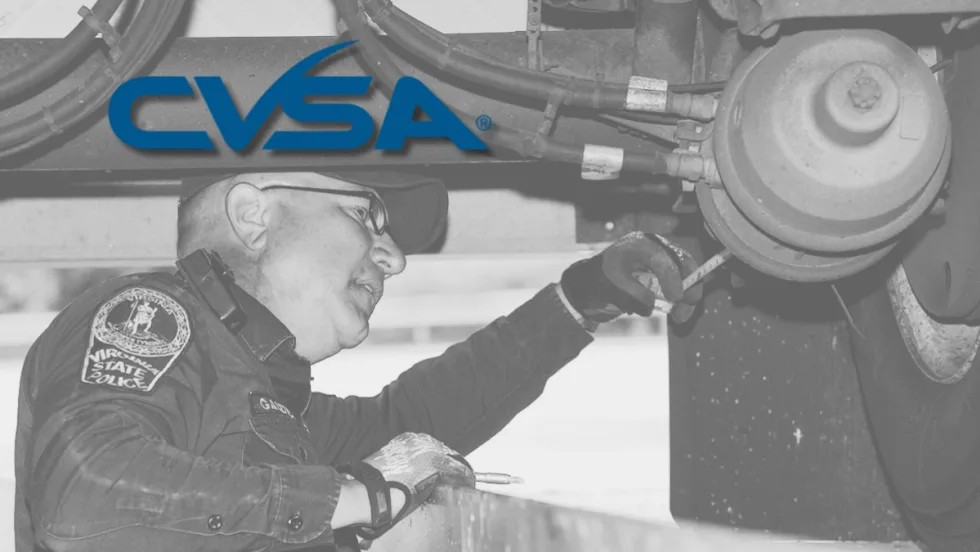
Brake Safety Week to Focus on Drums and Rotors
Commercial vehicle inspectors are focusing on truck brakes during CVSA's Brake Safety Week, August 23-29.
Read More →Possible Battery-Cable Fires Prompt Recall of 15,000+ International MV and HV Trucks
On the recalled vehicles, manufacturing variations can cause the battery interconnect cable to contact the auxiliary stud and hold down the bracket.
Read More →
Rush, MCT Team Up to Grow Refrigeration Service Network
The joint venture will operate MCT's network of Carrier Transicold dealerships and mobile service locations, with the companies promising greater service capacity and uptime for refrigerated fleets.
Read More →