




Brake Safety Week: Most Trucks Had No OOS Violations
Of the 38,117 inspections of commercial motor vehicles during the Commercial Vehicle Safety Alliance’s Brake Safety Week, 13% were placed out of service for brake-related violations.

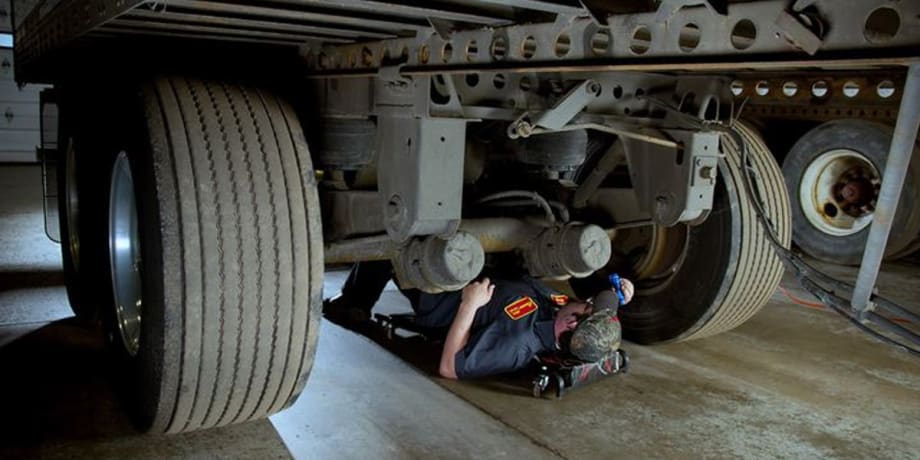
Nearly 87% of the commercial motor vehicles inspected throughout North America during Brake Safety Week 2022 did not have a brake-related critical violation.
Photo: Saf-Holland
During Commercial Vehicle Safety Alliance’s Brake Safety Week between Aug. 21 and Aug. 27, North American inspectors conducted 38,117 inspections of commercial motor vehicles and 4,664 (13%) were placed out of service for brake-related violations.
That also means that nearly 87% of the commercial motor vehicles inspected throughout North America during the voluntary brake-safety inspection and enforcement initiative did not have brake-related critical vehicle inspection item violations.
Brake Safety Week 2022 Results
- Inspectors identified and documented 6,305 brake hose/tube chafing violations, which are a common brake-related violation and was the focus area for this year’s Brake Safety Week. Inspectors reported brake hose chafing violations in four different categories, with varying levels of chafing severity, including two which were out-of-service violations.
- Eleven jurisdictions with performance-based brake testers assessed the braking performance of 392 commercial motor vehicles during Brake Safety Week.
- 29 commercial motor vehicles failed their PBBT test – a 7% out-of-service rate. PBBTs, based on mechanical or electronic decelerometers, assess the overall vehicle braking capability through a stopping performance test in which deceleration and/or stopping distance is obtained, independent of brake type or application method.
During Brake Safety Week, inspectors primarily conducted the North American Standard Level I or Level V Inspection. Both inspection levels include thorough examination of brake systems and components. Inspectors will look for missing, non-functioning, loose, cracked or broken parts, such as spider castings, return springs, brake drums or rotors, brake shoes, linings or pads and slack adjusters. They also inspect for contaminated linings or pads, non-manufactured holes in spring brake housings, S-cam flip-over, and audible air leaks. They check for mismatched brake chambers on an axle, security of air reservoirs, condition of hoses and lines, air pressure in the system, the breakaway device, tractor protection system, pushrod travel and brake-system warning devices.
Vehicles that did not have any vehicle and driver out-of-service violations during a Level I or Level V Inspection may have received a CVSA decal, which is a visual indicator (valid for three months) to inspectors that the vehicle was recently inspected and had no critical vehicle inspection item violations.
Brake Safety Week is part of CVSA’s Operation Airbrake program, in partnership with the U.S. Federal Motor Carrier Safety Administration, the Canadian Council of Motor Transport Administrators, and Mexico’s Ministry of Communications and Transportation. Operation Airbrake is a program dedicated to improving commercial motor vehicle brake safety throughout North America.
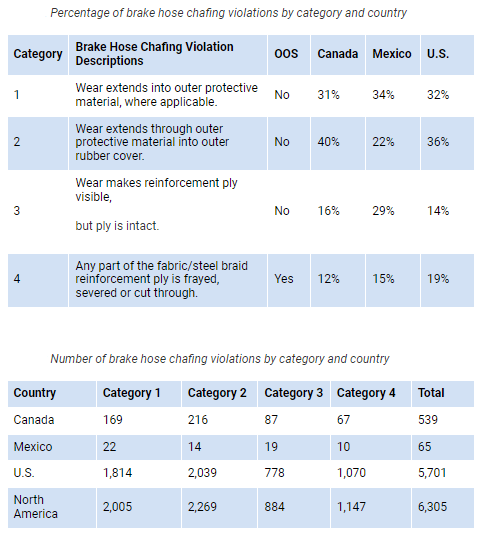
Inspectors identified and documented 6,305 brake hose/tube chafing violations.
Chart: CVSA
More Equipment
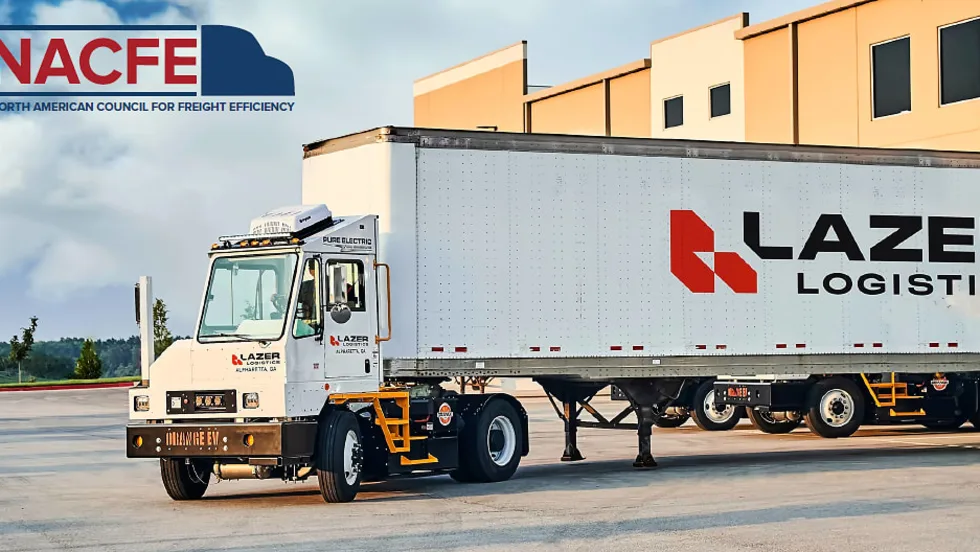
Electric Yard Tractors Move Beyond Pilots
Operating-cost savings have overtaken sustainability goals as the leading reason surveyed fleets are adopting battery-electric terminal tractors, according to new NACFE research.
Read More →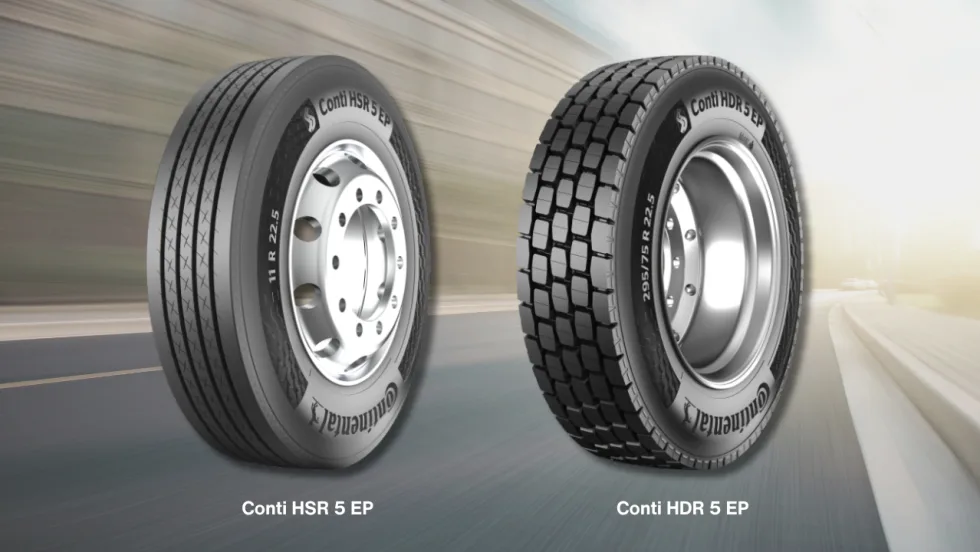
Continental Introduces New Regional Truck Tires
Continental says its new Generation 5 steer and drive tires for regional operations offer longer tread life, with estimated mileage gains of 22% and 19%, respectively.
Read More →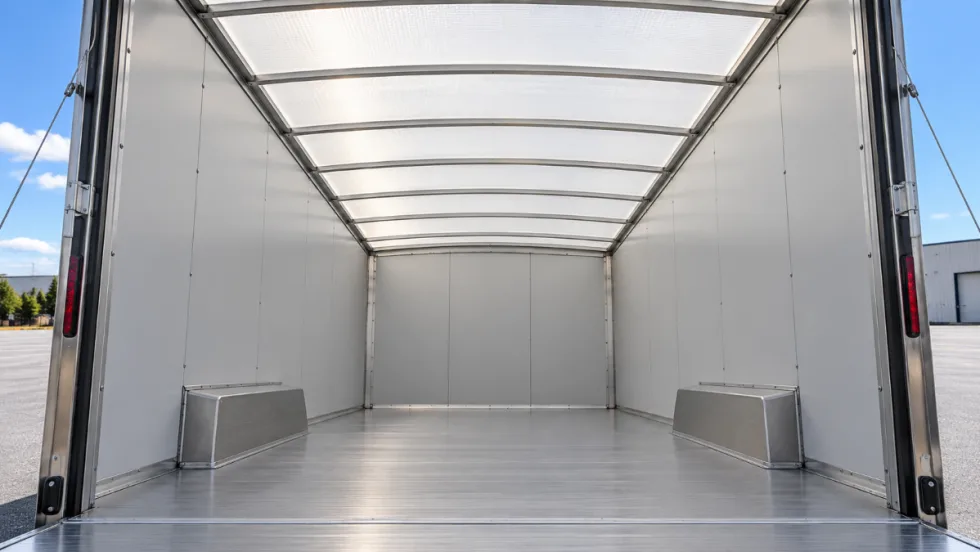
Tekmodo Introduces CargoBright Brand for Translucent Trailer Roofs
CargoBright is designed to diffuse daylight across the cargo area while performing as a working vehicle roof.
Read More →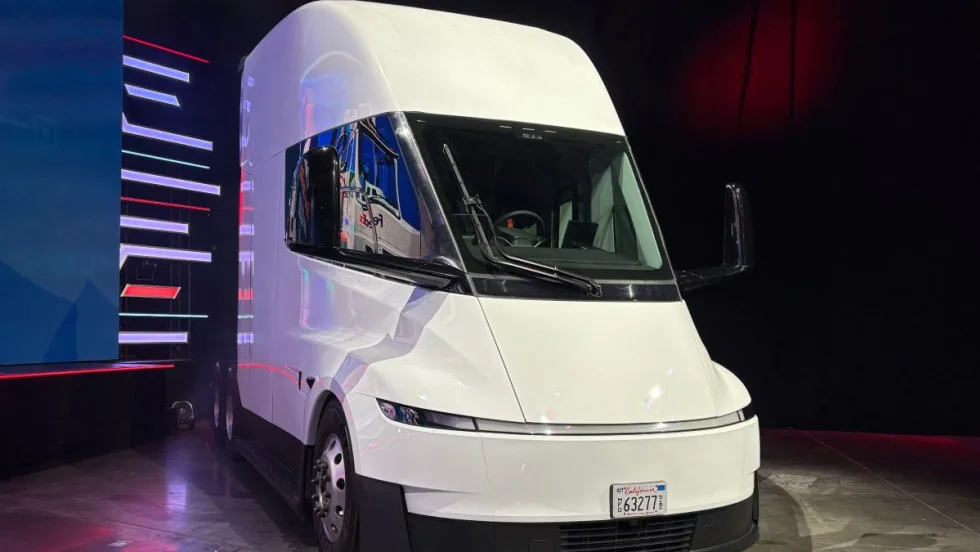
Fleet Economics Shape Electric Truck Outlook
ACT Research expects costs, charging infrastructure, and technology improvements to drive zero-emission commercial vehicle adoption as federal regulations and incentives retreat.
Read More →
Kodiak Targets Dallas–Houston for Driverless Trucks
The company says its autonomous trucks are completing the I-45 run without a safety observer taking control. It plans to remove the observer by the end of 2026.
Read More →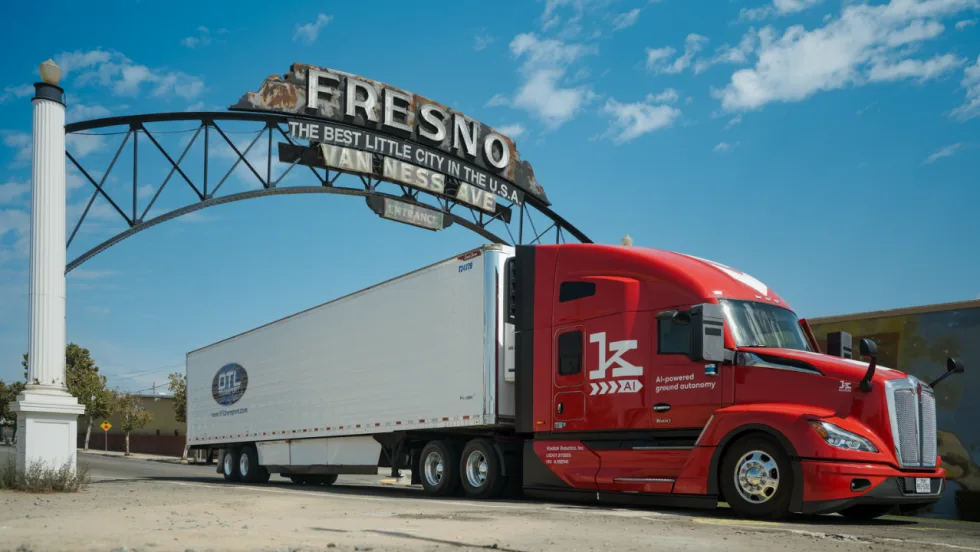
Kodiak Hauls Produce in California Autonomous Truck Pilot
Kodiak AI and DTL Transport have begun hauling produce between Fresno and Los Angeles under California’s new rules for testing heavy-duty autonomous trucks. A safety driver remains behind the wheel.
Read More →
Used-Truck Remarketing Math Is Changing
Used-truck value is no longer just a concern at trade-in. Decisions made throughout a truck’s first life can influence what it’s worth years later.
Read More →
How Volvo Updated Its D13 for EPA 2027 [Watch]
Volvo’s updated D13 promises lower emissions without sacrificing performance or fuel economy. Take a closer look at what changed inside the engine in this HDT Spotlight video.
Read More →
Michelin Tire Improves Efficiency and Durability for Regional Fleets
The Michelin X Multi Energy D2 is a regional haul drive tire engineered to help fleets improve fuel efficiency, durability and traction in demanding stop-and-go operations.
Read More →
ZF Expands Commercial Vehicle Push in North America
ZF is expanding its North American commercial-vehicle presence with new transmission applications, electrification, trailer technology and autonomous-driving systems.
Read More →