





Autonomous Trucks Could Reshape How We Think About Insurance
Bot Auto Insurance Model Making Autonomous Truck Risk Measurable, Not Theoretical
Autonomous freight company Bot Auto announced it has obtained a comprehensive insurance program that could be a key step toward making driverless freight commercially viable.
November 12, 2025
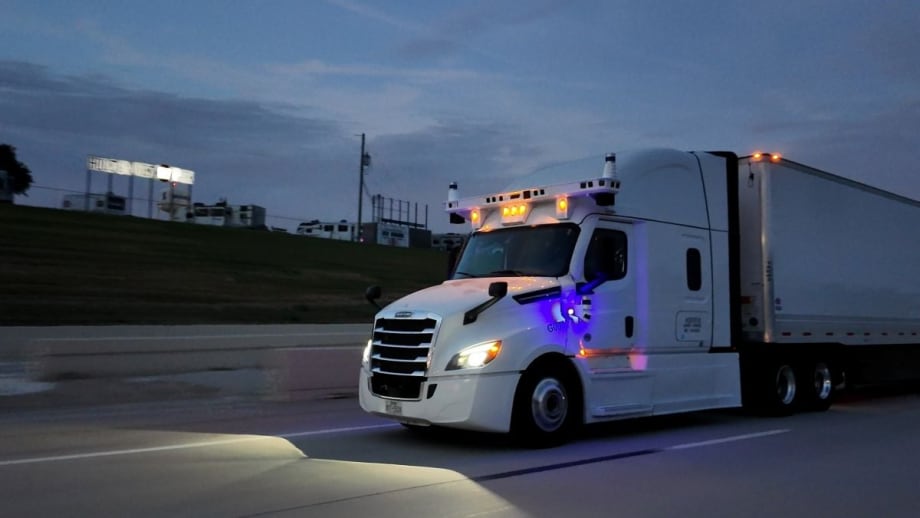
With insurance in place across its fleet, Bot Auto operates daily commercial loads between Houston and San Antonio, with additional lane expansions planned.
Photo: Bot Auto
2 min to read
Autonomous freight company Bot Auto announced it has obtained a comprehensive insurance program that could be a key step toward making driverless freight commercially viable.
The announcement comes on top of the company hitting its “Breaking 2” milestone: fully humanless operations at $1.89 per mile, beating the $2.26 human-driven baseline (ATRI).
It's the first tangible proof that autonomy can outcompete on cost, redefining how progress in driverless freight is measured and how quickly it scales commercially, according to the company.
Bot Auto is using a transportation-as-a-service model for autonomous trucks. By combining advanced autonomy with vertically integrated logistics operations, Bot Auto provides safe, efficient, and cost-effective freight movement across high-density corridors, according to a news release.
Why Insurance Program Will Help Scale Autonomous Trucks
The placement of a comprehensive insurance program supports the safe scaling and deployment of its autonomous truck fleet.
The insurance provides Bot Auto with auto liability, property, general liability, cargo, and inland marine protection, complemented by a separate cyber policy. It is underwritten by an A-rated carrier and placed by Marsh, a global leader in insurance brokering and risk management.
Bot Auto has completed driverless runs on public roads in Houston. Now with insurance in place across its fleet, the company said, it operates daily commercial loads between Houston and San Antonio, with additional lane expansions planned.
Insurance, Risk, and Autonomous Trucks
The news comes as questions around liability and fault continue to shape the conversation around AV adoption.
Unlike limited pilot coverage seen across much of the industry, this program creates a repeatable model for evaluating and underwriting autonomy through real-time, data-driven risk assessment, according to a Bot Auto news release — a key step toward making driverless freight commercially viable.
As the trucking industry faces increasing legal, financial, and reputational exposure — including the risk of nuclear verdicts — Bot Auto's autonomy-native operations present a fundamentally different risk profile, according to the company.
Its real-time data architecture, consistent vehicle behavior, and traceability create a transparent operating environment where questions that once relied on courtroom debate can now be definitively answered through data.
Risk is no longer just underwritten; it's measurable, traceable, and actively managed.
"Safety isn't a feature we layer in, it's the foundation of how we operate," said Brian Moore, Chief Policy Officer at Bot Auto, in a news release.
"Our autonomous trucks are engineered to behave predictably, operate within strict parameters, and log everything. That allows us to respond faster, explain outcomes clearly, and continuously improve our systems. It's a level of operational clarity that every customer and partner deserves."
More Fleet Management

Sponsored•September 16, 2026
Color Match Smarter: Tools That Restore & Perform
For fleet managers and collision repair professionals keeping heavy-duty trucks on the road, getting the color right the first time isn't just about appearance — it's about efficiency, turnaround time, and bottom-line results. Discover how today's digital color tools are transforming the repair process from guesswork to precision.
Read More →
FMCSA Pauses Biennial-Update Enforcement Amid Motus Transition
Carriers whose updates were due on or after June 1 have more time, while FMCSA works to stabilize its new registration system and warns of phishing sites impersonating its new carrier registration system, Motus.
Read More →
Sponsored•September 14, 2026
2026 Blueprint for Countering Smarter Supply Chain Theft
Cargo theft is no longer just the cost of doing business. It's a multi-billion-dollar criminal enterprise exploiting vulnerabilities across your fleet, drivers, and supply chain.
Read More →


Sponsored•September 1, 2026
How Telematics Improves Visibility, Control, and Performance in Refrigerated Fleets
Explore how telematics help refrigerated fleets improve visibility, uptime, efficiency, compliance, and cargo protection across connected cold chain operations.
Read More →
What the U.S.-Canada Trade War Means for Trucking
Escalating U.S.-Canada tariffs could disrupt cross-border freight, reduce truck volumes, raise costs, and create new uncertainty for carriers on both sides of the border.
Read More →
What Are Trucking’s Top Concerns for 2026?
The American Transportation Research Institute wants to know what's worrying trucking fleet managers, drivers, and other stakeholders in its annual Industry Issues survey.
Read More →
American Trucking Associations Looks for a New Leader
ATA President and CEO Chris Spear abruptly left his job at the association on August 21, at a pivotal time for the trucking industry.
Read More →
Public Wi-Fi Cybersecurity Risks: How Truck Drivers and Fleets Can Protect Their Data
Public Wi-Fi can expose truck drivers and fleets to credential theft, malware, and other cyber threats. Here’s how to reduce the risk on the road.
Read More →
For Nicky Cupp, Fleet Innovation Starts With Frustration
HDT Truck Fleet Innovator Nicky Cupp turns everyday pain points at Fraley & Schilling into opportunities for better technology and smarter processes.
Read More →
Adam Buttgenbach’s Approach to Electric Trucks: Start With Where They Fit
HDT Truck Fleet Innovator Adam Buttgenbach helped PepsiCo build one of North America’s largest EV fleets by focusing on where electric trucks make operational sense.
Read More →