





3 Things Trucking Fleets Should Know About Runaway Jury Verdicts
Bluewire to Deploy Data in Defense of Trucking Industry
A new company plans to use data analysis to help fleets disarm nuclear verdicts before an accident even happens.
May 11, 2021
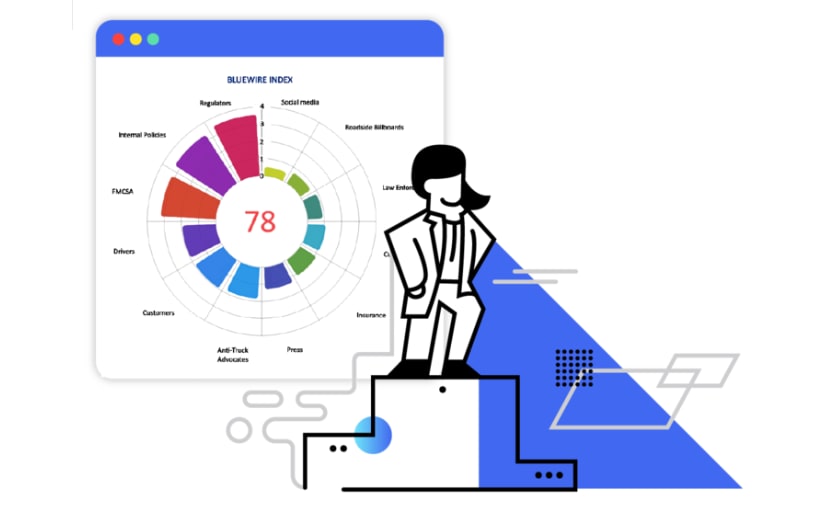
Bluewire will use data analysis to identify carrier vulnerabilities and make recommendations for how to improve in those areas.
Screenshot from Bluewire
5 min to read
A new company believes it can use data analysis to help fleets disarm nuclear verdicts before an accident even happens.
Bluewire is a subscription-based online service that aims to give motor carriers and their insurance partners a scientific, data-driven methodology to protect against vulnerabilities that lead to reputation-damaging false narratives. It’s those vulnerabilities and false narratives that allow plaintiffs’ attorneys to play on juries’ fear and anger and can result in record-high punitive damages following truck-involved crashes, according to the company’s founders.
Bluewire, explained Chief Executive Officer Steven Bryan in a May 11 virtual press conference, is named after the fact that “in every action movie ever made, the action hero disarms the bomb by cutting the blue wire.”
Bryan is no stranger to using data to help trucking companies improve their safety records. He came on the scene with the debut of what was then called CSA 2010, founding a company called Vigillo that used data analysis to help fleets understand and improve their safety scores. He sold Vigillo to Samba Safety in 2017 and stayed on for more than three years, leaving last year to work on this new project.
“If it isn’t data, I don’t know how to deal with it,” Bryan quipped.
In this case, the data being analyzed will cover the many elements that make up a trucking company’s “reputation.”
“We think we’ve got a moment in time to begin a new story, to start a movement, to get the industry thinking about the industry image – the image of the industry which we’ve all for years been pondering how we can improve this,” Bryan said. “We believe the answer is the individual reputations of the motor carriers.”
Some of the data that affects a carrier’s reputation include areas such as Federal Motor Carrier Safety Administration safety and crash data, driver background checks, telematics, in-cab cameras, vehicle maintenance, CSA scores, driver training, and even text-based factors such as how fleets recruit drivers and how they are portrayed on social media.
Reputational Vulnerabilities and Attack Vectors
The trucking industry, Bryan said, is “exposed to attacking plaintiffs who have discovered clever ways to… come at this industry of soft targets that are not well-prepared to defend themselves.”
Doug Marcello, Bluewire chief legal officer, explained it this way: “Reputational vulnerabilities… are the basis for claims of punitive damages whose purpose is to punish past conduct and deter it in the future,” said Marcello, who has been defending trucking clients exclusively for 16 years. “In short, reputational vulnerabilities are what create the jury anger that poses a trucking company’s greatest risk of punitive damages.
Nuclear verdicts, Marcello explained, are “driven by jury anger… they’re looking to find the flaws in the company’s processes and execution. We’re looking to develop an analysis and repair it before the accident happens. We’re developing the story the company wants to tell if they’re on the stand, and doing that ahead of time.”
Bryan added that nuclear verdicts are handed down, not because of bad behavior or negligence of the specific driver, but “because the jury is convinced that the company doesn’t care, that they’re a bad actor – and that translates to, they have a bad reputation.”
By using data analysis to proactively identify the “target vectors” by which plaintiffs’ lawyers are able to attack companies, fleets will be able to improve in those areas before the lawsuit-drawing crash even happens, Bluewire’s founders believe. “Attack vectors” can come through FMCSA, safety advocates, drivers, roadside billboards, customers, and worst of all, be self-inflicted, Bryan said – such as the chatter that takes place between a dispatcher and a driver.
Bryan pointed out that this strategy will have advantages beyond defending against nuclear verdicts (and against the more common “hand-grenade” cases, as he called them.) A better reputation can help recruit and retain drivers, affect the ability to attract new customers, and improve shareholder value.
How Bluewire Works
Powered by advanced artificial intelligence and text-mining technologies, Bluewire’s software will monitor the safety systems, data silos, and insurance claims that exist throughout the trucking and related insurance industries.
Subscriber motor carriers will be benchmarked against the industry using the Bluewire Reputational Index. Then Bluewire’s White Hat Recommendation Engine will make recommendations based on actionable data to help motor carriers improve that reputation. Rich data visualization will help fleets make sense of the data.
“For example, say your DQ [driver qualification] file is antiquated and still in paper folders in a filing cabinet,” Bryan said. “That’s something that needs to be updated, and we can recommend that needs to be addressed. And BI will show you why we have discovered this is a vulnerability.”
In addition to recommendations, Bluewire will provide access to a network of subject matter experts to help in remedying any deficiencies.
Bluewire will launch next month offering free, high-level assessments. That will help it gather data for benchmarking. That will be followed quickly, Bryan said, with paid assessments, which will be a much deeper dive into a company’s operations.
Later in the year, Bluewire will launch the ability for customers to log in and see their reputational index, recommendation engine, data visualization and access the expert network.
In 2022, the company plans to move into working with trucking insurance professionals.
Bryan said he’s starting Bluewire with a strong team of experienced trucking, safety, and legal experts. Bob Boyich has 40 years of experience in the private fleet industry. Doug Marcello has been doing defense work as an attorney for 40 years, And Peter Roe was Bryan’s technology partner at Vigillo. In addition, the board of directors includes well-known safety names such as Don Osterberg, who was the longtime chief of safety at Schneider, and former FMCSA Administrator Annette Sandberg.
More Safety & Compliance
Sponsored•October 6, 2026
A Camera Isn't a Safety Program. Here's What Brokers Are Screening for Now
Footage alone may not be enough to pass broker vetting processes. Here's what counts as a defensible safety program now.
Read More →
Marijuana and Trucking’s Drug-Testing Dilemma
Marijuana is getting stronger, laws are changing, and drug tests still can’t reliably establish impairment. What does that mean for truck drivers and the fleets that employ them?
Read More →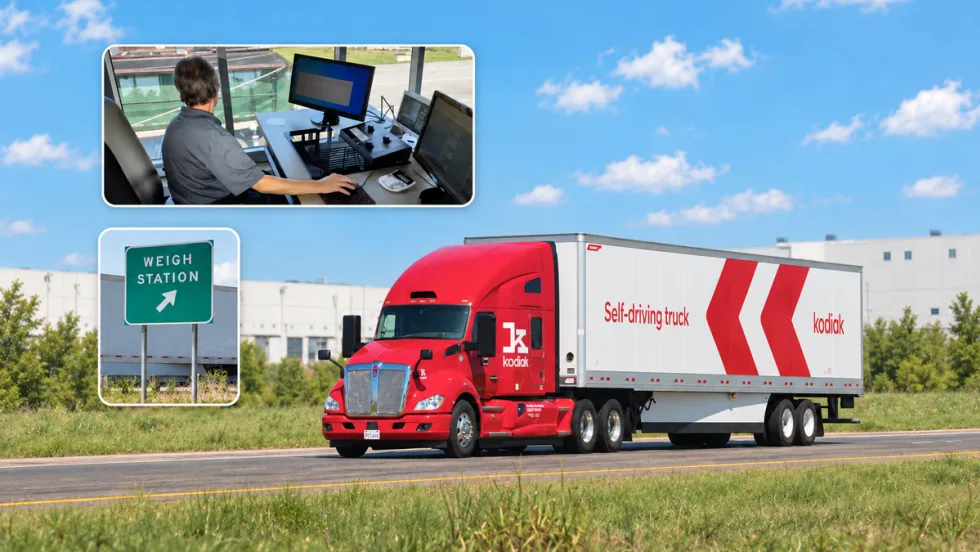
PrePass, Kodiak Connect Driverless Trucks to Roadside Enforcement
The system will allow enforcement agencies to verify Enhanced Inspection information and decide whether Kodiak’s autonomous trucks can bypass roadside screening sites.
Read More →

From One Generation to the Next: How Mentorship Builds Safer Truck Drivers
After three decades in trucking, Harold Perry shares what he's learned about driver safety, mentorship, and helping the next generation build confidence behind the wheel.
Read More →
FMCSA Pauses Biennial-Update Enforcement Amid Motus Transition
Carriers whose updates were due on or after June 1 have more time, while FMCSA works to stabilize its new registration system and warns of phishing sites impersonating its new carrier registration system, Motus.
Read More →
ZF Expands Commercial Vehicle Push in North America
ZF is expanding its North American commercial-vehicle presence with new transmission applications, electrification, trailer technology and autonomous-driving systems.
Read More →
Truck Drivers Need More Than Another Alert
Fleets have more visibility into truck health, safety events, and driver activity than ever. The next challenge is turning all that information into useful guidance for the person who has to decide what to do next.
Read More →
Tesla Wants a Self-Driving Semi. Are Cameras Enough?
Could Tesla’s camera-only autonomous driving technology work on an 80,000-pound Semi? In this commentary, HDT's Deborah Lockridge takes a look at Tesla, Cybercab, and how autonomous trucks see the road.
Read More →
What DOT’s Automated Vehicle Strategy Means for Trucking
The U.S. Department of Transportation issued a new automated-vehicle strategy that outlines plans for driverless-truck regulations, cross-state freight corridors, and federal safety standards.
Read More →
NYC Expands Speed, Pedestrian Safety Tech Across Fleet
New York City is expanding intelligent speed assistance and pedestrian-alert systems across its municipal fleet, moving the technologies from pilot programs into vehicle procurement and retrofit requirements.
Read More →