




Bipartisan House Bill Aims to Raise Private-Investment Limit for Highway Projects
A bill that would raise the federal cap on private activity bonds for surface-transportation and freight-improvement projects has been rolled out to the House of Representatives by a bipartisan group of lawmakers.

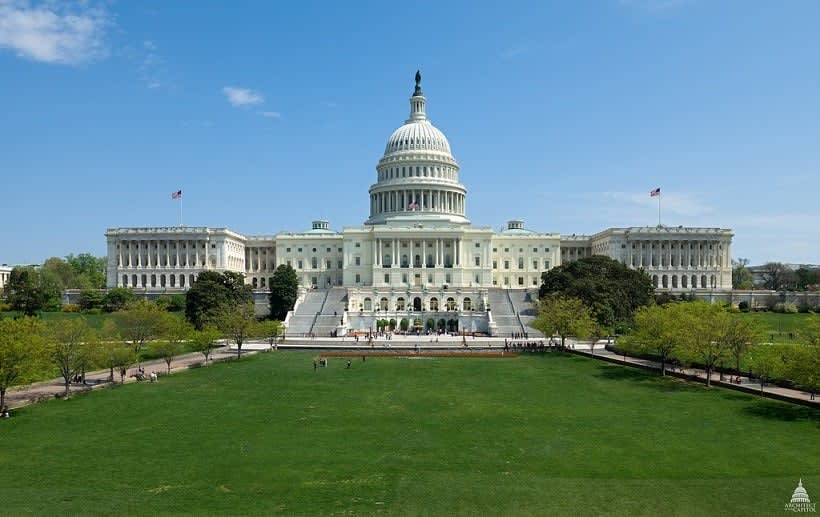
The BUILD Act would increase the federal cap for state and local government Private Activity Bonds (PABs) by $5.8 billion, bringing it from $15 billion to $20.8 billion
Photo: File
A bill that would raise the federal cap on private activity bonds for surface-transportation and freight-improvement projects by $5.8 billion has been rolled out to the House of Representatives by a bipartisan group of lawmakers, includers members of the powerful Committee on Ways and Means, which makes recommendations to the full House on all bills pertaining to raising revenue.
The Building United States Infrastructure and Leveraging Development (BUILD) Act was introduced on May 7 by Representatives Earl Blumenauer (D-OR), Mike Kelly (R-PA), Terri Sewell (D-AL), and Rodney Davis (R-IL).
Blumenauer, well-known as an advocate of fully funding transportation infrastructure, serves on Ways and Means; Sewell is Vice Chair of Ways and Means, and Kelly is the Ranking Member of its Subcommittee on Oversight. Davis serves as the Ranking Member of the Committee on Transportation and Infrastructure’s Subcommittee on Highways and Transit.
Private Activity Bonds (PABs) allow state or local governments the ability to issue tax-exempt debt, with approval from the Department of Transportation, for qualified improvements to highways or surface freight facilities that are privately developed and operated, per a joint statement released by the lawmakers.
The BUILD Act would increase the federal cap for state and local government PABs by $5.8 billion, bringing it from $15 billion to $20.8 billion. This will allow state and local governments to enter into additional public-private partnerships to supplement future surface transportation projects with private investment, according to the four Members of Congress sponsoring the bill.
“We have to get serious about investing in our future. Our nation’s roads and bridges are crumbling while our global competitors are making significant infrastructure investments,” said Rep. Blumenauer. “Public-private partnerships are one of a myriad of tools the nation needs to bridge the $2 trillion infrastructure investment gap. I am hopeful that this bipartisan legislation will be part of any upcoming effort to rebuild and renew America.”
Rep. Kelly stated that, “The U.S. used to have the best infrastructure in the world, but now, foreign countries like India and China far outpace us in making robust investments. Our bipartisan, bicameral bill will fix this by helping to finance improvement projects through public-private partnerships. We must make these desperately needed investments in our nation’s highways and roads without raising taxes.”
“Congress must take a comprehensive approach to address America’s crumbling infrastructure,” said Rep. Sewell. “The BUILD Act will help spur additional investments into these critical projects and help ensure the United States can maintain its competitiveness in the 21st century.”
Rep. Davis said that, “Public-private partnerships are critical for the future of infrastructure in this country. We need to diversify funding and financing options if we are ever going to fix our nation’s outdated infrastructure. The BUILD Act will allow for greater public-private investments in local projects.”
The House bill is companion legislation to an identical BUILD Act introduced in the Senate in February, also in bipartisan fashion. The upper chamber’s act was introduced by two key leaders: Senators John Cornyn (R-TX) and Mark Warner (D-VA). Both serve on the influential Finance Committee, which has jurisdiction over such policy areas as taxation, ports of entry, trade, tariffs, and infrastructure.
“As more and more of our infrastructure requires critical improvements, it’s imperative we find ways to reinvest in our roads and rails without the burden falling to taxpayers,” Cornyn said of the bill.
“Not only will this legislation help boost U.S. competitiveness, it will also help close our nation’s infrastructure gap in a responsible way by facilitating proven methods of partnering private investment with public funds to help make desperately needed infrastructure improvements,” stated Warner.
It should be noted that no sponsor of this legislation in either chamber has indicated that allowing more money to flow into public-private infrastructure partnerships is the sole solution to funding the massive amount of work that needs to be done to repair and upgrade the nation’s highways and bridges.
More Fleet Management

Color Match Smarter: Tools That Restore & Perform
For fleet managers and collision repair professionals keeping heavy-duty trucks on the road, getting the color right the first time isn't just about appearance — it's about efficiency, turnaround time, and bottom-line results. Discover how today's digital color tools are transforming the repair process from guesswork to precision.
Read More →
FMCSA Pauses Biennial-Update Enforcement Amid Motus Transition
Carriers whose updates were due on or after June 1 have more time, while FMCSA works to stabilize its new registration system and warns of phishing sites impersonating its new carrier registration system, Motus.
Read More →
2026 Blueprint for Countering Smarter Supply Chain Theft
Cargo theft is no longer just the cost of doing business. It's a multi-billion-dollar criminal enterprise exploiting vulnerabilities across your fleet, drivers, and supply chain.
Read More →


How Telematics Improves Visibility, Control, and Performance in Refrigerated Fleets
Explore how telematics help refrigerated fleets improve visibility, uptime, efficiency, compliance, and cargo protection across connected cold chain operations.
Read More →
What the U.S.-Canada Trade War Means for Trucking
Escalating U.S.-Canada tariffs could disrupt cross-border freight, reduce truck volumes, raise costs, and create new uncertainty for carriers on both sides of the border.
Read More →
What Are Trucking’s Top Concerns for 2026?
The American Transportation Research Institute wants to know what's worrying trucking fleet managers, drivers, and other stakeholders in its annual Industry Issues survey.
Read More →
American Trucking Associations Looks for a New Leader
ATA President and CEO Chris Spear abruptly left his job at the association on August 21, at a pivotal time for the trucking industry.
Read More →
Public Wi-Fi Cybersecurity Risks: How Truck Drivers and Fleets Can Protect Their Data
Public Wi-Fi can expose truck drivers and fleets to credential theft, malware, and other cyber threats. Here’s how to reduce the risk on the road.
Read More →
For Nicky Cupp, Fleet Innovation Starts With Frustration
HDT Truck Fleet Innovator Nicky Cupp turns everyday pain points at Fraley & Schilling into opportunities for better technology and smarter processes.
Read More →
Adam Buttgenbach’s Approach to Electric Trucks: Start With Where They Fit
HDT Truck Fleet Innovator Adam Buttgenbach helped PepsiCo build one of North America’s largest EV fleets by focusing on where electric trucks make operational sense.
Read More →