




Bill to Increase Carrier Insurance Reintroduced
OOIDA opposes the legislation, saying it would lead to a dramatic increase in insurance premiums for small-business truckers.

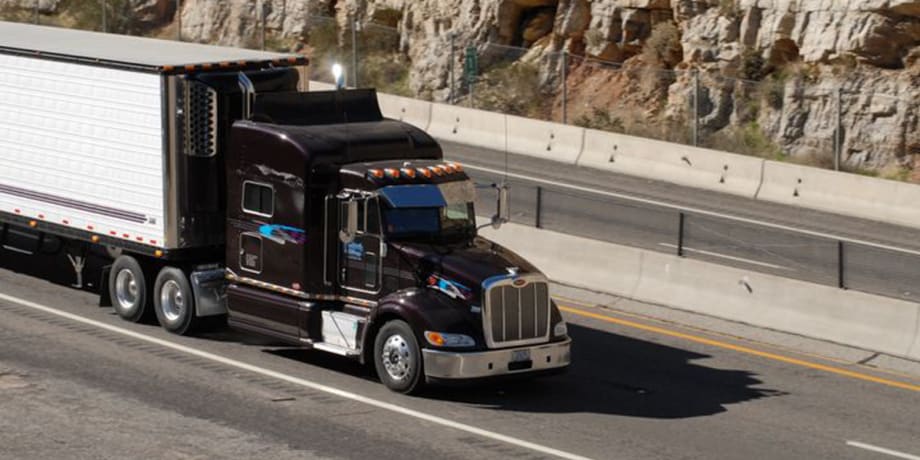
The Owner-Operator Independent Drivers Association opposes the legislation, saying it would lead to a dramatic increase in insurance premiums for small-business truckers and would do nothing to improve highway safety.
Photo: Jim Park
Legislation to ensure minimum insurance requirements for motor carriers are periodically adjusted to the inflation rate of medical costs has been reintroduced this week by U.S. Rep. Jesus “Chuy” Garcia (D- Ill.).
In 1980, Congress established $750,000 as the minimum insurance requirement for motor carriers to "ensure public safety and to measure the financial fitness and responsibility of a motor carrier company entering the business." Over the past four decades, the cost of living rose by more than 200%, and the per capita health expenditure jumped from about $1,000 to approximately $12,000. Insurance minimums haven't kept up. That's where the INSURANCE Act would come in in order to adjust those rates to be in-line with current inflation rates.
In 2014, the Federal Motor Carrier Safety Administration issued a study concluding that “the current financial responsibility minimums are inadequate to fully cover the costs of some crashes in light of increased medical costs and revised value of statistical life estimates.” FMCSA soon after issued a proposed rulemaking to increase the minimums, however, the agency withdrew it in 2017.
Forty-eight truck safety advocates from 26 states and Washington D.C. that make up the Truck Safety Coalition sent a letter to members of the U.S. House Committee on Transportation and Infrastructure calling for passage of the legislation. The letter was signed by truck crash survivors and victims’ families.
The legislation is also supported by the Citizens for Reliable and Safe Highways, Parents Against Tired Truckers, Institute for Safer Trucking, the American Association for Justice and Road Safe America. However, it draws strong opposition from Owner-Operator Independent Drivers Association, which says the legislation would lead to a dramatic increase in insurance premiums for small-business truckers and would do nothing to improve highway safety because “there is no correlation between insurance coverage.”
“Federal law currently requires motor carriers to maintain at least $750,000 in liability coverage ($5 million for those hauling hazardous materials),” OOIDA offfials said in a written testimony to the T&I Committee. “ However, the vast majority of carriers are insured at $1 million or more. Having additional coverage is obviously not required, but the insurance industry tends to naturally adjust levels based on market conditions. If enacted, legislation like [the INSURANCE Act] from the 116th Congress would increase minimums from $750,000 to a whopping $4,923,154.”
OOIDA estimates that if Congress increased minimum coverage requirements to $2 million, premium costs for small business truckers could at least double, causing a trucker who currently pays $10,000 per year to pay $20,000.
More Fleet Management

Color Match Smarter: Tools That Restore & Perform
For fleet managers and collision repair professionals keeping heavy-duty trucks on the road, getting the color right the first time isn't just about appearance — it's about efficiency, turnaround time, and bottom-line results. Discover how today's digital color tools are transforming the repair process from guesswork to precision.
Read More →
FMCSA Pauses Biennial-Update Enforcement Amid Motus Transition
Carriers whose updates were due on or after June 1 have more time, while FMCSA works to stabilize its new registration system and warns of phishing sites impersonating its new carrier registration system, Motus.
Read More →
2026 Blueprint for Countering Smarter Supply Chain Theft
Cargo theft is no longer just the cost of doing business. It's a multi-billion-dollar criminal enterprise exploiting vulnerabilities across your fleet, drivers, and supply chain.
Read More →


How Telematics Improves Visibility, Control, and Performance in Refrigerated Fleets
Explore how telematics help refrigerated fleets improve visibility, uptime, efficiency, compliance, and cargo protection across connected cold chain operations.
Read More →
What the U.S.-Canada Trade War Means for Trucking
Escalating U.S.-Canada tariffs could disrupt cross-border freight, reduce truck volumes, raise costs, and create new uncertainty for carriers on both sides of the border.
Read More →
What Are Trucking’s Top Concerns for 2026?
The American Transportation Research Institute wants to know what's worrying trucking fleet managers, drivers, and other stakeholders in its annual Industry Issues survey.
Read More →
American Trucking Associations Looks for a New Leader
ATA President and CEO Chris Spear abruptly left his job at the association on August 21, at a pivotal time for the trucking industry.
Read More →
Public Wi-Fi Cybersecurity Risks: How Truck Drivers and Fleets Can Protect Their Data
Public Wi-Fi can expose truck drivers and fleets to credential theft, malware, and other cyber threats. Here’s how to reduce the risk on the road.
Read More →
For Nicky Cupp, Fleet Innovation Starts With Frustration
HDT Truck Fleet Innovator Nicky Cupp turns everyday pain points at Fraley & Schilling into opportunities for better technology and smarter processes.
Read More →
Adam Buttgenbach’s Approach to Electric Trucks: Start With Where They Fit
HDT Truck Fleet Innovator Adam Buttgenbach helped PepsiCo build one of North America’s largest EV fleets by focusing on where electric trucks make operational sense.
Read More →