




Bill Aims to Give Hair-Testing Equal Footing
Bipartisan legislation was introduced in Congress today that would allow the Department of Transportation to recognize hair testing as an alternative option to give companies greater flexibility when conducting drug and alcohol testing.

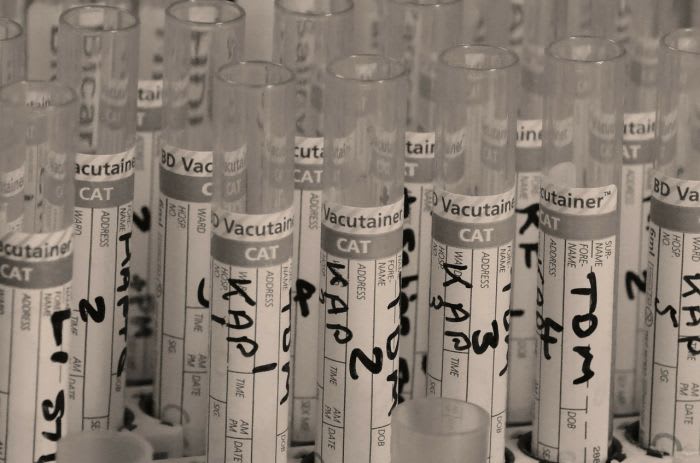
Photo via Pixabay
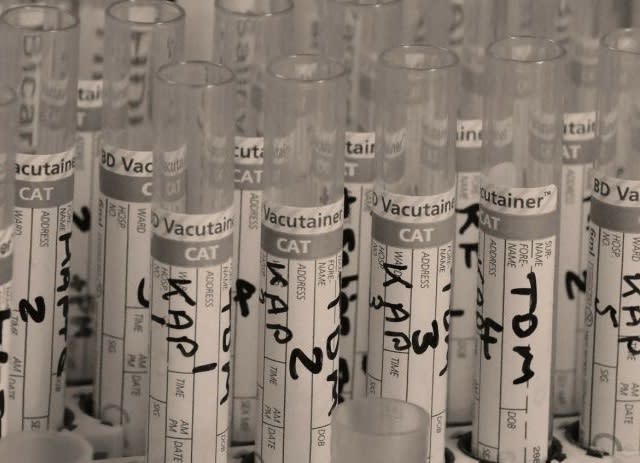
Photo via Pixabay
U.S. Senators John Boozman (R-AR) and Joe Manchin (D-WV) today introduced bipartisan legislation that would allow the Department of Transportation “to recognize hair testing as an alternative option to give companies greater flexibility when conducting drug and alcohol testing,” according to a news release issued by the Senate.
The Drug Free Commercial Driver Act of 2015 is also cosponsored by Senator Heidi Heitkamp (D-ND). Companion legislation was introduced as well in the House by Rep. Rick Crawford (R-AR) and cosponsored by Rep. Rick Crawford (R-Ark.), Rep. Dan Lipinski (D-IL), and Del. Eleanor Holmes Norton (D-DC)
The rationale for the bill is the same as that of legislation introduced on Capitol Hill back in October 2014: That when it comes to detecting employee drug and alcohol use, urinalysis is regarded as often less effective in detecting substance abuse— as it provides only a two- to three-day window for detection-- while hair testing provides a 60- to 90-day window.
And while some employers already use hair testing for their own purposes, the federal government requires that duplicative urinalysis testing also take place.
For example, from May 2006 to December 2014, stated the Senate news release, J.B. Hunt Transport’s drug-testing data found that 110 driver applicants failed the urine test while 3,845 people had drug-positive hair test results. In addition, Schneider National’s pre-employment drug testing data from March 2008 to June 2012 found 120 prospective drivers failed the urine test while 1,400 applicants had drug-positive hair test results. The upshot is that under current law, trucking companies that elect to use hair testing to gain more accurate test results must bear the added cost of administering both types of testing.
“Preventing drug users from operating commercial trucks will improve safety on our roads and enhance industry standards,” said Sen. Boozman. “This legislation eliminates the duplicative drug-testing process and allows trucking companies to use the more effective option, without having to pay for two tests.”
“Americans rely every day on the safety of our roads and highways as they commute to their jobs, travel to schools and recreational activities, and transport goods and products across the country,” Sen. Manchin said. “That is why this commonsense legislation is so important. By allowing companies to use more accurate alcohol and drug testing techniques to test those operating commercial vehicles, we will not only help combat the fight against substance abuse, but we will also help improve the safety of our roads.”
“My bill’s only concern is improving the safety of our roads,” Rep. Crawford said. “Some drug users, when they know that a drug test is likely, are able to abstain for just a few days before the test and beat the system. This bill would catch a much larger percentage of those drivers and keep them off the roads. As a member of the Transportation and Infrastructure Committee, I’m always looking for ways to improve roadway safety, and this bill helps tackle that problem.”
Both the Alliance for Driver Safety & Security (a.k.a. the Trucking Alliance) and the American Trucking Associations lauded the bipartisan measure aimed at improving the trucking industry’s pre-employment drug screening process.
Referencing the J.B. Hunt hair vs urine test results, Lane Kidd, managing director for the Trucking Alliance, noted that “this statistic is alarming because while J.B. Hunt was able to avoid putting these drug users in a commercial truck, many of them are likely driving a commercial truck somewhere today for a company that only utilizes a urine test.”
ATA is urging lawmakers to support this bipartisan legislation as it would “allow trucking companies to use a highly effective tool-- hair testing-- to meet federal requirements and prevent drug users from getting behind the wheel of trucks.”
"ATA is committed to improving highway safety, including doing all we can to prevent individuals who use drugs or alcohol from driving trucks," said ATA president and CEO Bill Graves. "ATA's advocacy [of mandatory drug and alcohol testing] has resulted in a steady decline in the small percentage of drivers who use drugs, and hair testing is the next logical step."
Graves added that while “trucking’s positive testing rate is remarkably low, Congress should provide a means for fleets, as part of the DOT testing regime, to further identify and eliminate from the industry those who don't share the industry's commitment to highway safety."
According to ATA, some fleets voluntarily conduct hair tests, in addition to mandatory urine tests, to identify habitual drug users who may otherwise briefly abstain from use or otherwise attempt to “beat the test” to gain trucking employment.
The trucking lobby noted that in 2008 the Government Accountability Office “highlighted the severity of these limitations in DOT’s current urine drug testing program.”
But because hair tests have not yet been accepted by DOT to meet federal testing requirements, other fleets have been deterred by the redundant costs of employing hair testing programs in addition to the required DOT urine-based tests, ATA stated.
Hair-specimen testing proponents say such screening provides a significantly longer detection window, is very difficult to adulterate, and eliminates collection issues associated with urine. As a result, hair testing has consistently identified over three times as many illegal substance users as urine testing in regulated industry pre-employment trial programs.
More Fleet Management

Color Match Smarter: Tools That Restore & Perform
For fleet managers and collision repair professionals keeping heavy-duty trucks on the road, getting the color right the first time isn't just about appearance — it's about efficiency, turnaround time, and bottom-line results. Discover how today's digital color tools are transforming the repair process from guesswork to precision.
Read More →
FMCSA Pauses Biennial-Update Enforcement Amid Motus Transition
Carriers whose updates were due on or after June 1 have more time, while FMCSA works to stabilize its new registration system and warns of phishing sites impersonating its new carrier registration system, Motus.
Read More →
2026 Blueprint for Countering Smarter Supply Chain Theft
Cargo theft is no longer just the cost of doing business. It's a multi-billion-dollar criminal enterprise exploiting vulnerabilities across your fleet, drivers, and supply chain.
Read More →


How Telematics Improves Visibility, Control, and Performance in Refrigerated Fleets
Explore how telematics help refrigerated fleets improve visibility, uptime, efficiency, compliance, and cargo protection across connected cold chain operations.
Read More →
What the U.S.-Canada Trade War Means for Trucking
Escalating U.S.-Canada tariffs could disrupt cross-border freight, reduce truck volumes, raise costs, and create new uncertainty for carriers on both sides of the border.
Read More →
What Are Trucking’s Top Concerns for 2026?
The American Transportation Research Institute wants to know what's worrying trucking fleet managers, drivers, and other stakeholders in its annual Industry Issues survey.
Read More →
American Trucking Associations Looks for a New Leader
ATA President and CEO Chris Spear abruptly left his job at the association on August 21, at a pivotal time for the trucking industry.
Read More →
Public Wi-Fi Cybersecurity Risks: How Truck Drivers and Fleets Can Protect Their Data
Public Wi-Fi can expose truck drivers and fleets to credential theft, malware, and other cyber threats. Here’s how to reduce the risk on the road.
Read More →
For Nicky Cupp, Fleet Innovation Starts With Frustration
HDT Truck Fleet Innovator Nicky Cupp turns everyday pain points at Fraley & Schilling into opportunities for better technology and smarter processes.
Read More →
Adam Buttgenbach’s Approach to Electric Trucks: Start With Where They Fit
HDT Truck Fleet Innovator Adam Buttgenbach helped PepsiCo build one of North America’s largest EV fleets by focusing on where electric trucks make operational sense.
Read More →