




ATA: Trucking is Prepared for Panama Canal Expansion, but Challenges Exist
Trucking is prepared for the projected increases in freight to come from the expansion of the Panama Canal, but the country still faces challenges related to congestion and the condition of our infrastructure, an American Trucking Associations representative said on Capitol Hill Wednesday.
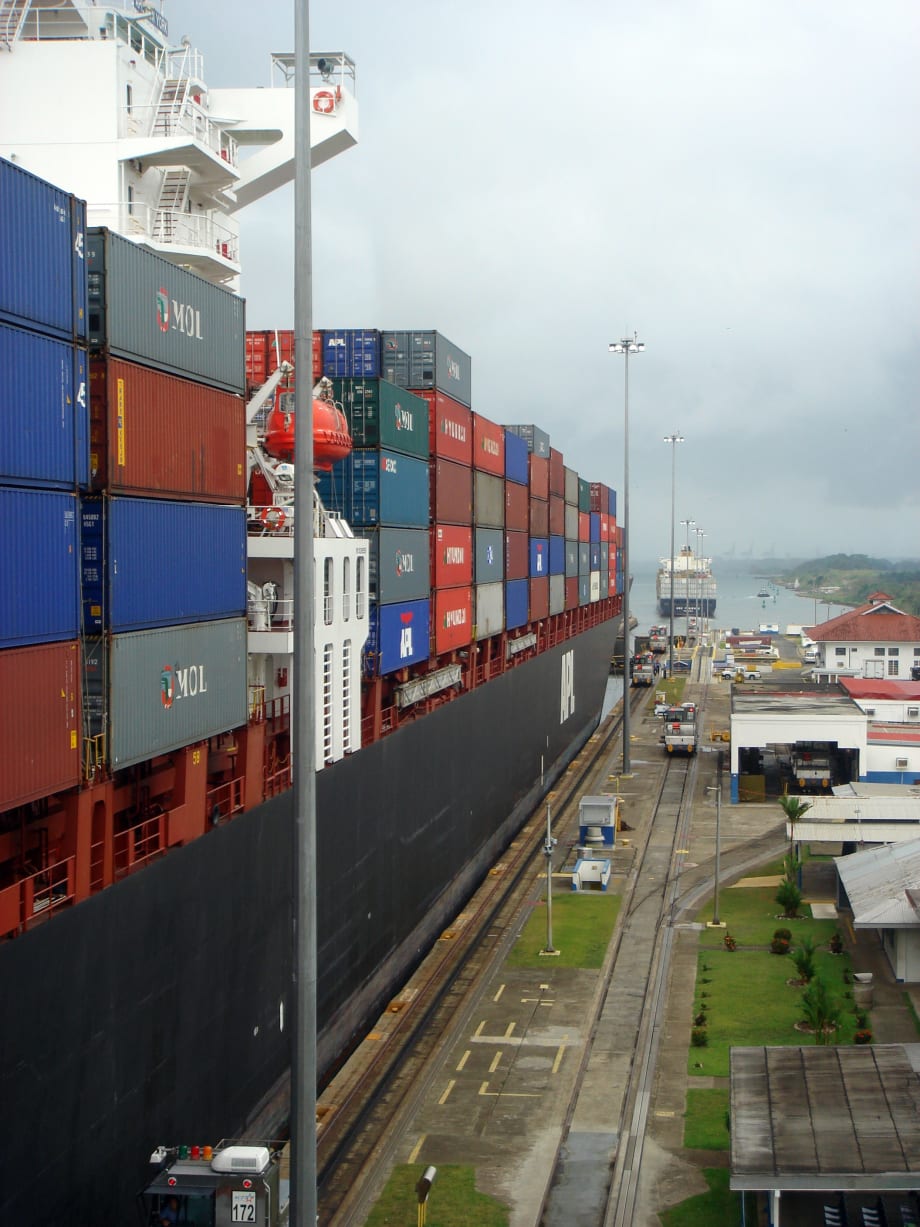
Container ship going through the Panama Canal. In a couple of years, larger ships will be able to go through the canal, which could change port dynamics in the U.S.
Container ship going through the Panama Canal. In a couple of years, larger ships will be able to go through the canal, which could change port dynamics in the U.S.
Trucking is prepared for the projected increases in freight to come from the expansion of the Panama Canal, but the country still faces challenges related to congestion and the condition of our infrastructure, an American Trucking Associations representative said on Capitol Hill Wednesday.
Phil Byrd, president and CEO of Bulldog Hiway Express, testified before the Senate Commerce, Science and Transportation Committee on behalf of ATA.
The Panama Canal expansion, expected to be completed in 2015, will double the capacity of the canal by increasing throughput and allowing much bigger ships (13,000 standard 20 foot containers, or TEUs) to pass through the locks than the currently sized 5,000 or less TEU vessels. Port investments and port and intermodal traffic planning and marketing are proceeding at a fever pace, with most port locations claiming they will be ready when the Panama Canal expansion is completed.
Since plans to widen the Panama Canal were approved six years ago, there has been much speculation regarding the widened canal’s impacts on world container trade. Early predictions estimated that East Coast and Gulf Coast ports would see double digit increases in volume. In part, the projected growth was predicated on the diversion of mini-bridge traffic from West Coast ports due to larger container vessels that will make all water transport to the East and Gulf Coasts more attractive.
Over time, however, the projected double-digit increases have moderated to single digits, and potential West Coast diversion impacts have become less certain.
Byrd explained that where, how many, and when port intermodal trucks are deployed in the container transport sector is actually dictated by decisions made by ocean carriers, 3PLs, brokers, railroads, terminals and shipping customers, not by the motor carriers.
“We are aware of no systemic trucking capacity shortages that are currently impacting freight movement at our port facilities or could serve to restrict the transport of Panama Canal increased volumes beginning in 2015,” Byrd said.
Rather, Byrd, ATA’s first vice chairman, said trucking’s challenges in handling the expected increase in freight are more likely “outside the gate … specifically the impact our crumbling infrastructure will have on handling increased traffic and freight demands.”
Several ports affected by the canal widening are located in cities identified by the Texas Transportation Institute, among the most congested in the nation, he noted, including New York City, Houston, Miami, and Baltimore.
Byrd, whose company moved the first container to come off a vessel in the Port of Charleston, also cited inefficiencies getting in and out of port complexes, sporadic labor issues and constraints on driver resources – specifically the soon-to-be imposed hours-of-service rules and the looming driver shortage – as issues that weigh on trucking’s ability to handle an increased workload.
“Given the proven, adaptive and flexible nature of the trucking industry however, we believe we will be able to handle these container freight increases wherever they actually occur in America’s port system,” Byrd said.
You can read Byrd's full prepared testimony here.
More Fleet Management

Nominations Open for HDT Emerging Leaders
Heavy Duty Trucking is looking for accomplished trucking fleet professionals under 40 who are making an impact and helping lead the industry forward.
Read More →
Why Private Fleets Are Taking More Freight
Private fleets are putting their own trucks on demanding customers and high-cost lanes as companies seek greater control over service, costs, and capacity.
Read More →
Color Match Smarter: Tools That Restore & Perform
For fleet managers and collision repair professionals keeping heavy-duty trucks on the road, getting the color right the first time isn't just about appearance — it's about efficiency, turnaround time, and bottom-line results. Discover how today's digital color tools are transforming the repair process from guesswork to precision.
Read More →


FMCSA Pauses Biennial-Update Enforcement Amid Motus Transition
Carriers whose updates were due on or after June 1 have more time, while FMCSA works to stabilize its new registration system and warns of phishing sites impersonating its new carrier registration system, Motus.
Read More →
2026 Blueprint for Countering Smarter Supply Chain Theft
Cargo theft is no longer just the cost of doing business. It's a multi-billion-dollar criminal enterprise exploiting vulnerabilities across your fleet, drivers, and supply chain.
Read More →
How Telematics Improves Visibility, Control, and Performance in Refrigerated Fleets
Explore how telematics help refrigerated fleets improve visibility, uptime, efficiency, compliance, and cargo protection across connected cold chain operations.
Read More →
What the U.S.-Canada Trade War Means for Trucking
Escalating U.S.-Canada tariffs could disrupt cross-border freight, reduce truck volumes, raise costs, and create new uncertainty for carriers on both sides of the border.
Read More →
What Are Trucking’s Top Concerns for 2026?
The American Transportation Research Institute wants to know what's worrying trucking fleet managers, drivers, and other stakeholders in its annual Industry Issues survey.
Read More →
American Trucking Associations Looks for a New Leader
ATA President and CEO Chris Spear abruptly left his job at the association on August 21, at a pivotal time for the trucking industry.
Read More →
Public Wi-Fi Cybersecurity Risks: How Truck Drivers and Fleets Can Protect Their Data
Public Wi-Fi can expose truck drivers and fleets to credential theft, malware, and other cyber threats. Here’s how to reduce the risk on the road.
Read More →