




ATA Ready to Roll with Political Tide
As the Trump Administration starts to take shape and Capitol Hill is poised to take up yet another omnibus spending package to keep the government running, the head of the American Trucking Associations has issued a gimlet-eyed take on the election results that captures the political nuances industry lobbyists must embrace.

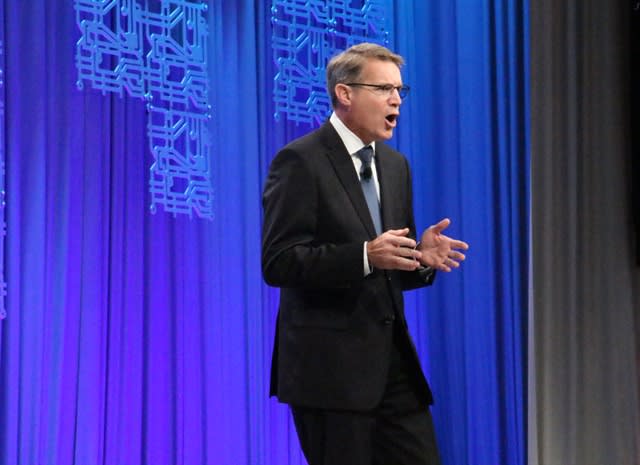
ATA's Chris Spear Photo: Evan Lockridge
ATA's Chris SpearPhoto: Evan Lockridge
As the Trump Administration starts to take shape and Capitol Hill is poised to take up yet another omnibus spending package to keep the government running, the head of the American Trucking Associations has issued a gimlet-eyed take on the election results that captures the political nuances industry lobbyists must embrace.
In a Nov 14 letter to members, ATA President and CEO Chris Spear said that “those who actually vote can change the road traveled by an entire nation.”
He said the presidential outcome along with the retention of GOP control of both chambers of Congress “will directly impact the trucking industry, further defining the landscape of issues that govern our future, including free and fair trade, comprehensive tax reform, and dedicated and sustainable funding for infrastructure.”
In Spear’s view, the Trump Administration may “allow ATA increased input to shape regulatory proposals in a transparent, inclusive and data-driven manner.”
However, he added, that “one thing is clear– to make progress on legislation, we will continue to work with both Republicans and Democrats to achieve most of our goals, particularly in the Senate where there is a working majority, not a voting majority.”
Spear advised that ATA has been wasting no time prepping for the expected year-end omnibus spending legislation package that “would include” a permanent fix for the Hours of Service rule and federal preemption of meal and rest breaks imposed by several states.
“It is now possible that Congress will instead opt for a second consecutive Continuing Resolution (CR) during the upcoming lame duck session,” Spear said of the likely outcome. “The CR would fund the federal government through the first quarter of 2017.”
According to Spear, delaying an omnibus package until early next year would allow the Republican-controlled House and Senate to “send a stronger package” for signing by newly sworn-in President Donald Trump.
He noted that although ATA “would welcome immediate passage” of legislation that addresses both Hours of Service and meal/break preemption, “a short delay of the Omnibus would only increase the likelihood that these two ATA priority issues are passed.
Spear added that “a short delay” might enable ATA to secure a “full remedy” regarding preemption that would include piece rates as well. “The question about moving the Omnibus spending package isn’t about ‘if,’ but ‘when.’”
Turning to highway funding, Spear pointed out that right after the election, Trump said he would send a $1 trillion infrastructure plan to Congress within his first 100 days in office. Noting that he had proposed ATA establish a new Infrastructure Funding Task Force during the group’s annual meeting in October, Spear said he now intends to establish this task force “no later than the end of this month” to ensure that “ATA is in a position to help the next Administration and Congress shape and pass a dedicated and sustainable funding package for our nation’s roads and bridges.”
More Fleet Management

Color Match Smarter: Tools That Restore & Perform
For fleet managers and collision repair professionals keeping heavy-duty trucks on the road, getting the color right the first time isn't just about appearance — it's about efficiency, turnaround time, and bottom-line results. Discover how today's digital color tools are transforming the repair process from guesswork to precision.
Read More →
FMCSA Pauses Biennial-Update Enforcement Amid Motus Transition
Carriers whose updates were due on or after June 1 have more time, while FMCSA works to stabilize its new registration system and warns of phishing sites impersonating its new carrier registration system, Motus.
Read More →
2026 Blueprint for Countering Smarter Supply Chain Theft
Cargo theft is no longer just the cost of doing business. It's a multi-billion-dollar criminal enterprise exploiting vulnerabilities across your fleet, drivers, and supply chain.
Read More →


How Telematics Improves Visibility, Control, and Performance in Refrigerated Fleets
Explore how telematics help refrigerated fleets improve visibility, uptime, efficiency, compliance, and cargo protection across connected cold chain operations.
Read More →
What the U.S.-Canada Trade War Means for Trucking
Escalating U.S.-Canada tariffs could disrupt cross-border freight, reduce truck volumes, raise costs, and create new uncertainty for carriers on both sides of the border.
Read More →
What Are Trucking’s Top Concerns for 2026?
The American Transportation Research Institute wants to know what's worrying trucking fleet managers, drivers, and other stakeholders in its annual Industry Issues survey.
Read More →
American Trucking Associations Looks for a New Leader
ATA President and CEO Chris Spear abruptly left his job at the association on August 21, at a pivotal time for the trucking industry.
Read More →
Public Wi-Fi Cybersecurity Risks: How Truck Drivers and Fleets Can Protect Their Data
Public Wi-Fi can expose truck drivers and fleets to credential theft, malware, and other cyber threats. Here’s how to reduce the risk on the road.
Read More →
For Nicky Cupp, Fleet Innovation Starts With Frustration
HDT Truck Fleet Innovator Nicky Cupp turns everyday pain points at Fraley & Schilling into opportunities for better technology and smarter processes.
Read More →
Adam Buttgenbach’s Approach to Electric Trucks: Start With Where They Fit
HDT Truck Fleet Innovator Adam Buttgenbach helped PepsiCo build one of North America’s largest EV fleets by focusing on where electric trucks make operational sense.
Read More →