




ATA: NY Times Article on Distracted Driving is Misleading
As a national summit on distracted driving gets under way this week, the New York Times coverage of driver distraction raised the ire of trucking industry representatives who said it contained a number of errors
As a national summit on distracted driving gets under way this week, the New York Times coverage of driver distraction raised the ire of trucking industry representatives who said it contained a number of errors.
At issue is part of a series called "Driven to Distraction," a Sept. 27 feature, "Truckers Insist on Keeping Computers in the Cab."
While much of the public debate on distracted driving has focused on the use of cell phones, particularly texting, this article focused in on the in-cab computers, such as the familiar Qualcomm units.
Among other things, the article refers to a Virginia Tech Transportation Institute study that found that those who used on-board computers faced a 10 times greater risk of crashing, nearly crashing or wandering from their lane than truckers who did not use those devices. The study found that truckers using on-board computers take their eyes off the road for an average of four seconds, enough time at highway speeds to cover roughly the length of a football field.
The American Trucking Associations issued a release Tuesday, saying the story "presented misleading characterization" of the group's and views on the subject, "and included factual errors on truck crash data compiled by federal safety officials."
A Times editor told ATA it will run two corrections to the article's representation of truck crash data from the National Highway Traffic Safety Administration (NHTSA). The first error: The story stated that NHTSA data shows the number of large-truck-involved crash deaths rose significantly from 1997 to 2007, when in fact the number decreased by 11 percent.
The error occurred because the newspaper staff misinterpreted figures that NHTSA published in its "Traffic Safety Facts" for 1997 and 2007. The two figures were not comparable. The 1997 figure was for trucks over 26,000 pounds gross vehicle weight while the 2007 figure was for trucks over 10,000 pounds gross vehicle weight, which inflated the 2007 number.
The second error: The story stated that large trucks "caused" the deaths that occurred in those crashes, when actually NHTSA states only that those crashes "involved" large trucks. In fact, it is most likely that a majority of those deaths were caused by automobile drivers, not truck drivers. Numerous scientific studies, including one by the American Automobile Association Foundation for Traffic Safety, have found that approximately 75 percent of all fatal car-truck crashes are caused by the car driver.
ATA also notes that its official policy, which it sent to the paper, "encourages drivers and/or motor carriers to consider a range of policies and safeguards intended to reduce, minimize and or eliminate driver distractions that may be caused by the increased use of electronic technologies."
The association also says the article's statement, "The trucking industry says these devices . . . should be exempted from legislation that would ban texting while driving" is inaccurate.
ATA says there were similar errors less than a week ago in a Times editorial, and the association has requested a correction to the editorial and submitted a letter to the editor about it as well.
Washington Editor Oliver Patton is attending the Distracted Driving Summit; watch Truckinginfo.com for a report.
More Safety & Compliance
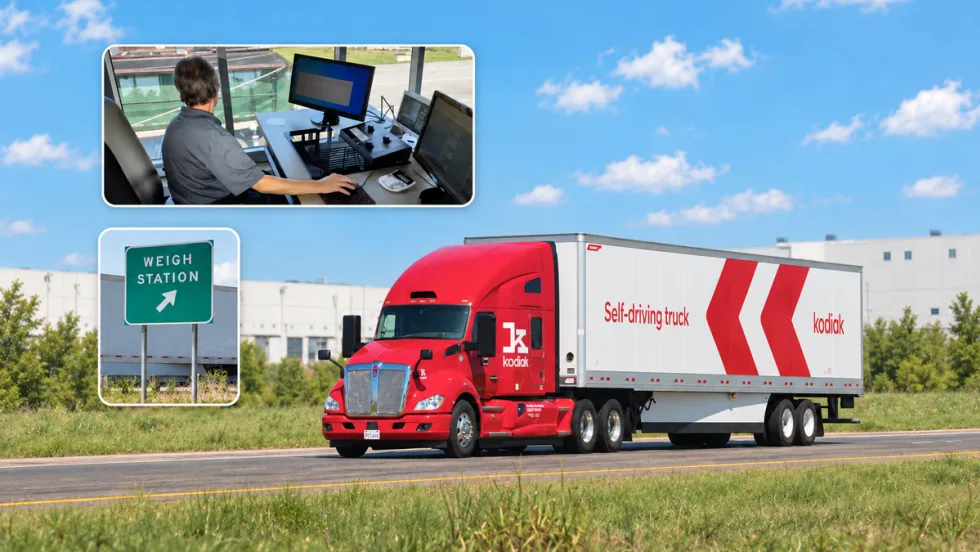
PrePass, Kodiak Connect Driverless Trucks to Roadside Enforcement
The system will allow enforcement agencies to verify Enhanced Inspection information and decide whether Kodiak’s autonomous trucks can bypass roadside screening sites.
Read More →
From One Generation to the Next: How Mentorship Builds Safer Truck Drivers
After three decades in trucking, Harold Perry shares what he's learned about driver safety, mentorship, and helping the next generation build confidence behind the wheel.
Read More →
FMCSA Pauses Biennial-Update Enforcement Amid Motus Transition
Carriers whose updates were due on or after June 1 have more time, while FMCSA works to stabilize its new registration system and warns of phishing sites impersonating its new carrier registration system, Motus.
Read More →
ZF Expands Commercial Vehicle Push in North America
ZF is expanding its North American commercial-vehicle presence with new transmission applications, electrification, trailer technology and autonomous-driving systems.
Read More →
Truck Drivers Need More Than Another Alert
Fleets have more visibility into truck health, safety events, and driver activity than ever. The next challenge is turning all that information into useful guidance for the person who has to decide what to do next.
Read More →
Tesla Wants a Self-Driving Semi. Are Cameras Enough?
Could Tesla’s camera-only autonomous driving technology work on an 80,000-pound Semi? In this commentary, HDT's Deborah Lockridge takes a look at Tesla, Cybercab, and how autonomous trucks see the road.
Read More →
What DOT’s Automated Vehicle Strategy Means for Trucking
The U.S. Department of Transportation issued a new automated-vehicle strategy that outlines plans for driverless-truck regulations, cross-state freight corridors, and federal safety standards.
Read More →
NYC Expands Speed, Pedestrian Safety Tech Across Fleet
New York City is expanding intelligent speed assistance and pedestrian-alert systems across its municipal fleet, moving the technologies from pilot programs into vehicle procurement and retrofit requirements.
Read More →
FMCSA Removes 110 Truck Driver Training Schools from Certified ELDT List
Federal regulators also are targeting more than 160 additional training providers and launching a nationwide audit of third-party CDL skills testers as part of a broader crackdown on trucking fraud.
Read More →
Beyond DOT Compliance: What Makes a Trucking Fleet Truly Safe?
A trucking fleet can follow every rule and still make unsafe decisions. The real test comes when safety conflicts with freight, productivity, or cost.
Read More →