




At Least 15 Lawsuits vs. Cat on ACERT Diesels Include Trucks, Buses
Multiple lawsuits against Caterpillar for chronic failures of its 2007-2010 ACERT diesels go beyond heavy trucks, and include school buses and motor coaches as well as at least one marine engine, according to news reports, while a wide variety of problems have been chronicled in discussion groups on the Internet.
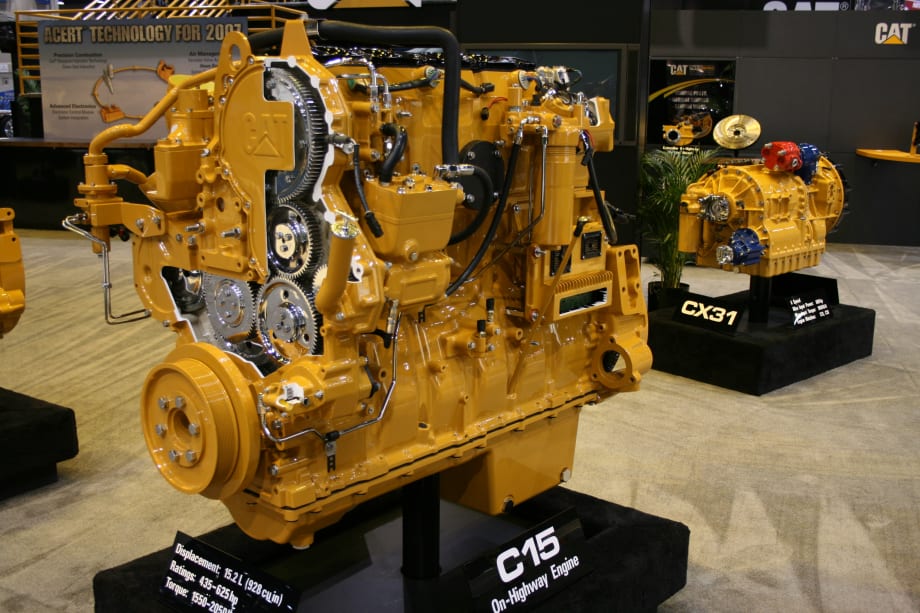
Multiple lawsuits against Caterpillar for chronic failures of its 2007-2010 ACERT diesels go beyond heavy trucks, and include school buses and motor coaches as well as at least one marine engine, according to news reports, while a wide variety of problems have been chronicled in discussion groups on the Internet.
At least 15 suits are now pending over Cat C13 and C15 engines, reports say, and some have been consolidated by a federal court to make them more manageable. Some suits are in state courts.
Law firms have filed suits on behalf of trucking and bus companies and at least one owner-operator, news reports say. A common complaint is that the engines are unreliable and repeatedly break down, leaving trucks, drivers and loads stranded while mechanics at truck dealers and Cat’s own distributors struggled to repair them.
Some fleets claim they lost hundreds of thousands of dollars in repairs and lost revenue; many disposed of their Cat-powered trucks early and bought vehicles with other engines. A boat fire in Florida prompted one suit, while a motor coach owner in California sued there.
Stories in the Wall Street Journal and the Journal Star of Peoria, Ill., Cat’s corporate home, said some suits have been settled with judgments ranging into the millions of dollars.
A school district in San Antonio, Tex., won $900,000 over engine failures and fires that destroyed at least two buses, reports said. Those presumably involved midrange C7 diesels, which used pollution-control equipment similar to those on the larger C13 and C15 engines.
Complaints on internet chat sites include vibrations, fuel starvation, injectors, cooling systems, diesel particulate filters, and the “seventh fuel injector” that provides heat for burning soot out of the DPFs. Some complaints date prior to the implementation of ACERT equipment.
ACERT, which stands for Advanced Combustion Emiussions Reduction Technology, was a key feature was the piping of filtered exhaust gas to combustion chambers instead of using unfiltered gas, as competitors did. This, too, was troublesome, users have claimed.
Effects on Cat’s financial performance are not known, but the huge, multi-national corporation earns billions of dollars a year and is probably in no danger. Cat’s main businesses are manufacturing machinery and engines for construction, mining, electric power generation, ships and boats, and railroad locomotives.
However, “The suits are a potential embarrassment for a company that regularly says the reliability of its products justifies premium prices,” noted the WSJ.
As is common in lawsuits brought against corporations, Cat has not commented on specific filings and complaints. In a statement last month, the company said, “Caterpillar Inc. is addressing various claims relating to alleged performance issues with emissions technology in some of its 2007 EPA-compliant C13 and C15 ACERT on-highway engines.
“Caterpillar has worked diligently to deliver operating cost improvements and other value-added features in its engines to enable our customers to benefit from this technology,” the statement said. “Our customers have utilized and had success with the performance of these engines in trucks, buses and RVs across millions of miles in North America.
“Caterpillar looks forward to addressing these allegations now that they have been consolidated in one forum.”
Cat left the truck- and bus-engine business at the end of 2009 when ever-tighter federal emissions limits made compliance increasingly expensive. Meanwhile, the market for vendor-supplied diesels was shrinking as truck builders used more of their own engines. Cummins is now the only independent engine supplier to commercial truck makers.
More Fuel Smarts

Wex Adds Cardless Fuel Payments for Over-the-Road Customers
A new fuel card feature for Wex customers offers convenience and security.
Read More →
New California Law Could Shed Light on Electric Truck Prices
Why do battery-electric Class 8 trucks remain so expensive? A California bill signed by Gov. Gavin Newsom would give fleets and state agencies more visibility into what manufacturers charge.
Read More →
How Volvo Updated Its D13 for EPA 2027 [Watch]
Volvo’s updated D13 promises lower emissions without sacrificing performance or fuel economy. Take a closer look at what changed inside the engine in this HDT Spotlight video.
Read More →

Diesel Price Spike Shortens Payback for Natural Gas Trucks, Report Says
Energy Vision estimates fleets could recover the higher purchase price of an RNG-fueled Class 8 tractor in 1.3 to 2.8 years under current fuel-price scenarios.
Read More →
Calstart Becomes Catalyst Mobility, Reflecting Broader Focus
Calstart is now Catalyst Mobility, reflecting the nonprofit’s growing national role in clean transportation, including zero-emission trucks, infrastructure and incentive programs.
Read More →
Record Diesel Prices Squeeze Trucking Fleets
Average U.S. diesel prices have climbed to nearly $6 a gallon, surpassing the 2022 record as tight refinery capacity and Middle East disruptions keep fuel costs elevated.
Read More →
How Fuel Delivery Shapes Engine Performance
Fuel delivery depends on more than what happens at the injector. For fleet, maintenance and technical professionals, looking at the full path from pump to injector can provide useful context for understanding engine performance.
Read More →
East Coast Port Launches $45M Electric Truck Push
The Port Authority of New York and New Jersey announced millions in incentives for zero-emission drayage trucks, yard tractors, and new charging hubs near the port.
Read More →
Detroit Opens Orders for EPA 2027 Engines
Detroit isn’t starting from scratch to meet EPA 2027 diesel emissions standards. Its Gen 6 DD13 and DD15 engines keep much of today’s platform while updating the fuel and aftertreatment systems.
Read More →
Zero-Emission Truck Corridor Planned for West Coast
California, Oregon, Washington, British Columbia and Baja California are coordinating plans for truck charging and hydrogen fueling from Canada to Mexico.
Read More →