




Associations Lobby Highway Bill Conferees to Address Trucking's Needs
Leaders of American Trucking Associations asked members of the conference committee currently negotiating on the highway bill to address several critical issues for the trucking industry -- one of them calling for electronic onboard recorders, which the Owner-Operator Independent Drivers Association and a coalition of other groups are lobbying against.
Leaders of American Trucking Associations asked members of the conference committee currently negotiating on the highway bill to address several critical issues for the trucking industry -- one of them calling for electronic onboard recorders, which the Owner-Operator Independent Drivers Association and a coalition of other groups are lobbying against.
ATA's call follows a letter from ATA President and CEO Bill Graves to Sen. Barbara Boxer (D-Calif.), Rep. John Mica (R-Fla.) and their fellow conferees outlining the priorities of America's leading trucking industry group.
Among those priorities:
- Preservation of the National Freight Program proposed by the Senate
- Inclusion of the modest truck productivity provisions drafted by the House, as well as limiting of a potential study on truck productivity to one year, rather than six
- Retention of the Bingaman amendments to protect highway users from expansion of risky infrastructure privatization schemes
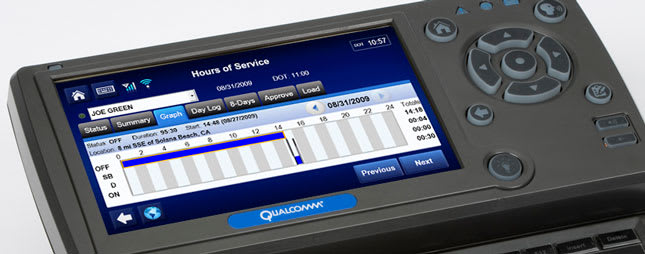
- Adoption of the Senate's language calling for a full mandate for electronic onboard recorders
- Including the House's request for a full study of the restart provisions of the Administration's hours-of-service rules before those rules go into effect
- Prohibiting the Federal Motor Carrier Safety Administration from publishing a rule on carrier safety fitness before addressing serious flaws with its Compliance Safety Accountability program.
"ATA has been a consistent supporter of passing a long-term highway bill," says Graves. "These provisions will advance the safety and efficiency of our highway system and bolster our still-recovering economy."
EOBR debate
At the same time, the Owner-Operator Independent Drivers Association and a coalition of small-business groups announced their opposition to the EOBR provision.
The groups collectively sent a letter to U.S. Senate and House negotiators saying that EOBRs are an unproven technology that will hurt small businesses and cost the industry more than $2 billion if enacted.
OOIDA was joined in the letter by the following organizations:
- National Federation of Independent Business
- National Ready Mixed Concrete Association
- National Association of Small Trucking Companies
- Portland Cement Association
- American Concrete Pavement Association
- National Precast Concrete Association
- Agricultural Retailers Association
- Petroleum Marketers Association of America
"This is more about attacking independent contractors and small businesses than safety," says Todd Spencer, OOIDA executive vice-president. "They want to increase costs for small-business competitors while squeezing more driving hours or 'productivity' out of drivers, maximizing every second of the 70-hour work-week, regardless of safety."
A regulatory version of an EOBR mandate was struck down by a federal Court of Appeals for the 7th Circuit because the FMCSA failed to deal with the harassment of drivers. Noted in that ruling was the fact that no research has shown how such a mandate would do anything to improve highway safety, says the coalition. The current EOBR rulemaking has been estimated by the Obama administration to cost the industry $2 billion and would be one of the seven most expensive regulations pursued by the administration, according to OOIDA.
"Instead of adding new unproven and unnecessary regulatory burdens to industry, Congress and the Administration should be taking steps to ensure that burdens are limited to those that are absolutely essential," the letter says.
To read the letter in its entirety, click here.
Deadline looms
The conferees have until June 30 to work out a deal or pass another extension.. Transportation Secretary Ray LaHood has predicted that there will not be a bill, and American Trucking Associations President and CEO Bill Graves has said he is not optimistic that Congress will do what needs to be done.
Hill insiders, however, say that if the conferees can find a way to compromise on tough issues such as funding and the Keystone XL Pipeline, there's a chance they can follow through with a bill sometime this year that at least begins the process of reforming the federal highway program.
To read Graves' letter, click here.
Related Stories:
ATA's Graves Not Optimistic about Highway Bill
Highway Bill Conferees Face Tough Funding Issues but Share Some Common Ground on Policy
Transport Experts Say Public Must Push Congress to Act on Highways
More Drivers

EEOC Sues Texas Trucking Company Over Driver Age Limits
The agency says Trancasa USA rejected applicants over 65 and applied tougher driving-record standards to those over 60.
Read More →
Nussbaum, Roehl Announce Second Driver Pay Increase This Year
This year has seen a swath of major truck driver pay increases as freight capacity has tightened.
Read More →
From One Generation to the Next: How Mentorship Builds Safer Truck Drivers
After three decades in trucking, Harold Perry shares what he's learned about driver safety, mentorship, and helping the next generation build confidence behind the wheel.
Read More →
Truck Drivers Need More Than Another Alert
Fleets have more visibility into truck health, safety events, and driver activity than ever. The next challenge is turning all that information into useful guidance for the person who has to decide what to do next.
Read More →
FMCSA Removes 110 Truck Driver Training Schools from Certified ELDT List
Federal regulators also are targeting more than 160 additional training providers and launching a nationwide audit of third-party CDL skills testers as part of a broader crackdown on trucking fraud.
Read More →
Hours of Service Pilot Programs: FMCSA Readies for 2027 Rollout
Two pilot programs could eventually reshape hours-of-service rules, giving truck drivers options to pause their 14-hour clock or use longer split sleeper rest periods.
Read More →
Medical Cards, English Proficiency Reshape Roadcheck Violations
Medical-card violations jumped to the top of the driver out-of-service list during CVSA’s 2026 International Roadcheck, while English-language proficiency violations appeared among the leading violations for the first time.
Read More →
Driver Trust Can Make or Break the Success of Fleet Safety Technology
New Teletrac Navman research suggests that onboarding, transparency about driver data, and positive feedback can play a significant role in how commercial drivers respond to safety and coaching technology.
Read More →
EEOC Sues KLLM Over Alleged Sex Discrimination in Driver Training
KLLM is facing a federal sex-discrimination lawsuit over policies the EEOC alleges put female truck driver trainees at a disadvantage.
Read More →
FMCSA Moves to Codify English Language Requirements for Commercial Drivers
By changing regulations on English-language proficiency requirements for commercial drivers, rather than relying on a guidance memo, the FMCSA said future administrations won't be able to walk back the Trump administration's stricter enforcement with just a memo.
Read More →