





Related: Industry Group Recommends How to Better Prevent Bridge Hits
ARTBA: 230,000 U.S. Bridges Need Major Repairs
According to a recent analysis from the American Road & Transportation Builders Association (ARTBA), more than 230,000 U.S. bridges need either major repair work or should be replaced.
April 13, 2020
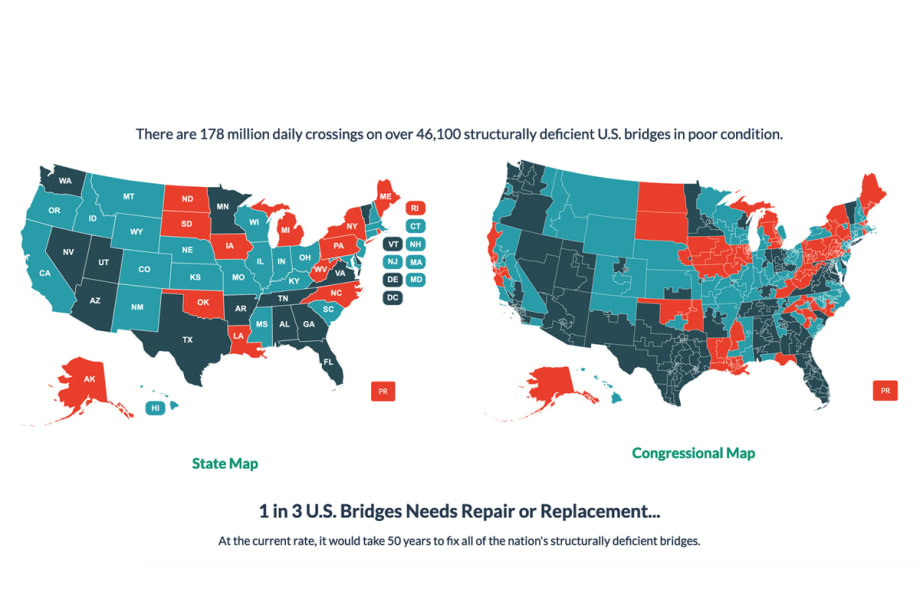
More than 230,000 U.S. bridges need either major repair work or should be replaced, according to ARTBA's analysis of the U.S. Department of Transportation's 2019 National Bridge Inventory database to form the analysis.
Source: ARTBA
2 min to read
According to a recent analysis from the American Road & Transportation Builders Association (ARTBA), more than 230,000 U.S. bridges need either major repair work or should be replaced. The analysis used the U.S. Department of Transportation's 2019 National Bridge Inventory database to form the analysis.
In simpler terms, 37% of all U.S. bridges, which would stretch more than 6,300 miles altogether and see American drivers crossing them 1.5 billion times per day, need immediate repair, according to the data. Of this total, more than 46,000 of those bridges are considered "structurally deficient" and in poor condition. These are crossed 178 million times a day.
The report, which was released as Congress and the White House continue to respond to the fiscal impacts of the COVID-19 pandemic, could lay down a road map to economic recovery, according to ARTBA President Dave Bauer.
“Economic recovery from coronavirus begins with strategic road and bridge improvements,” said Bauer. “Increased transportation investments support direct job creation and retention, while putting in place capital assets that will enhance U.S. productivity for decades to come.”
Diving deeper into the numbers, an additional 81,000 bridges should be replaced and one-third of Interstate highway bridges – or 18,177 – need repairs, according to ARTBA Chief Economist Dr. Alison Premo Black, who led the analysis.
While the transportation construction industry is not seeking federal assistance, it should be part of the solution, according to Bauer, adding that in July 2019, the Senate Environment and Public Works Committee unanimously approved a five-year highway reauthorization bill, which should be the starting point for discussions.
“The sooner we invest in robust new transportation improvements, the sooner the American people will experience the economic benefits,” Bauer says.
ARTBA estimates the cost to make the identified repairs for all 231,000 bridges in the U.S. at nearly $164 billion, based on average cost data published by the Federal Highway Administration.
“At the current pace, it would take more than 50 years to repair America's structurally deficient bridges,” said Black. “Our bridge network is underfunded and should be modernized. State and local government just haven't been given the necessary financial resources to fully address the problem.”
See the full report here.
More Safety & Compliance

FMCSA Pauses Biennial-Update Enforcement Amid Motus Transition
Carriers whose updates were due on or after June 1 have more time, while FMCSA works to stabilize its new registration system and warns of phishing sites impersonating its new carrier registration system, Motus.
Read More →
ZF Expands Commercial Vehicle Push in North America
ZF is expanding its North American commercial-vehicle presence with new transmission applications, electrification, trailer technology and autonomous-driving systems.
Read More →
Truck Drivers Need More Than Another Alert
Fleets have more visibility into truck health, safety events, and driver activity than ever. The next challenge is turning all that information into useful guidance for the person who has to decide what to do next.
Read More →
Tesla Wants a Self-Driving Semi. Are Cameras Enough?
Could Tesla’s camera-only autonomous driving technology work on an 80,000-pound Semi? In this commentary, HDT's Deborah Lockridge takes a look at Tesla, Cybercab, and how autonomous trucks see the road.
Read More →
What DOT’s Automated Vehicle Strategy Means for Trucking
The U.S. Department of Transportation issued a new automated-vehicle strategy that outlines plans for driverless-truck regulations, cross-state freight corridors, and federal safety standards.
Read More →
NYC Expands Speed, Pedestrian Safety Tech Across Fleet
New York City is expanding intelligent speed assistance and pedestrian-alert systems across its municipal fleet, moving the technologies from pilot programs into vehicle procurement and retrofit requirements.
Read More →
FMCSA Removes 110 Truck Driver Training Schools from Certified ELDT List
Federal regulators also are targeting more than 160 additional training providers and launching a nationwide audit of third-party CDL skills testers as part of a broader crackdown on trucking fraud.
Read More →
Beyond DOT Compliance: What Makes a Trucking Fleet Truly Safe?
A trucking fleet can follow every rule and still make unsafe decisions. The real test comes when safety conflicts with freight, productivity, or cost.
Read More →
Hours of Service Pilot Programs: FMCSA Readies for 2027 Rollout
Two pilot programs could eventually reshape hours-of-service rules, giving truck drivers options to pause their 14-hour clock or use longer split sleeper rest periods.
Read More →
New Guide Offers Pet Safety Tips for Truck Drivers
Hundreds of thousands of pets travel in truck cabs. A new safety guide from Volvo Trucks and the Center for Pet Safety offers practical advice for truck drivers who bring dogs and cats along for the ride.
Read More →