




APG Books Return Orders for Dual-Fuel Gas-Diesel Systems
The company says its dual-fuel gliders outperform and are more reliable than dedicated natural gas engines that customers are evaluating.
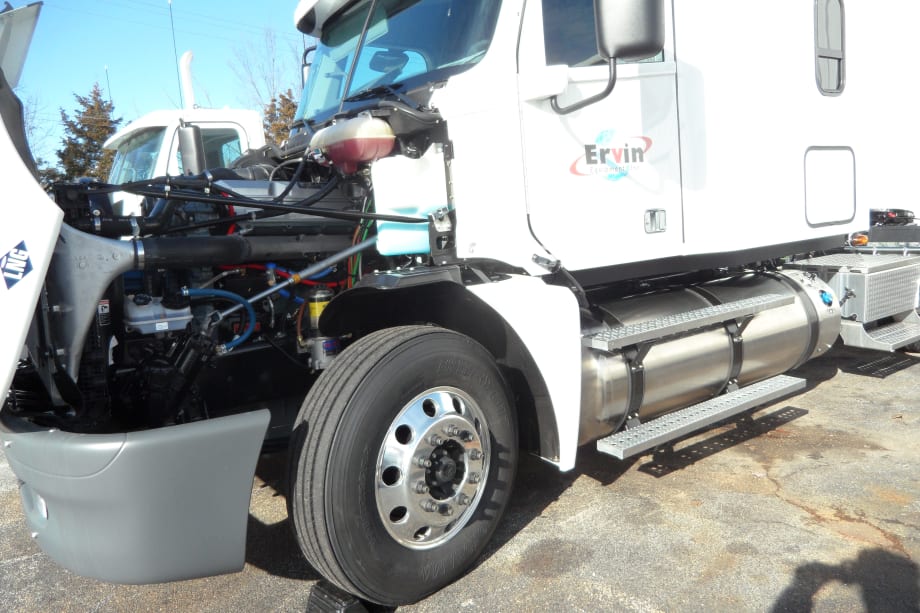
Clarke Power assembled this Freightliner glider with a Detroit Series 60 engine equipped with APG’s dual-fuel system, enabling it to run on natural gas and diesel. Gas is stored in liquefied form on this tractor.
American Power Group reports it recently received orders for 38 of its dual-fuel diesel-natural gas systems, a record number in one month for the product. APG also says the dual-fuel systems are comparing favorably in cost and reliability with gas-only engines being tried by some fleets.
The V5000 systems will be installed in Class 8 tractors, enabling their heavy diesels to burn gas with diesel to lower fuel costs and reduce exhaust emissions. The orders involve APG’s partnership with the WheelTime Network and its members, who operate service shops and parts outlets.
APG has evaluation orders for nine dual-fuel systems from a high-profile, family owned food service fleet based in Oklahoma, which has some of the lowest natural gas prices in the United States, said Lyle Jensen, APG’s chief executive officer.
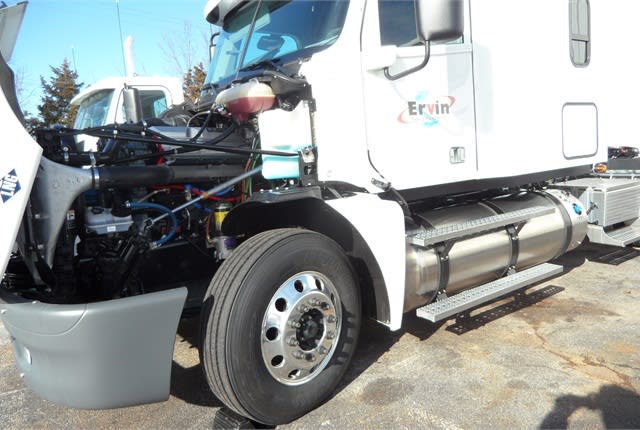
Clarke Power assembled this Freightliner glider with a Detroit Series 60 engine equipped with APG’s dual-fuel system, enabling it to run on natural gas and diesel. Gas is stored in liquefied form on this tractor.
APG will coordinate this $290,000 conversion with United Engines, a WheelTime member, with operations in Oklahoma City. It expects to convert five trucks during June and install systems in four new Freightliner APG Dual Fuel Gliders later this year.
Clarke Power Services, another WheelTime member, received a follow-on order for 20 APG Dual Fuel Gliders from a food-grade bulk hauling customer who had initially purchased 10 dual-fuel glider-kitted tractors in March, Jensen said. Net fuel savings and the lighter weight of a glider compared to a new diesel tractor are the key reasons the fleet wants more dual-fuel gliders.
Additionally, Clarke Power booked an evaluation order for conversion of two Class 8 tractors for a major for-hire carrier. Clarke also has outstanding quotes with another four major for-hire fleets.
Penn Commercial Vehicle Solutionshas booked an initial evaluation order for five APG dual fuel systems with a large regional textile services company in Pennsylvania. The order will target conversion of 2007-2009 model year trucks in their fleet and will be filled from Penn Commerical’s existing dual fuel systems inventory, so APG expects a restocking order soon.
Interstate Power Systemshas received a follow-on order for four APG Dual Fuel Gliders from a Freightliner dealer who purchased its initial dual fuel glider in April. The dealer specializes in glider kits and is primarily focused on heavy-duty Class 8 trucks servicing the oil & gas exploration and production industry, which reportedly has 190,000 heavy-duty trucks operating in North America.
“One of the more exciting emerging trends we see is the success our 2014/2015 APG Dual Fuel Glider is having in side-by-side customer evaluation tests with dedicated natural gas engines,” Jensen said. “The Series 60 12.7L APG dual fuel glider is outperforming and experiencing less maintenance downtime then their dedicated natural gas engine counterpart."
He said the company belives its dual fuel system was going to be more than just a transition technology to dedicated natural gas engines. Early indications are showing the APG Dual Fuel Glider is becoming an alternative mainstream natural gas vehicular choice for the Class 8 trucking industry, according to Jensen.
The company currently has about 450 EPA Outside Useful Life approvals covering six engines on the road and has shipped over 250 dual-fuel vehicular conversion systems in North America and over 150 internationally, Jensen said.
More Fuel Smarts

How Volvo Updated Its D13 for EPA 2027 [Watch]
Volvo’s updated D13 promises lower emissions without sacrificing performance or fuel economy. Take a closer look at what changed inside the engine in this HDT Spotlight video.
Read More →
Diesel Price Spike Shortens Payback for Natural Gas Trucks, Report Says
Energy Vision estimates fleets could recover the higher purchase price of an RNG-fueled Class 8 tractor in 1.3 to 2.8 years under current fuel-price scenarios.
Read More →
Calstart Becomes Catalyst Mobility, Reflecting Broader Focus
Calstart is now Catalyst Mobility, reflecting the nonprofit’s growing national role in clean transportation, including zero-emission trucks, infrastructure and incentive programs.
Read More →

Record Diesel Prices Squeeze Trucking Fleets
Average U.S. diesel prices have climbed to nearly $6 a gallon, surpassing the 2022 record as tight refinery capacity and Middle East disruptions keep fuel costs elevated.
Read More →
How Fuel Delivery Shapes Engine Performance
Fuel delivery depends on more than what happens at the injector. For fleet, maintenance and technical professionals, looking at the full path from pump to injector can provide useful context for understanding engine performance.
Read More →
East Coast Port Launches $45M Electric Truck Push
The Port Authority of New York and New Jersey announced millions in incentives for zero-emission drayage trucks, yard tractors, and new charging hubs near the port.
Read More →
California Bill Could Shed Light on Electric Truck Prices
Why do battery-electric Class 8 trucks remain so expensive? A California bill headed to Gov. Gavin Newsom would give fleets and state agencies more visibility into what manufacturers charge.
Read More →
Detroit Opens Orders for EPA 2027 Engines
Detroit isn’t starting from scratch to meet EPA 2027 diesel emissions standards. Its Gen 6 DD13 and DD15 engines keep much of today’s platform while updating the fuel and aftertreatment systems.
Read More →
Zero-Emission Truck Corridor Planned for West Coast
California, Oregon, Washington, British Columbia and Baja California are coordinating plans for truck charging and hydrogen fueling from Canada to Mexico.
Read More →
A Closer Look at Kenworth’s Electric T880E Vocational Truck [Video]
Learn more about Kenworth's T880E battery-electric vocational truck at the Paccar Technical Center, including its range, applications, upfitting considerations, and PTO options, in this HDT Spotlight video.
Read More →