




Ag Transporters Refute Hours Exemption Criticism
The Agricultural and Food Transporters Conference of the American Trucking Associations released a critique Tuesday refuting allegations of safety concerns with hours-of-service exemptions
The Agricultural and Food Transporters Conference of the American Trucking Associations released a critique Tuesday refuting allegations of safety concerns with hours-of-service exemptions.
Current law exempts ag carriers from hours-of-service regulations operating within a 100-air-mile radius from their central base of operation during planting and harvesting seasons. Similar provisions provide flexibility for other essential industries such as electric utilities and water well drilling as well as short-haul trucking operations within many states.
In April, the Commercial Vehicle Safety Aliance called for the repeal of those exemptions, following the results of a study of truck crash and out of service rates by the U.S. Department of Transportation's Volpe National Transportation Systems Center.
Ronald Knipling, an independent consultant with 30 years of experience in traffic and motor carrier safety, wrote a critique pointing out shortcomings of the Volpe study. Some of his major points:
* The study implicates HOS exemptions as the primary cause of higher crash rates for select groups of carriers, but in fact contains no direct information on driver fatigue or any other crash cause.
* Carriers examined in the CVSA study may differ in safety-relevant ways that have nothing to do with regulation differences. Carriers may be of different sizes, be distributed differently geographically, and use different mixes of fleet vehicles. Certainly, they drive in different roadway environments. Agricultural production under the HOS exemption occurs largely in rural areas where the overwhelming percentage of travel is on undivided roads, while divided highways in general have markedly lower crash rates.
* HOS rules are intended to reduce commercial driver fatigue and, specifically, asleep-at-the-wheel crashes. Driver fatigue as a crash cause is much less frequent in short-haul trucking operations than in long-haul operations.
"It seems unwise to base a regulatory and economic decision as significant as revocation of the short-haul agricultural HOS exemption solely on (inadequate) statistics," Knipling concluded. "Imposing new agricultural HOS regulations would likely have little measurable effect on short-haul trucking safety."
Knipling's conclusions follow a recent letter signed by 50 agricultural organizations sent to leaders of the House Transportation and Infrastructure Committee that expresses support for maintaining the agricultural hours-of-service exemption during the transportation authorization debate.
More info: www.truckline.com/Federation/Conferences/AFTC/Pages/Default.aspx
More Safety & Compliance
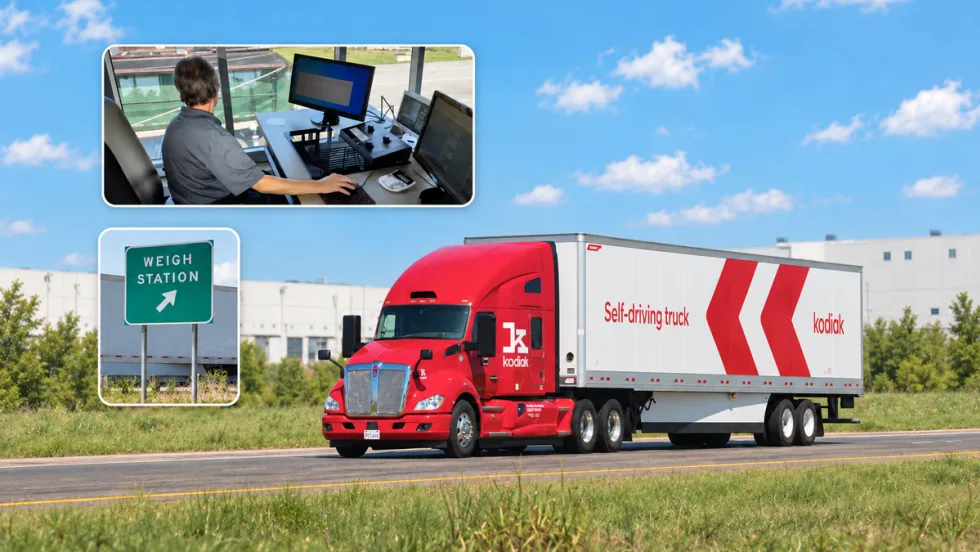
PrePass, Kodiak Connect Driverless Trucks to Roadside Enforcement
The system will allow enforcement agencies to verify Enhanced Inspection information and decide whether Kodiak’s autonomous trucks can bypass roadside screening sites.
Read More →
From One Generation to the Next: How Mentorship Builds Safer Truck Drivers
After three decades in trucking, Harold Perry shares what he's learned about driver safety, mentorship, and helping the next generation build confidence behind the wheel.
Read More →
FMCSA Pauses Biennial-Update Enforcement Amid Motus Transition
Carriers whose updates were due on or after June 1 have more time, while FMCSA works to stabilize its new registration system and warns of phishing sites impersonating its new carrier registration system, Motus.
Read More →
ZF Expands Commercial Vehicle Push in North America
ZF is expanding its North American commercial-vehicle presence with new transmission applications, electrification, trailer technology and autonomous-driving systems.
Read More →
Truck Drivers Need More Than Another Alert
Fleets have more visibility into truck health, safety events, and driver activity than ever. The next challenge is turning all that information into useful guidance for the person who has to decide what to do next.
Read More →
Tesla Wants a Self-Driving Semi. Are Cameras Enough?
Could Tesla’s camera-only autonomous driving technology work on an 80,000-pound Semi? In this commentary, HDT's Deborah Lockridge takes a look at Tesla, Cybercab, and how autonomous trucks see the road.
Read More →
What DOT’s Automated Vehicle Strategy Means for Trucking
The U.S. Department of Transportation issued a new automated-vehicle strategy that outlines plans for driverless-truck regulations, cross-state freight corridors, and federal safety standards.
Read More →
NYC Expands Speed, Pedestrian Safety Tech Across Fleet
New York City is expanding intelligent speed assistance and pedestrian-alert systems across its municipal fleet, moving the technologies from pilot programs into vehicle procurement and retrofit requirements.
Read More →
FMCSA Removes 110 Truck Driver Training Schools from Certified ELDT List
Federal regulators also are targeting more than 160 additional training providers and launching a nationwide audit of third-party CDL skills testers as part of a broader crackdown on trucking fraud.
Read More →
Beyond DOT Compliance: What Makes a Trucking Fleet Truly Safe?
A trucking fleet can follow every rule and still make unsafe decisions. The real test comes when safety conflicts with freight, productivity, or cost.
Read More →