




AFL-CIO Coalition Seeks to Clip Hair Testing
A coalition of AFL-CIO member unions is urging the Federal Motor Carrier Safety Administration to deny a petition by several trucking companies to use hair specimens in lieu of federally mandated urine in pre-employment drug tests.

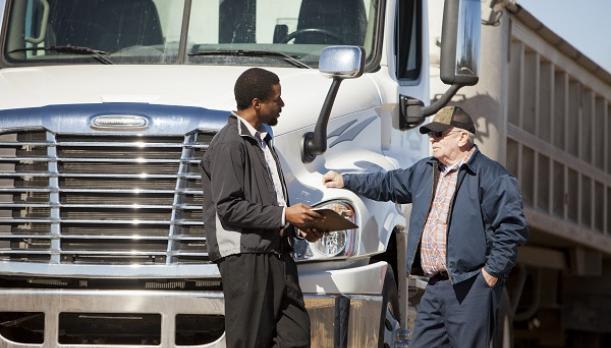
Photo: FMCSA

Photo: FMCSA
A coalition of 32 AFL-CIO member unions representing transportation workers is urging the Federal Motor Carrier Safety Administration to deny a petition by several trucking companies to use hair specimens in lieu of federally mandated urine in pre-employment drug tests.
The Transportation Trades Department of AFL-CIO contends that the safety agency should “follow established protocol and put science first” by denying the petition filed back in October by Maverick Transportation, Knight Transportation, J.B. Hunt Transport Services and Dupré Logistics, all members of the Alliance for Driver Safety & Security, along with Schneider National and Werner Enterprises.
In comments filed on April 25, TTD pushed back against the petition, citing concerns about the reliability, accuracy and fairness of hair testing. The union coalition stated that studies show that hair testing can produce false results and may have an inherent racial bias. Darker and more porous hair retains some drugs at greater rates than lighter hair, said TTD, adding that “hair specimens can test positive for drugs drivers never ingested.”
“No one in America should be denied employment because the trucking industry wants to rely on an unsound testing method as a way to cut drug-testing costs,” said TTD President Edward Wytkind. “Until hair testing is proven to be a reliable and fair way of testing for drug use and federal standards are in place, subjecting transportation workers to hair-testing should not be up for serious consideration.”
TTD argues that, unlike urine tests, which it said are the most accurate and reliable method for pre-employment drug testing, hair testing lacks federal oversight. Therefore, relying on hair testing as a condition of employment “could unfairly hinder a driver’s chance to earn a livelihood and sets a threatening precedent that could affect millions of workers in the transportation sector and across the economy.”
The union coalition noted that language in the FAST Act highway bill of 2015 directs the Department of Health and Human Services to issue scientific and technical guidelines on hair testing and permits bus and truck companies to perform pre-employment hair tests only after HHS guidelines are issued. “This reflects the standard that the Department of Transportation has adhered to since 1991, when Congress mandated that DOT follow HHS guidelines in creating federal drug test standards,” TTD said.
“By petitioning FMCSA with the same request Congress ultimately denied, these trucking companies are circumventing a long-established process that rightfully allows scientists, not employers or politicians, to determine which testing methods and procedures are approved and implemented,” Wytkind said. “Deviating from that process undermines scientific standards and sets a dangerous precedent that could have far-reaching consequences.”
In addition, TTD pointed out that several prominent civil rights groups, including the NAACP, ACLU and the Drug Policy Alliance, have submitted comments that also urge FMCSA to deny the petition, “citing the racial biases and false results associated with hair testing.”
TTD also noted that influential Congressman Peter DeFazio (D-OR), Ranking Member of the House Transportation Committee, and Del. Eleanor Holmes Norton (D-DC) have also called on FMCSA to deny the petition. In a Feb. 21 letter to the agency, the two Capitol Hill stalwarts call the implementation of hair testing “premature” and a contradiction of Congressional intent.
On the other hand, hair testing is still drawing firm support from key trucking industry groups, including the American Trucking Associations, the Truckload Carriers Association, and the aforementioned Alliance for Driver Safety & Security. The latter group has stated that it supports hair testing over urinalysis because it is “more effective at identifying lifestyle drug users.”
More Fleet Management

Color Match Smarter: Tools That Restore & Perform
For fleet managers and collision repair professionals keeping heavy-duty trucks on the road, getting the color right the first time isn't just about appearance — it's about efficiency, turnaround time, and bottom-line results. Discover how today's digital color tools are transforming the repair process from guesswork to precision.
Read More →
FMCSA Pauses Biennial-Update Enforcement Amid Motus Transition
Carriers whose updates were due on or after June 1 have more time, while FMCSA works to stabilize its new registration system and warns of phishing sites impersonating its new carrier registration system, Motus.
Read More →
2026 Blueprint for Countering Smarter Supply Chain Theft
Cargo theft is no longer just the cost of doing business. It's a multi-billion-dollar criminal enterprise exploiting vulnerabilities across your fleet, drivers, and supply chain.
Read More →


How Telematics Improves Visibility, Control, and Performance in Refrigerated Fleets
Explore how telematics help refrigerated fleets improve visibility, uptime, efficiency, compliance, and cargo protection across connected cold chain operations.
Read More →
What the U.S.-Canada Trade War Means for Trucking
Escalating U.S.-Canada tariffs could disrupt cross-border freight, reduce truck volumes, raise costs, and create new uncertainty for carriers on both sides of the border.
Read More →
What Are Trucking’s Top Concerns for 2026?
The American Transportation Research Institute wants to know what's worrying trucking fleet managers, drivers, and other stakeholders in its annual Industry Issues survey.
Read More →
American Trucking Associations Looks for a New Leader
ATA President and CEO Chris Spear abruptly left his job at the association on August 21, at a pivotal time for the trucking industry.
Read More →
Public Wi-Fi Cybersecurity Risks: How Truck Drivers and Fleets Can Protect Their Data
Public Wi-Fi can expose truck drivers and fleets to credential theft, malware, and other cyber threats. Here’s how to reduce the risk on the road.
Read More →
For Nicky Cupp, Fleet Innovation Starts With Frustration
HDT Truck Fleet Innovator Nicky Cupp turns everyday pain points at Fraley & Schilling into opportunities for better technology and smarter processes.
Read More →
Adam Buttgenbach’s Approach to Electric Trucks: Start With Where They Fit
HDT Truck Fleet Innovator Adam Buttgenbach helped PepsiCo build one of North America’s largest EV fleets by focusing on where electric trucks make operational sense.
Read More →