





One petitioner reported that 108 people who applied for employment as truck drivers passed the urine exam but failed their hair test.
Trucking Alliance Pulls Hard for Hair-Testing
The Alliance for Driver Safety & Security (a.k.a. “Trucking Alliance”) has submitted a set of comments to the Federal Motor Carrier Safety Administration to support a petition calling for motor carriers to be exempt from having to use urinalysis to test for drug use by CDL driver applicants.
February 17, 2017
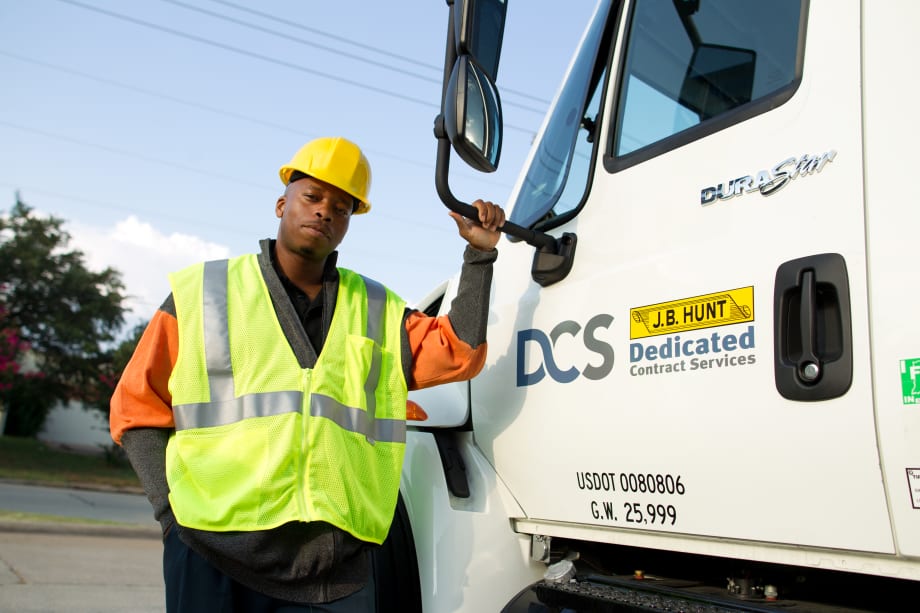
J.B Hunt is among the member companies of the Trucking Alliance seeking an exemption to let them conduct hair-testing for pre-employment drug testing of driver applicants. Photo: Drivewyze
5 min to read
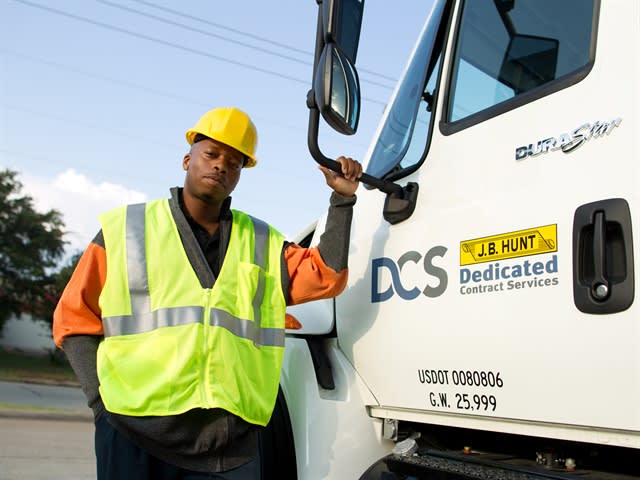
J.B Hunt is among the member companies of the Trucking Alliance seeking an exemption to let them conduct hair-testing for pre-employment drug testing of driver applicants. Photo: Drivewyze
The Alliance for Driver Safety & Security (a.k.a. “Trucking Alliance”) has submitted a set of detailed comments to the Federal Motor Carrier Safety Administration that strongly support a petition calling for motor carriers to be exempt from having to use urinalysis to test for drug use by CDL driver applicants. Four of the six petitioners are member companies of the Trucking Alliance.
If the exemptions are granted, the petitioning carriers will not have to wait for FMCSA to initiate and complete a rulemaking that would allow hair-testing in lieu of urinalysis or one that would mandate hair-testing instead of urinalysis.
According to a Feb. 16 letter to FMCSA containing the comments (Docket FMCSA-2017-0002) and signed by Trucking Alliance Managing Director Lane Kidd, the petitioners seek to instead use hair analysis to meet federal drug test requirements for commercial driver job applicants.
“Hair-testing is a more reliable (albeit twice as expensive) method for identifying lifestyle drug users, than the less expensive and less reliable urine exam,” states Kidd.
Kidd notes in the letter that the Alliance “concurs with petitioners in their stated reasons for deserving an exemption, but adds that “in the broader context, the petitioners are utilizing a more reliable method [hair-testing] for identifying drug users than the vast majority of U.S. freight and logistics carriers.”
He then contends that the petitioners are “deserving of an exemption and for the following public safety reasons:”
The role drugs play in large-truck accidents. “’Lifestyle drug users’ have no place in the commercial truck driver profession. Truck driving is an occupation that exposes the general public to possible safety risks, because motorists share the highways with thousands of commercial truck drivers every day. Freight transportation companies, the federal government and state commercial vehicle enforcement agencies have a moral responsibility to ensure that commercial truck drivers are well trained, rested, and drug and alcohol free, as they deliver our products.” Kidd states that per the National Highway Traffic Safety Administration, between 2012 and 2014, there were 560 fatal accidents involving large trucks in which the truck driver tested positive for illegal drug use. “All of these 560 truck drivers were presumed to have passed their urine exam before employment. Yet, they were identified as drug users after these fatal accidents occurred.”
Lifestyle drug users skirt the system. “Today, there are numerous products available to purchase online and at truck stops across America that enable a person to mask their drug use in a urine exam. But hair- testing is more difficult to disguise a person’s drug use. In fact, Psychemedics, a leading hair-testing laboratory, estimates that 85% of the drug users identified by its hair testing process would be missed by a urinalysis.”
Kidd adds that “an untold number of lifestyle drug users are likely operating large trucks today. "Consider that one petitioner, Maverick USA, has reported that 108 people who applied for employment as truck drivers at the company passed the urine exam but failed their hair test.” He also says that another petitioner, J.B. Hunt Transport, has voluntarily conducted hair tests on commercial driver applicants for 10 years. “Since then, more than 4,700 J.B. Hunt driver applicants passed their urinalysis but the hair exam identified them as drug users.”
Congress recognizes benefits of hair-testing. “The Petition for Exemption is not without support, merit or precedent. For example, in 2013, after recognizing the efficiencies of hair testing over a urinalysis, Congressman Rick Crawford (R-AR) was joined by Congressman Lou Barletta (R-PA) and others in introducing ‘The Drug Free Commercial Driver Act.’ The legislation would have directed the Secretary of Transportation to modify regulations and allow a motor carrier to use hair-testing in lieu of a urinalysis, as a method for detecting use of controlled substances by an operator, but only for pre-employment testing and random testing. However, the legislation did not receive consideration.”
Kidd points out that more recently, the FAST Act highway bill contained a provision that directed the Department of Health and Human Services to issue scientific and technical guidelines for hair-testing, as a method to detect controlled substance abuse. “After these guidelines are adopted, FMCSA may initiate a rulemaking to permit hair testing as an acceptable alternative to urine-testing for certain drug tests. However, this rulemaking process to recognize hair-testing could take years.”
In closing the letter, Kidd says that “Trucking Alliance companies report that not one lawsuit has been filed against their companies by a person who failed a hair exam, in which they claimed a false test result, employment prejudice, or for any other reason.
“In summary,” he adds, “the petitioners are committed to keeping lifestyle drug users out of their trucks and off the nation’s highways. Granting the Petition for Exemption will enable the petitioners to continue their effective, established and nationally recognized protocol for achieving their worthy objective, without incurring needless expenses, and while HHS and FMCSA complete their legislatively mandated tasks and rulemakings regarding hair-testing.”
The member companies of the Trucking Alliance companies and the states in which they are headquartered are: Cargo Transporters (North Carolina), Dupré Logistics (Louisiana), JB Hunt Transport Services (Arkansas), KLLM Transport Services (Mississippi), Knight Transportation (Arizona), Maverick USA (Arkansas), and US Xpress (Tennessee). These transportation and logistics companies collectively employ 46,475 people in 49 states, operate more than 39,000 trucks, own more than 110,000 semitrailers and containers, and deliver products “safely and efficiently throughout North America and internationally.”
More Drivers
Platform Science Adds Dispatch and Safety Tools
Four additions to PS Fleet help fleets monitor loads, manage driver coaching, share truck locations and adjust video system settings.
Read More →
When Language Stops the Truck: The Return of ELP Out-of-Service Orders
English language proficiency rules for commercial drivers aren’t new, but renewed out-of-service enforcement has raised the stakes. Here’s what carriers need to know before a driver reaches a roadside inspection.
Read More →
Samsara Launches Custom AI Agent Builder
Agent Studio lets fleets create AI tools for hours-of-service monitoring, reporting and driver support, including agents that communicate by phone.
Read More →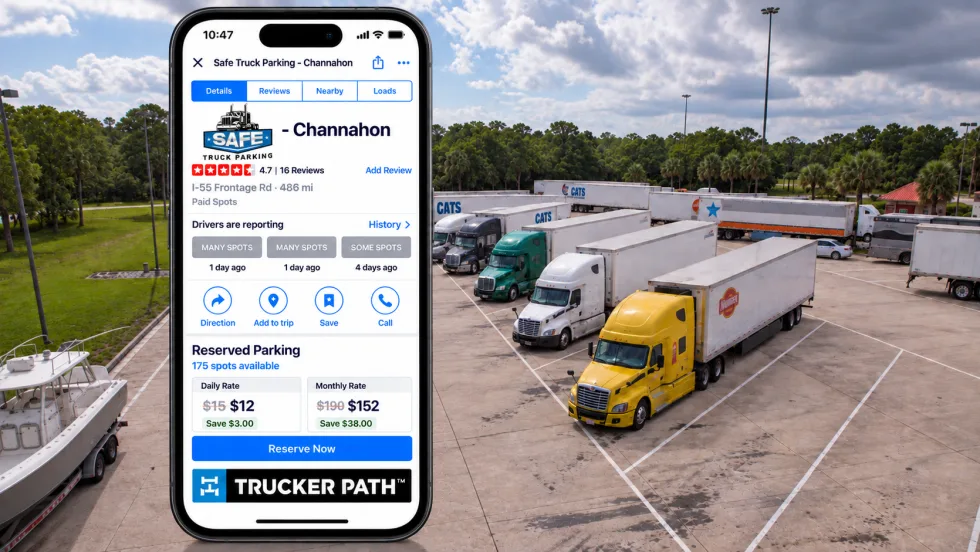
Trucker Path Expands Reserved Parking Network
Trucker Path has added close to 6,000 more truck parking spaces to its Trucker Path Reserved Parking Network with the addition of Safe Truck Parking.
Read More →
EEOC Sues Texas Trucking Company Over Driver Age Limits
The agency says Trancasa USA rejected applicants over 65 and applied tougher driving-record standards to those over 60.
Read More →
Nussbaum, Roehl Announce Second Driver Pay Increase This Year
This year has seen a swath of major truck driver pay increases as freight capacity has tightened.
Read More →
From One Generation to the Next: How Mentorship Builds Safer Truck Drivers
After three decades in trucking, Harold Perry shares what he's learned about driver safety, mentorship, and helping the next generation build confidence behind the wheel.
Read More →
Truck Drivers Need More Than Another Alert
Fleets have more visibility into truck health, safety events, and driver activity than ever. The next challenge is turning all that information into useful guidance for the person who has to decide what to do next.
Read More →
FMCSA Removes 110 Truck Driver Training Schools from Certified ELDT List
Federal regulators also are targeting more than 160 additional training providers and launching a nationwide audit of third-party CDL skills testers as part of a broader crackdown on trucking fraud.
Read More →
Hours of Service Pilot Programs: FMCSA Readies for 2027 Rollout
Two pilot programs could eventually reshape hours-of-service rules, giving truck drivers options to pause their 14-hour clock or use longer split sleeper rest periods.
Read More →