




ACT Research: YTD Used Class 8 Sales Up, Average Price, Miles and Age Down
While preliminary data shows that used Class 8 volumes dropped 10% month-over-month in October, they are still 10% up compared to the first 10 months of 2019, according to ACT Research.


While preliminary data shows that used Class 8 volumes dropped 10% month-over-month in October, they are still 10% up compared to the first 10 months of 2019, according to ACT Research.
Month-over-month comparisons for October 2020, which showed that average prices increased 4%, reported that average miles rose 1% and average age gained 2%, compared to September. But, when loking at year-to-date data, the trio were all lower, down 11%, 3%, and 7%, respectively, compared to January through October of 2019.
“How the year ultimately plays out will depend heavily on the demand for equipment, particularly in the spot freight markets, where rates have yet to show any signs of abating from recent record highs,” said Steve Tam, vice president of ACT Research. “That said, one of the most frequent questions we are being asked today is why truckers are buying trucks when there are still tens of thousands of unemployed truck drivers, whose rigs are sitting idle.”
Tam added that each buyer likely has their own reasons for purchasing and is not worried about the “big picture of balancing work and capacity.”
“Buyers are probably unaware that they are individually contributing to a faster imbalance of too many trucks and not enough freight, which will hasten the next peak and send the industry down the backslope of the next cycle,” he concluded.
More Equipment

ZF Expands Commercial Vehicle Push in North America
ZF is expanding its North American commercial-vehicle presence with new transmission applications, electrification, trailer technology and autonomous-driving systems.
Read More →
Tesla Wants a Self-Driving Semi. Are Cameras Enough?
Could Tesla’s camera-only autonomous driving technology work on an 80,000-pound Semi? In this commentary, HDT's Deborah Lockridge takes a look at Tesla, Cybercab, and how autonomous trucks see the road.
Read More →
Kodiak: Driverless Long-Haul Truck Launch on Track for 2026
Kodiak AI says its driverless long-haul safety case is 93% complete and it remains on track to begin commercial operations by year-end 2026.
Read More →
What DOT’s Automated Vehicle Strategy Means for Trucking
The U.S. Department of Transportation issued a new automated-vehicle strategy that outlines plans for driverless-truck regulations, cross-state freight corridors, and federal safety standards.
Read More →
East Coast Port Launches $45M Electric Truck Push
The Port Authority of New York and New Jersey announced millions in incentives for zero-emission drayage trucks, yard tractors, and new charging hubs near the port.
Read More →
PlusAI Going Public to Fund Autonomous Truck Launch
A SPAC deal could provide PlusAI with up to $300 million as it works toward a 2027 commercial launch of factory-built autonomous trucks.
Read More →
NHTSA Moves to Rewrite Truck Fuel-Economy Rules
The National Highway Traffic Safety Administration says it lacks authority to regulate medium- and heavy-duty truck engines separately from complete vehicles, but the existing standards have not yet been eliminated.
Read More →
Detroit Opens Orders for EPA 2027 Engines
Detroit isn’t starting from scratch to meet EPA 2027 diesel emissions standards. Its Gen 6 DD13 and DD15 engines keep much of today’s platform while updating the fuel and aftertreatment systems.
Read More →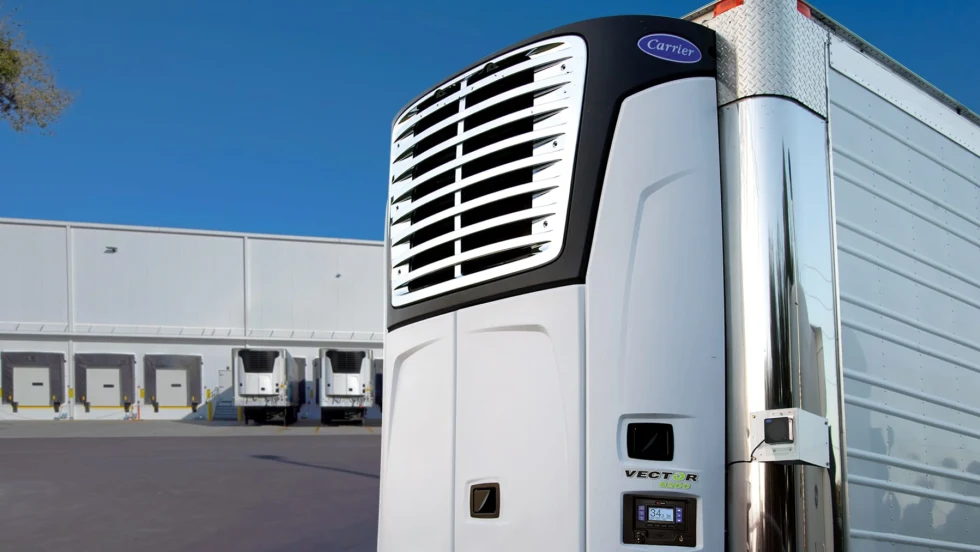
Carrier Transicold Adds All-Electric TRU for Stationary Cold Storage
Carrier Transicold’s new Vector 8200 all-electric transport refrigeration unit gives fleets a diesel-free option for temporary refrigerated and frozen trailer storage.
Read More →
A Closer Look at Kenworth’s Electric T880E Vocational Truck [Video]
Learn more about Kenworth's T880E battery-electric vocational truck at the Paccar Technical Center, including its range, applications, upfitting considerations, and PTO options, in this HDT Spotlight video.
Read More →