




Three Transportation Technology Trends From CES 2024
CES can always be counted on for a glimpse of the future. This year’s show didn’t disappoint on the commercial vehicle front, says HDT's Jack Roberts in his Truck Tech blog.


AUO showcased a new generation of driver-vehicle information technology that will almost certainly be coming to a new truck near you soon.
Photo: Jack Roberts
CES — formerly known as the world-famous Consumer Electronics Show — is a lot to take in. It's impossible to see everything at the show, which sprawls over almost the entire, massive, Las Vegas Convention Center complex. Nonetheless, CES is the place to see the latest and greatest tech trends for any market segment or industry you can think of. Transportation is no exception.
Although CES isn’t an automotive-focused show, it is still a great place to get a sense of the overall trends shaping both trucking and passenger car markets. This year’s show was no exception.
Here are a few emerging trends from CES 2024 that I think OEMs, suppliers and fleets ought to pay attention to. In my opinion, these are major technology developments that will be shaping commercial vehicle design, use and operation in the coming years.
1. Software-Defined Vehicles – But Whose Software?
Last year from CES I reported that the rise of the Software-Defined Vehicle was imminent. And that's still true.
Really, the concept of the “software-defined vehicle” makes perfect evolutionary sense from a technology point of view. Software and computing systems dominate every other facet of our lives, and motor vehicles aren’t going to be an exception. Cars and trucks are well on their way to becoming rolling computers. OEMs and outside suppliers are hard at work developing new apps and special computing programs designed to heighten safety and increase comfort for drivers and passengers alike.
But there are already problems with this new software push.
The average passenger car today depends on more than 10 million lines of computer code to operate its various systems. More often than not, these codes are written by multiple suppliers. The brake supplier writes the code for the brakes. The engine supplier writes the code for the engine. The transmission supplier writes the code for the AMT. And so on.
Figuring out how to get all of these codes to work smoothly together without some sort of common, open-source, baseline operating code is already starting to be a problem. The Chevrolet Blazer EV has already become a poster child for this challenge, with a litany of highly publicized software issues plaguing the vehicle.
There’s another issue as well: The OEMs have been eying the airlines’ business model and really like the idea of having the people who buy their vehicles paying monthly subscription fees for “add-on” features, ranging from heated seats to any number of apps performing any number of services. But it remains to be seen if the people who purchase those vehicles will be as enthusiastic about paying subscriptions for all of those features as OEMs hope they will be.
2. Mandatory Driver and Passenger Monitoring Systems are Coming
Beginning this year, every vehicle sold in Europe is required to have interior camera systems that monitor driver behavior. The U.S. is considering enacting similar regulations.
Obviously, the trucking industry has already dealt with this issue on a voluntary basis, driven by the need to reduce crashes, lower insurance costs, and minimize the threat of nuclear verdicts. We understand well how unpopular those systems can be with commercial drivers. But it seems like this is something very likely to become a regulatory reality fairly soon.
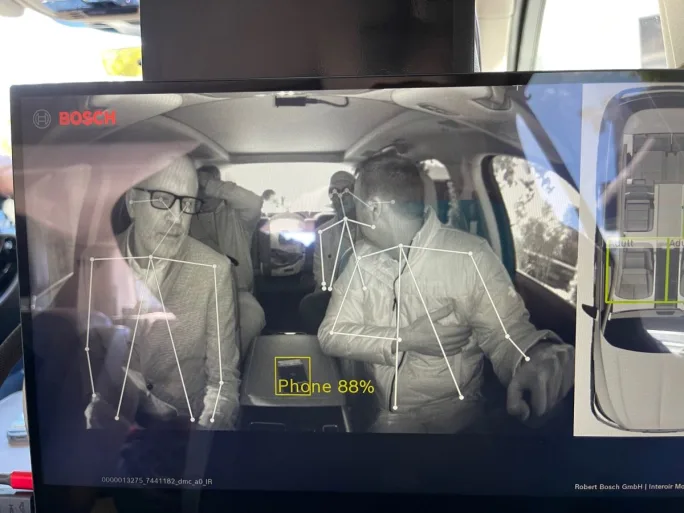
Bosch's new in-vehicle monitoring system is designed to enhance both driver and passenger safety.
Photo: Jack Roberts
Not surprisingly, several automotive suppliers at CES 2024 this year, notably Bosch and Continental, introduced new in-vehicle camera and radar systems to monitor both drivers and passengers. These systems use AI to make sure the driver is not sleepy, intoxicated, ill, impaired or distracted and that passengers are behaving reasonably.
These sophisticated systems can even identify objects inside the vehicle such as smartphones or laptops. Bosch has augmented its camera monitoring system with an in-cabin radar system that can detect objects out of the line of sight of the cameras. These radars are sensitive enough to pick up respiratory patterns in the air emitted by unattended children covered by blankets or pets asleep in the floorboard.
This technology seems poised for rapid growth and is certainly worth watching.
3. Get Ready for a Whole New Driver-Vehicle Interface
Just like it was only a matter of time before software became the dominant design/operational system for cars and trucks, we’re frankly overdue for a complete reworking of how drivers and passengers get information while they’re driving or riding in a vehicle.
True, there are a lot more bells and whistles and display screens in modern vehicles. But for the most part, the dashboard and interiors look a lot like they did 50 or 60 years ago. But that’s about to change.
Very soon, modern graphics and touch-pad interfaces, combined with new window coatings, lighting and interiors, are going to completely transform every aspect of a vehicle’s interior and how drivers get information from the vehicle itself, its immediate surroundings and the outside world.
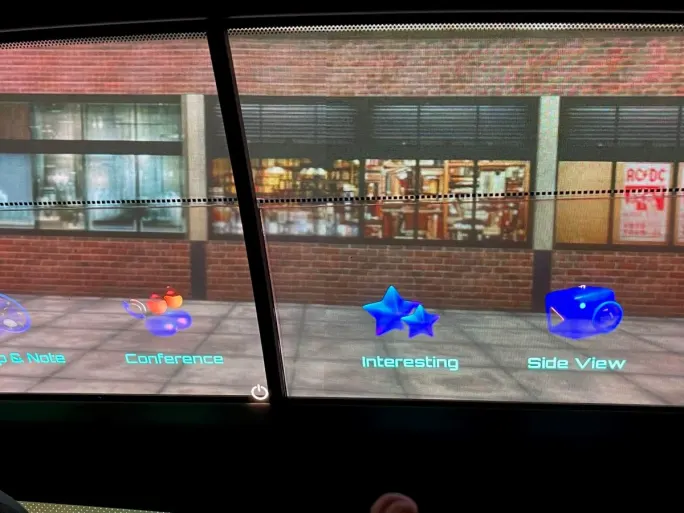
Very soon, side windows on cars and trucks will display real-time, interactive information -- both inside and outside the vehicle.
Photo: Jack Roberts
Several technology suppliers at CES 2024 demonstrated brand-new dashboards that bring modern computing icons, graphics and information into the vehicle in a truly stunning way.
AUO, a Taiwanese computer graphics and display company, showed me a compelling suite of all-new display systems that allow real-time information, including navigation prompts and danger alerts, to be flashed onto the windshield in front of the driver. All this in addition to new, completely customizable dashboards and control systems for vehicle functions.
With the AUO system, passengers can receive descriptions of landmarks, or even advertisements or special offers from buildings and businesses they drive past translucently displayed on the vehicle’s side windows.
And, significantly for commercial vehicles, those window display screens work both ways. So, a truck driver using AUO vehicle display systems can get a see-through message flashed on the front windshield above the steering wheel directing them to their assigned loading dock to make a delivery. At the same time, a QR code with information on the shipment and the cargo could be flashed on the outside windshield to be scanned by a dock worker and expedite the shipment onward to its final destination. The same interactive system, tied in with the truck’s telematics system, could display a maintenance checklist on the side window for technicians, who could then tick off the work performed right on that window/computer screen.
How and when these new technologies will begin to show up on new vehicles remains to be seen. But it is obvious that all three have tremendous potential to transform fleet operations if implemented successfully.
More Blog Posts

That Time Mack Trucks Threw Me a Birthday Party
Sometimes the best birthdays are the ones you never planned. Mine happened courtesy of one of America's oldest truck manufacturers, and it reminded me why I still love this industry after more than three decades.
Read More →
Trucking Should Prepare for Long Siege of High Fuel Prices
Many in trucking are treating today's fuel-price surge as a temporary disruption. History suggests they may be making a costly mistake.
Read More →
30 Days on the Road: April 2026
There was a glut of good news for the North American trucking industry. HDT's Jack Roberts takes a look back at our major stories from the month.
Read More →
30 Days on the Road: HDT's Monthly News Roundup for March 2026
HDT's Monthly News Roundup takes a look at the major North American trucking industry news stories from March, 2026.
Read More →
The Major Autonomous News No One is Talking About
Both Aurora Innovation and PlusAI have made under-the-radar announcements that signal a massive game-changer for trucking is coming soon.
Read More →
HDT's Monthly News Roundup: February 2026
February was dreary and dull -- as usual. But the North American trucking industry finally showed some signs of life. But how long that will last is anybody's guess.
Read More →
Like it or Not, The New Year is Here!
HDT's Monthly Trucking Newsletter looks back on the top stories from January, 2026.
Read More →
The Robots are Here
After a bruising year for trucking, CES 2026 felt subdued. Until it suddenly offered a glimpse of trucking's next disruption and reminded everyone that technology never waits for the next freight cycle.
Read More →
Robots and Road Rage
Computers never get angry. And that's a good thing on crowded stretch of interstate.
Read More →
For the Love of Old Trucks
Old trucks generally get ignored in classic car circles. Maybe that's changing.
Read More →