




What's Up With Alternative Fuels?
Although some researchers predict fuel prices won't spike again as they did in 2008, it's still likely that fuel prices will go up over time
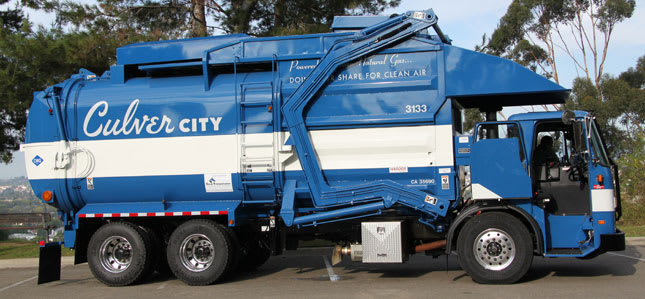
Culver City, Calif., is replacing its original CNG trash collection trucks with new Autocars powered by Cummins Westport ISL-G engines.
Although some researchers predict fuel prices won't spike again as they did in 2008, it's still likely that fuel prices will go up over time.
The International Energy Agency reported last month that global demand for energy could lead to oil prices of $113 to $135 a barrel by 2035, in 2009 dollars.
Even without the high fuel prices of 2008, demand for alternatives to traditional gasoline and diesel fuel is growing because of economic and social conditions, according to those who promote use of natural gas, propane and biodiesel. And, they say, some alternatives to straight diesel and gasoline can save money based simply on market prices.
Gaseous fuels - natural gas and liquefied petroleum gas, or propane - offer the promise of clean combustion and a substantial domestic supply. Thus they can help cleanse the air we breathe while weaning us from imported oil, backers say.
Prices for natural gas and propane are usually half that of diesel and gasoline in overseas countries, so are burned in a total of 29 million vehicles. But fewer than 350,000 cars and trucks here use those fuels because their prices aren't low enough. Federal tax credits artificially made natural gas, propane and other fuels sufficiently cheaper to boost use, but those credits expired last December, and Congress so far has not reinstated them.
There are several bills in Congress that would re-establish tax incentives, but their prospects are cloudy. Congress became preoccupied with healthcare reform and other controversial issues, and largely ignored transportation topics such as alternative fuel incentives and highway funding, critics say. Besides, incentives are carrots that reduce tax revenues needed for multiple government operations. So Congress several years ago went for a stick approach with its Renewable Fuels Standard. (More on this later).
The Pickens Plan
Natural gas got much publicity last year as investor T. Boone Pickens pushed his idea of converting much of America's truck fleet from diesel to gas. A few diesels designed to burn only natural gas are available, but not in big-bore sizes needed for highway running. Propane is mentioned far less in the news, but remains a strong choice of many fleets running lighter trucks, and in fact is made less from petroleum refining and more from natural gas. Propane is mainly burned by modified gasoline engines in cars and light- to medium-duty trucks. But diesels can be and are converted to propane "fumigation," where propane is injected into the air stream to displace diesel and help cleanse exhaust.
Thanks to an extensive network of pipelines, natural gas is used in most of North America for heating, manufacturing and power generation. But it's seldom available for vehicular use due to a lack of fueling stations. The stations are rare because few vehicles use natural gas - a which-comes-first situation that backers say should be replaced with a just-do-it approach.
Pickens' grand plan promotes wind turbines for stationary power and the establishment of a fueling infrastructure to support natural-gas vehicles. He claims that fueling stations would pop up if truckers would simply buy gas-powered vehicles. Truckers, however, won't invest in expensive equipment that might sit idle until fueling stations open.
Coordinated approaches have worked, as in southern California, where government-funded stations have fueled transit buses and trash trucks for almost two decades. And there are the Ports of Los Angeles and Long Beach, where natural gas fueling stations were constructed by a Pickens-connected company to support drayage tractors, whose fleet purchases were funded with the help of federal and state money.
Thus far, little is being done along long-haul lanes. However, natural gas backers in Las Vegas are reportedly promoting the building of at least one fueling station near Interstate 15. This would allow trucks to run from Los Angeles to Salt Lake City, where the stations already exist. In Canada, Quebec-based natural gas distributor Gaz Metro plans to develop three refueling sites along the Hwy. 401 corridor between Quebec City and Mississauga, Ontario, ensuring LNG fuel availability over range of nearly 1,000 miles.
Liquefied natural gas (LNG) seems the best way to operate over long distances, because the super-cooled fuel takes up relatively little chassis space. Compressed natural gas (CNG) is what's mostly used for local haulage, and multiple tanks are needed to store it aboard trucks and buses. An exception is seen at the SoCal seaport terminals, which are LNG.
LNG fueling stations are very expensive, sometimes costing millions of dollars for the larger ones. CNG stations are less so, but at $25,000 to $90,000 are more dear than simple pump-run underground tanks for diesel and gasoline. Federal and state money is still available to offset building of gas fueling stations, but the last of the federal tax credits for fueling stations, and trucks themselves, end on Dec. 31. Some state and local incentives remain, though.
Also costly are the tanks to store gas aboard trucks. These are high-pressure vessels that are carefully and precisely built. A complement of CNG cylinders or a single large LNG tank can cost $25,000 to $35,000, according to truck builder representatives. Others say that's exaggerated, and in fact that costs are offset by elimination of expensive exhaust aftertreatment equipment needed by most straight diesel engines to meet 2010 emissions limits. Natural gas engines meet the limits with only a catalyst.
Remember Propane?
Propane is seldom remarked upon in the general media, but it's widely used. Some say it's more convenient than natural gas. Propane is always handled as a liquid and is stored at about 300 psi, less than one-tenth of CNG, but the modest pressure is enough to compress it from a vaporous state to a liquid. Storage tanks are stout - picture the steel bottle on your barbecue grill - but not very costly, at about $400 to $700 for a 60-gallon saddle tank, proponents say. Propane is transported by truck and rail car, so it's very portable. As for infrastructure, about 2,200 propane fueling stations are open to the public, sometimes for bottle filling but also for vehicular replenishment.
Propane can be burned in gasoline engines with fairly simple modifications in the form of aftermarket kits. These systems retain the capability to switch back to gasoline - a dual-fuel setup useful where vehicles cannot afford to run out of fuel, as with police cruisers. More sophisticated, electronically controlled systems burn only propane, albeit more efficiently, and are being ordered by fleets that can effectively manage dispatching cars and trucks so they return to home base in time to tank up.
Straight propane fuel necessitates a "gaseous preparation package" consisting of hardened valves and valve seats, which Ford and General Motors now offer in certain light- and medium-truck gasoline engines. Aftermarket kits cost $4,500 to $7,500, and conversions of new engines run $8,000 to $12,000. Up to 80 percent of the conversion costs can be offset with federal tax credits, but they're about to expire.
Propane fumigation devices for diesel engines generally displace 15 to 20 percent of diesel fuel by injecting propane vapor. Coming are more efficient systems that displace up to 50 percent of the diesel fuel, and one system under development at a university displaces 90 percent. For now, exhaust aftertreatment equipment, including particulate filters and urea dosing chambers, are still required for dual-fuel diesels to meet 2007 and 2010 emissions limits. That makes for a complex and expensive truck, though government incentives and cheaper gaseous fuels might make it all worthwhile. That's especially true where alternative fuels are used to meet local or regional air quality goals.
Propane and natural gas might seem
More Fuel Smarts

Record Diesel Prices Squeeze Trucking Fleets
Average U.S. diesel prices have climbed to nearly $6 a gallon, surpassing the 2022 record as tight refinery capacity and Middle East disruptions keep fuel costs elevated.
Read More →
How Fuel Delivery Shapes Engine Performance
Fuel delivery depends on more than what happens at the injector. For fleet, maintenance and technical professionals, looking at the full path from pump to injector can provide useful context for understanding engine performance.
Read More →
East Coast Port Launches $45M Electric Truck Push
The Port Authority of New York and New Jersey announced millions in incentives for zero-emission drayage trucks, yard tractors, and new charging hubs near the port.
Read More →

California Bill Could Shed Light on Electric Truck Prices
Why do battery-electric Class 8 trucks remain so expensive? A California bill headed to Gov. Gavin Newsom would give fleets and state agencies more visibility into what manufacturers charge.
Read More →
Detroit Opens Orders for EPA 2027 Engines
Detroit isn’t starting from scratch to meet EPA 2027 diesel emissions standards. Its Gen 6 DD13 and DD15 engines keep much of today’s platform while updating the fuel and aftertreatment systems.
Read More →
Zero-Emission Truck Corridor Planned for West Coast
California, Oregon, Washington, British Columbia and Baja California are coordinating plans for truck charging and hydrogen fueling from Canada to Mexico.
Read More →
A Closer Look at Kenworth’s Electric T880E Vocational Truck [Video]
Learn more about Kenworth's T880E battery-electric vocational truck at the Paccar Technical Center, including its range, applications, upfitting considerations, and PTO options, in this HDT Spotlight video.
Read More →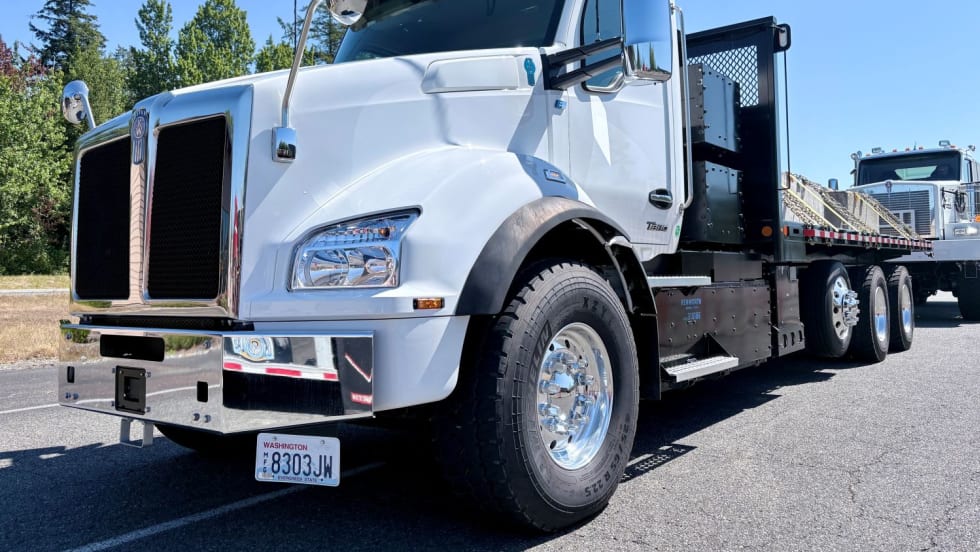
Kenworth T880E Brings EV Power to Vocational Trucks
A closer look at the Kenworth T880E’s range, charging, powertrain and upfit options — and where fleets are showing the most interest.
Read More →
Jennie Abarca Is Proving Electric Trucks Can Do the Job
HDT Truck Fleet Innovator Jennie Abarca is building confidence in fleet electrification one load at a time while openly sharing the challenges she encounters along the way as a small-fleet owner.
Read More →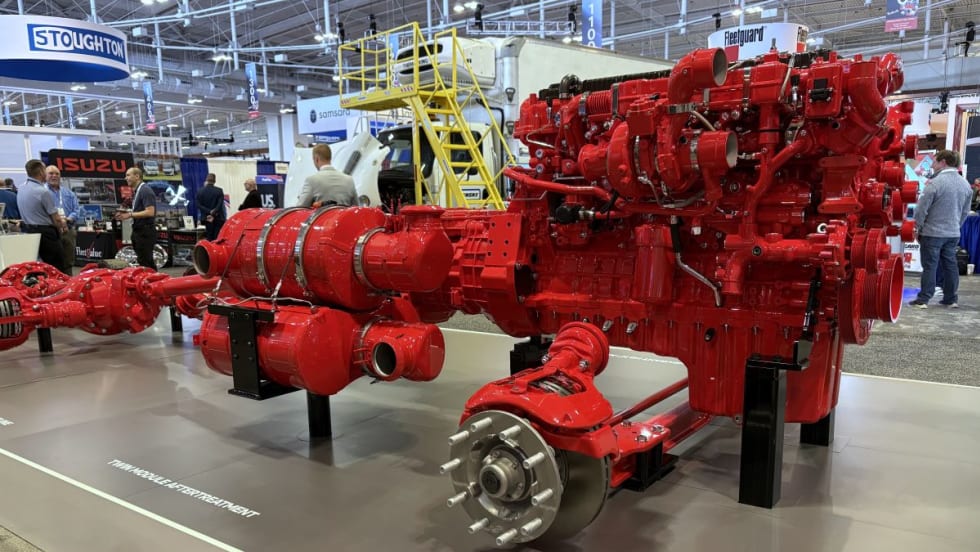
Cummins Adjusts 2027 Engine Rollout After EPA Proposal
The engine maker will gradually introduce its new Model Year 2027 diesel engines while continuing to offer current models during the transition, citing the EPA's proposed emissions rule changes.
Read More →