




What’s Going on with my Brakes?
When we started looking at wheel-end issues for this month's Tires & Wheels story, we discovered that reduced stopping distance rules have had some unintended consequences.


Front-axle brakes designed to meet reduced stopping distance rules may not run hot enough under normal driving conditions.

Front-axle brakes designed to meet reduced stopping distance rules may not run hot enough under normal driving conditions.
This month is a bit of a departure for Tires & Wheels, as we investigate a concern at the wheel-end — brake drum and lining wear likely related to the recent change in stopping distance requirements for heavy trucks.
We have heard reports of shorter-than-expected steer-axle brake drum life and of noisy, chattering brakes on trucks equipped to meet the shorter stopping distance requirements that went into effect in August 2011. Some of those models would now be coming up on a reline interval, while others may now require brake service where historically there was none.
Briefly, the National Highway Traffic Safety Administration mandated that a tractor-trailer traveling at 60 mph must come to a complete stop in 250 feet, versus the old standard of 355 feet. The first trucks the rule applied to were three-axle tractors with a gross vehicle weight rating of 59,600 pounds — or just about every line-haul truck in the country.
Fleet exposure to the symptoms seems to be tied to the OE and their choice of brake supplier. Bendix and Meritor, for example, both report that changes they made to their lining formulations and brake designs to meet the reduced stopping distance rules are manifesting themselves on some customer trucks as chattering noises, and in other cases as shortened lining and/or drum life.
“The problem is you’ve got these big brakes on the front axle, but they are ‘underutilized’ in normal conditions,” explains Frank Gilboy, product manager of aftermarket brake shoes at Bendix Spicer Foundation Brake. “If there’s insufficient heat to condition the brake properly, they will glaze and they will develop some noise and chatter.”
It’s nothing to worry about from a performance perspective, they say, but an unintended and perhaps irritating consequence of the rule change.
“Fleets are seeing linings glaze up because they aren’t being worked hard enough,” says Jim Reis, vice president and general manager of Stemco’s Brake Products division. “That’s causing noise and vibration in as little as three months after the truck goes into service. Typically front brakes ran the life of the vehicle, if not for rust-jacking. Now we find they need attention because of the glazing problem. It’s not so much a matter of [truck owners] wearing the brakes out, but just being dissatisfied with the day-to-day performance.”
We have also heard reports of faster-than-normal brake drum wear, possibly related to the more aggressive brake linings used on steer axles.
Chad Plank, president of Webb Wheel Products, says he began getting calls from customers about a year ago wondering why their brake drums were wearing so quickly. Since the steer-axle drums bore the symptoms of the problem, he got the calls.
“Our investigation revealed no issues with our drums,” he says. “Nothing had changed on our end, same material, same production process, same everything. We concluded it was due to the more aggressive linings OEs were using to meet RSD (reduced stopping distance rules).”
According to Reis, before the new rules, it wasn’t uncommon for a brake drum to outlast the linings two or three to one. That may not be the case going forward on steer axles.
“Something usually has to give,” he says. “You’re changing energy into heat, and with the more aggressive friction, I can see where a full cast drum potentially could wear out faster.”
The balance of power
Steer axle brakes are now doing proportionally more work than before. The physical changes required to meet the full-pressure application stopping distance requirements left the front brakes in a position that even in low-pressure applications, they take some of the workload from the drive-axle brakes.
Joe Kay, Meritor’s director of engineering for brakes, North America, says different OEMs use different air system philosophies that can make a difference in wear characteristics.
“Valve crack pressures, timing, and in some cases the plumbing of the system itself can create differences in wear rates,” he says. “Most stops are at 15-20 psi, which means 15-20% of the brake system’s capacity. If there is a 3-4 psi difference in application valve crack pressures from axle to axle, we can see some differences in wear based on timing and valve crack pressure.”
With the greater emphasis placed on the steer axle, it’s now the drive-axle brakes that are just going along for the ride, so to speak. It used to be that steer-axle brakes would last 600,000-700,000 miles because they were so lightly used.
“The rear linings may have actually been ‘dumbed down’ a little to prevent ABS events in the panic stop situation,” observes Jeff Geist, director of engineering at Stemco. “I’ve seen them take some performance out of the rears so that they don’t lock up and add to the stopping distance through ABS brake modulation. ABS will give you a controlled stop, but it won’t be the shortest stop. It’s going to increase the stopping distance.”
Kay says Meritor did make some changes to its drive-axle brake friction to account for the lower demand.
“Pre-RSD, drive-axle brakes were capable of locking up the wheels,” he says. “That’s significant because once the wheel is locked, you can’t add any more torque to it no matter what. So, because those brakes would be doing less work, we came up with some new friction formulas that condition-in more quickly and at lower temperatures than the pre-RSD materials. As a result, we are seeing a slight improvement in drive axle wear rates in some applications.”
Maintain or replace?
RSD raises some interesting issues. It’s mandated only for new vehicles; users are not required to maintain their brakes to those standards.
“There’s a lot of confusion amongst fleet operators over whether or not they should maintain it,” says Stemco’s Reis. “What does maintaining it mean? Putting back one part of a 17-part system? If you really want to maintain RDS, you have to keep the vehicle in the same condition it was in when it was new, including the drums, brake linings and tires, as they all affect brake performance. If you want to take it to the nth degree, you’d have to maintain cam bushings to new condition, ensure there is no bracket fatigue and all the interfaces are within tolerance. That’s a pretty tall order.”
Bendix and Meritor both recommend maintaining the truck to the original equipment standard.
“Meritor is always going to recommend sticking with the OE materials as replacements,” Kay says. “If the fleet noticed a drastic shift in the amount of wear, we’d work with the fleet to figure out what the problem is.”
And then there’s the liability question.
“From a legal standpoint, there’s always the potential for litigation arising from not maintaining the truck properly,” Gilboy warns.
Our sources say work is under way to resolve the question of under-utilized front brakes not conditioning properly in normal service. This issue doesn’t present a performance problem; the larger, more powerful front brakes see to that on their own. The question of lining and drum life, as well as the potential for more frequent lining changes because of noise and vibration, is a work in progress.
Currently, the American Trucking Association’s Technology and Maintenance Council has a Recommended Practice (RP 628) in the revision and balloting stage that shows minimum and maximum torque values of the RSD-approved friction currently on the market. That will help users choose an aftermarket lining material that meets their needs without changing any of the vehicle performance characteristics.
More Safety & Compliance
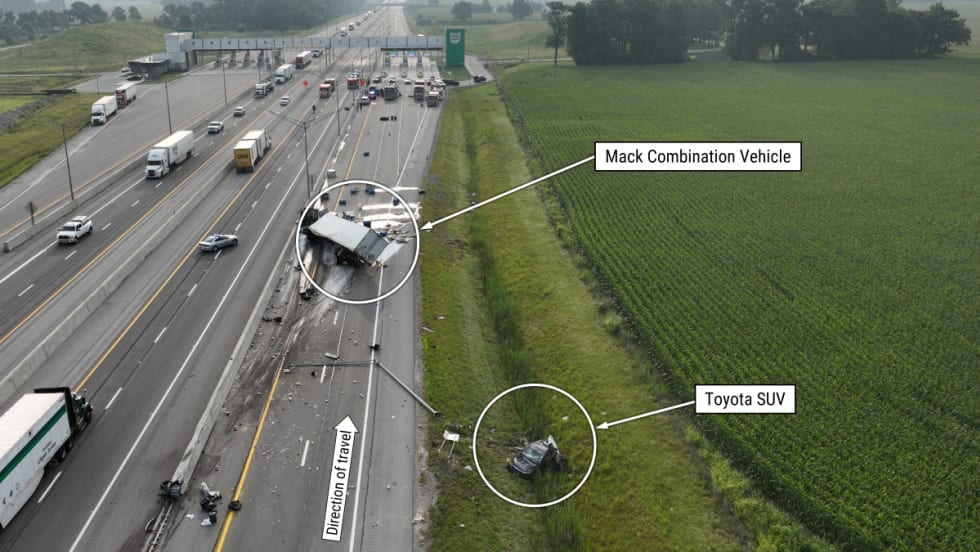
Fatal Crash Exposes Toll Plaza Risks
An NTSB investigation found that last-minute lane changes and large speed differences at an Ohio toll plaza created a hazard the truck driver couldn't avoid in time.
Read More →
When Language Stops the Truck: The Return of ELP Out-of-Service Orders
English language proficiency rules for commercial drivers aren’t new, but renewed out-of-service enforcement has raised the stakes. Here’s what carriers need to know before a driver reaches a roadside inspection.
Read More →
A Camera Isn't a Safety Program. Here's What Brokers Are Screening for Now
Footage alone may not be enough to pass broker vetting processes. Here's what counts as a defensible safety program now.
Read More →

Marijuana and Trucking’s Drug-Testing Dilemma
Marijuana is getting stronger, laws are changing, and drug tests still can’t reliably establish impairment. What does that mean for truck drivers and the fleets that employ them?
Read More →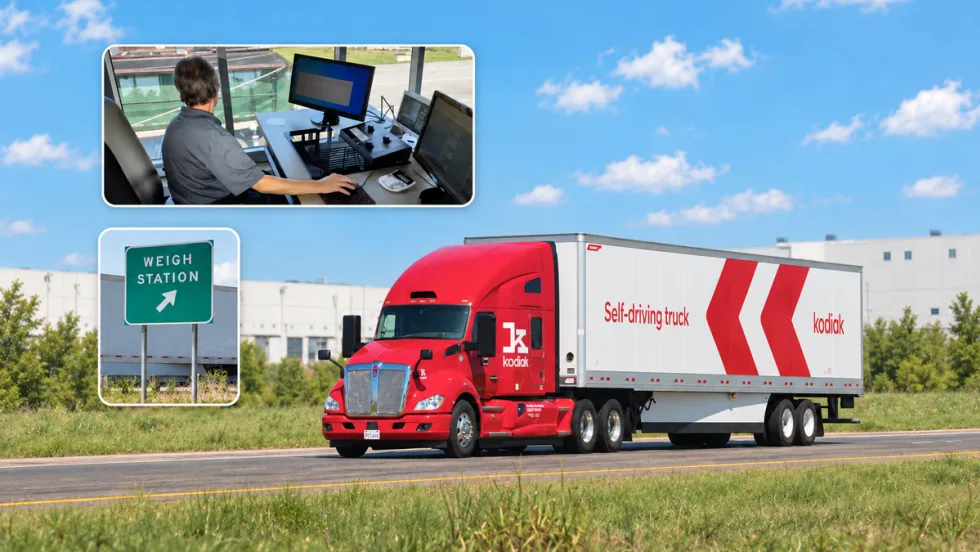
PrePass, Kodiak Connect Driverless Trucks to Roadside Enforcement
The system will allow enforcement agencies to verify Enhanced Inspection information and decide whether Kodiak’s autonomous trucks can bypass roadside screening sites.
Read More →
From One Generation to the Next: How Mentorship Builds Safer Truck Drivers
After three decades in trucking, Harold Perry shares what he's learned about driver safety, mentorship, and helping the next generation build confidence behind the wheel.
Read More →
FMCSA Pauses Biennial-Update Enforcement Amid Motus Transition
Carriers whose updates were due on or after June 1 have more time, while FMCSA works to stabilize its new registration system and warns of phishing sites impersonating its new carrier registration system, Motus.
Read More →
ZF Expands Commercial Vehicle Push in North America
ZF is expanding its North American commercial-vehicle presence with new transmission applications, electrification, trailer technology and autonomous-driving systems.
Read More →
Truck Drivers Need More Than Another Alert
Fleets have more visibility into truck health, safety events, and driver activity than ever. The next challenge is turning all that information into useful guidance for the person who has to decide what to do next.
Read More →
Tesla Wants a Self-Driving Semi. Are Cameras Enough?
Could Tesla’s camera-only autonomous driving technology work on an 80,000-pound Semi? In this commentary, HDT's Deborah Lockridge takes a look at Tesla, Cybercab, and how autonomous trucks see the road.
Read More →