




What’s Going On with Fleet Employment Numbers?
For trucking companies struggling to find drivers, these numbers might sound like nonsense. And in fact, the truth is far more complicated.
Note: Data is through September 2021
Source: Bureau of Labor Statistics, FTR
The for-hire trucking industry’s employment levels have recovered in fits and starts from the pandemic-related contraction in March and April 2020. Before the Bureau of Labor Statistics released its employment situation report in early November, it had appeared that payroll employment was still down about 22,000 jobs, or 1.4%, from February 2020, seasonally adjusted. Trucking certainly had recovered more jobs than many industries, but it seemed months away from returning to pre-pandemic levels.
The BLS report, however, showed solid growth for-hire trucking during October, adding in 7,900 payroll jobs. And the preliminary figures for August and September were revised sharply higher. So rather than being down nearly 22,000 jobs, trucking was down just 9,300 payroll jobs, or 0.6%, compared to a pre-pandemic February 2020. That might not be full recovery, but it is darn close.
For trucking companies struggling to find drivers, these numbers might sound like nonsense. And in fact, the truth is far more complicated.
First, the BLS numbers represent total employees, not drivers. Nevertheless, we generally treat payroll employment as a proxy, because it is the closest measure we have to real-time data and because drivers make up the lion’s share of workers.
Local vs. long-haul
Another limitation in the most up-to-date figures is that they do not tell us how different segments of the industry are faring. If we look back a month at September numbers, we can get more granular. We can look at “production/nonsupervisory employees,” which in trucking gets us closer to the truck driver population. We also can look at data for local and long-distance trucking in both general freight and specialized freight.
When we view the data through these prisms, it is much easier to reconcile the recruiting struggles of long-haul truckload carriers with what appears in the very broad picture like nearly full recovery.
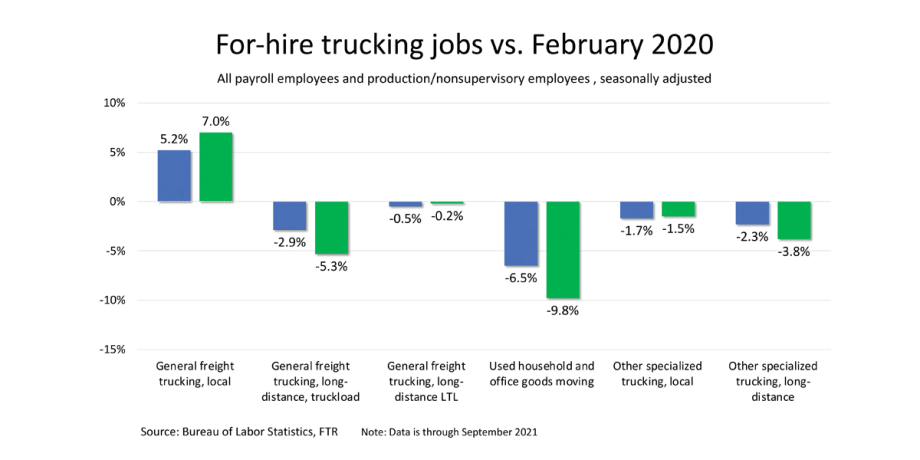
Total trucking employment in September was 1.1% below February 2020, but those production/nonsupervisory employee jobs were still down 2.3%. This implies that drivers are a drag on trucking’s recovery, not a contributor to it.
Nor has the recovery been uniform across industry segments. All segments of trucking in the BLS data were down in September — except for local general freight trucking, which has seen a 5.2% increase in total payroll employees and a 7% increase in production/nonsupervisory employees. Contrast that to long-haul general freight truckload, down 2.9% in total jobs and 5.3% among production/nonsupervisory employees.
Not to mention owner-operators
While total trucking payroll employment bottomed out in April 2020, production/nonsupervisory employment in general freight truckload didn’t bottom out until April 2021. At that point, jobs were down 6.2%, which is roughly equal to the total loss in overall trucking employment in March and April 2020. So, with that population still down 5.3%, over-the-road trucking has only begun to recover its pre-pandemic workforce.
On top of that, the employment numbers don’t even consider carriers’ loss of capacity in the form of leased owner-operators. Although we have no comprehensive data on the leased owner-operator population, we can presume that most of the carriers involved in the huge surge in newly authorized trucking companies that began in July 2020 are former leased owner-operators. More than 70% of those carriers have just one driver, and it is much easier for leased operators with their own trucks to strike out on their own than it is for company drivers who must buy trucks in a very hot used-truck market.
So, if you are a truckload carrier struggling to fill trucks and cover your customers’ load tenders, it’s not just you.
For more information visit FTR's website.
This column first appeared in the December 2021 issue of Heavy Duty Trucking.
More Fleet Management
Why This Trucking Recovery Is Different
Freight demand remains sluggish, but rising costs and tougher enforcement have taken enough capacity out of the market to change the outlook for motor carriers.
Read More →
Platform Science Adds Dispatch and Safety Tools
Four additions to PS Fleet help fleets monitor loads, manage driver coaching, share truck locations and adjust video system settings.
Read More →
PrePass Intelligence Mines Fleet Bypass, Toll and Safety Data
PrePass Intelligence helps fleets measure bypass savings, flag potential toll overcharges, and spot suspicious transactions by combining data from separate systems.
Read More →
Motive Adds AI Agents for Fleet Operations
New tools automate follow-up on fleet data, from maintenance work orders to driver alerts, with two-way voice conversations planned for later this year.
Read More →
Can You Beat Our Trucking Trivia Challenge?
Test your truck knowledge with 19 trivia questions from Heavy Duty Trucking Exchange. Can you keep up with the fleet pros?
Read More →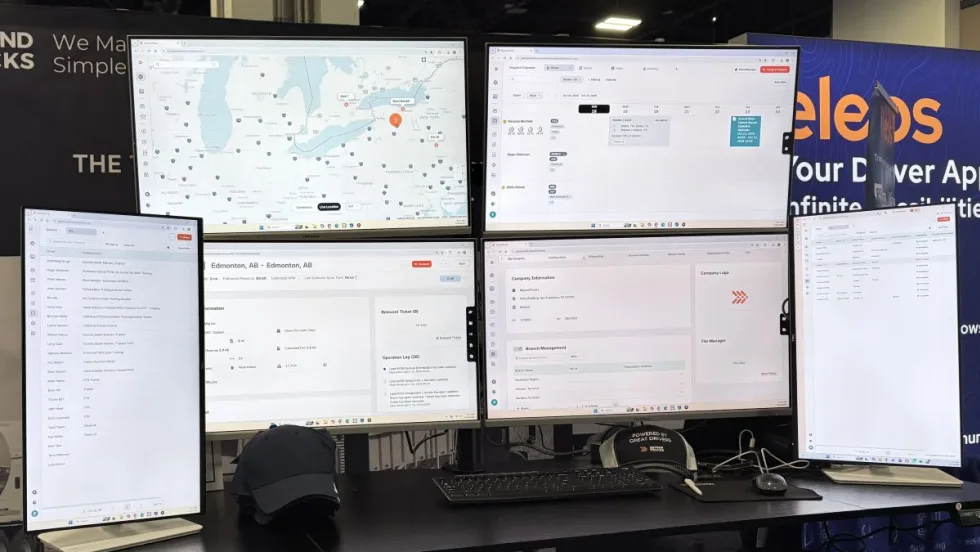
BeyondTrucks Adds Rules Checks to Dispatch
New Compatibility Engine checks driver qualifications, equipment requirements and fleet policies before loads are dispatched.
Read More →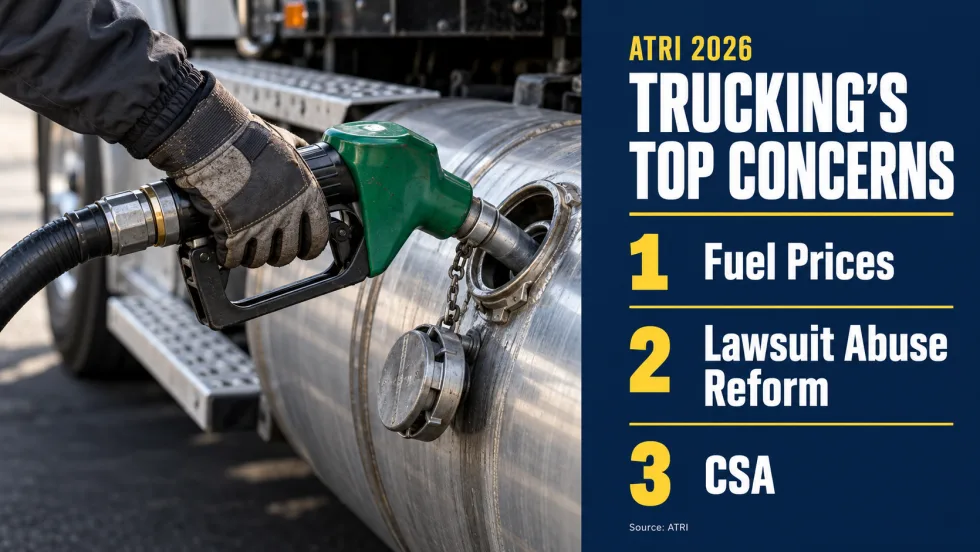
Diesel Prices Hijack Trucking’s Worry List
ATRI’s annual survey finds cautious optimism about freight, but diesel costs, litigation, and insurance continue to squeeze fleets. Drivers have different priorities on several issues.
Read More →
Nomination Deadline Extended for HDT Emerging Leaders
Just a few more days to nominate accomplished trucking fleet professionals under 40 who are making an impact and helping lead the industry forward for the HDT Emerging Leaders award. Deadline extended to October 20!
Read More →
What Will ATA’s New Leader Bring to Trucking's Table?
Incoming President and CEO Mark Colson’s record in Alabama offers clues about his priorities and approach following Chris Spear’s abrupt departure as the head of the American Trucking Associations.
Read More →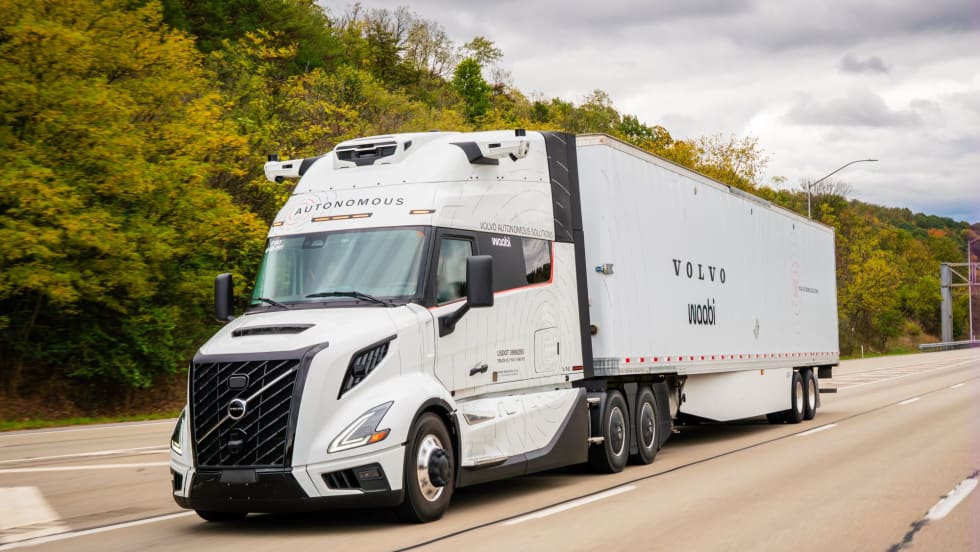
Volvo, Waabi Start Commercial Autonomous Operations in Texas
Volvo VNL Autonomous trucks, powered by the Waabi Driver, are hauling freight directly to third-party facilities for a customer in Texas.
Read More →