




What Smart Tanker Fleets Are Spec'ing
Owners of tank trailers keep them a long time. All the more reason to make sure when you buy a new one, you’re getting the best possible trailer for your operations for the price.

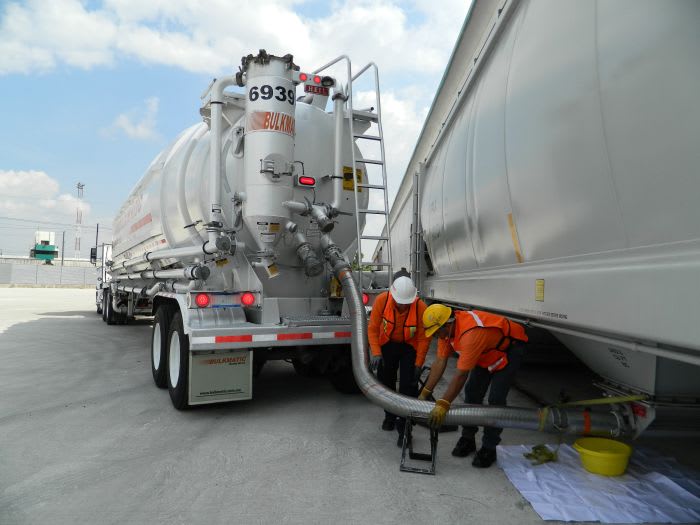
Bulkmatic Transport is retrofitting all 1,300 trailers with LED GloLight tail lamps for better visibility and reliability. Photo: Optronics
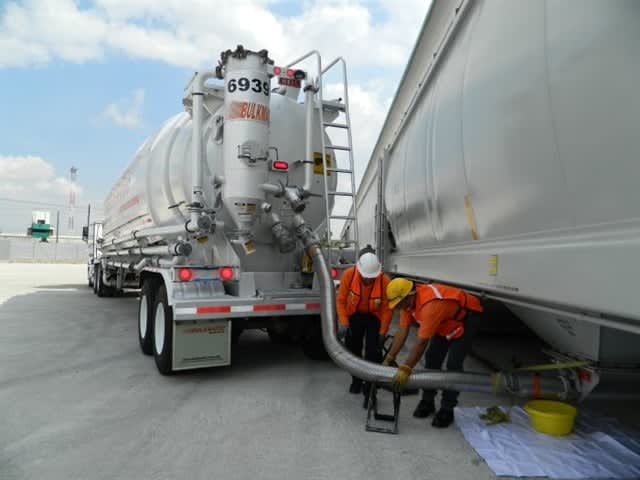
Bulkmatic Transport is retrofitting all 1,300 trailers with LED GloLight tail lamps for better visibility and reliability.Photo: Optronics
Owners of tank trailers keep them a long time. All the more reason to make sure when you buy a new one, you’re getting the best possible trailer for your operations for the price — the most “bang for your buck,” says Dan Flanagan, vice president of maintenance for Bulkmatic Transport, the largest dry bulk carrier in North America.
“You need to check with your vendors, with trailer makers, every year, because things change,” he says, with advancements in everything from suspensions and landing gear to upper couplers and metal thickness of the vessels. “To think that you can order the same vessel or pneumatic trailer every year – you can’t. You’ve got to find out what’s out there every year and if it’s worth it.”
Fleets want a trailer that’s going to be reliable over a long life, but other key areas to examine in the spec’ing process include safety, lightweight options, and fuel efficiency.
Safety
“In general, tanker fleets are very interested in safety technology, and especially so within the hazmat sector,” says Polar’s Koll. “Tanker fleets in general gravitate to the high end of technology when it comes to spec’ing components on trailers, both for safety and longevity.”
Tank trailer buyers are increasingly spec’ing such items as roll stability, antilock brakes, air disc brakes, and better lighting.
Rollovers are a concern with tankers because of the high center of gravity, so Koll says Polar continues to work to design trailers with lower centers of gravity.
Roll stability control is standard on all of Wabash’s trailer brands — Walker, Beall, Brenner and Bulk, notes Jim Miller, vice president of sales for Wabash National’s tank trailer business, and he says customer requests for disc brakes are on the rise.
At Carbon Express, new trailers are being spec’ed with air disc brakes. “The drivers love the disc brakes; the mechanics love them,” Rush says. “It’s a little bit of an upcharge, but the return is there pretty quickly.”
J&M Tank Lines, however, hasn’t yet adopted them on its approximately 750 trailers, although its 400 tractors feature Bendix disc brakes and other safety tech.
Safety for drivers loading and unloading is important, too. Wabash’s Miller says it’s important to enhance the safety of workers on top of tanks, including walkway and ladder combinations
Polar’s Koll notes that “extra lighting, extra turn signals, high mounted lights, even strobes are gaining popularity.”
Bulkmatic is in the process of converting its entire fleet of trailers to GloLight LED lighting from Optronics, spec’ing them on new trailers from Heil as well as retrofitting its 1,300 trailers.
“Optronics lights are very unique,” Flanagan says. “They’re eye catching. The halo design I think when driving, or when parking lights or tail lights are on, [or] when the turn signal comes on, it makes a big difference.”
The LEDs are brighter and unlike traditional bulbs there are no filaments to break, especially important for trailers that get jostled a lot loading and delivering in mills and rail yards.
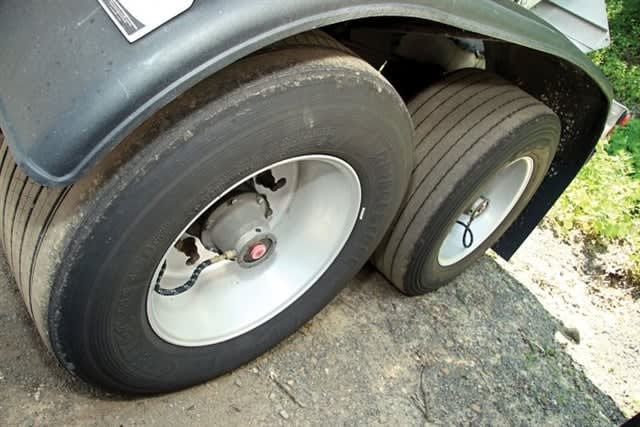
Carbon Express uses wide-base single tires and Stemco Aeris tire inflation systems on their trailers. Wide-base singles are popular for especially weight-sensitive customers, but some fleets have gone back to duals.Photo: Carbon Express
Tires and wheels
Because of weight concerns, aluminum wheels are practically standard on tankers. Wide base tires offer weight savings, but they “get mixed reviews,” says John Koll, product manager-stainless sanitary for Polar. Those using wide-base singles tend to use automatic tire inflation systems, he says, because reliability and air leaks are still a concern. Bulkmatic, for instance, only uses them with some very weight-conscious customers. It has had problems with retreads on wide-base tires so it’s using only virgin tires for those trailers.
New Jersey-based tanker fleet Carbon Express over the past four to five years has been retrofitting its 115 tank trailers with automatic tire inflation systems. “I don’t know how we did without,” says founder and CEO Steve Rush. “It’s helped save tire wear, speeds up pretrip/postrip inspections, and adds to fuel economy.”
Both Polar and Wabash National report increased interest in lift axles. Birmingham, Alabama-based J&M Tank Lines has front lift axles on all its pneumatic tanks. Because they don’t have a lot of backhauls, says Billy Lollar, vice president of maintenance, “half the tires don’t roll half the time,” meaning less wear and better fuel economy.
Carbon Express is also a fan. “On the tank truck side, anybody that doesn’t go for that lift axle in my opinion is missing the whole thing, especially petroleum haulers,” says Rush.
Long life
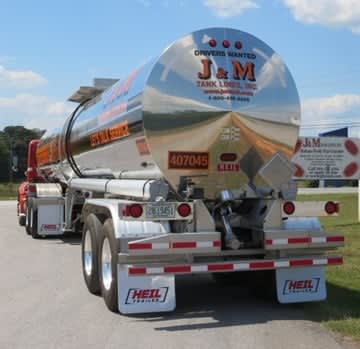
Trailer specs in the same fleet can differ by application and customer. This J&M tanker hauls slurry and glue in the Southeast.Photo by Deborah Lockridge
Bulkmatic’s lighting choice also is prompted by longevity concerns, says Joe Gogolak, senior parts manager. “We keep our trailers at least 20 years, and we’ve got to have a light that’s going to last that long.” Along with the inherent advantages of LEDs, the Optronics lamps use an amp connection instead of a PL3 plug for a weathertight connection. “The light is nothing without the connection,” he explains. “If you get corrosion in there it’s not going to work.”
In another bid to beat corrosion, Bulkmatic is working with Hendrickson on suspensions where parts have an anti-corrosion coating.
“We have seen an increase in demand for specialty steels to offset corrosion issues,” notes Wabash’s Miller.
Similarly, Koll says Polar has almost eliminated carbon steel components on most trailers in favor of aluminum and stainless steel components. “Where steel is required, galvanizing or powder coating are often used,” he says. “Barrel materials are always being looked at. In the chemical business, various grades of duplex stainless are gaining attention, for weight and corrosion advantages.”
Sometimes simple things can help keep trailers lasting longer and out of the shop. At Carbon Express, the ladder has been moved to the street side so the driver can see it, resulting in fewer damaged ladders.
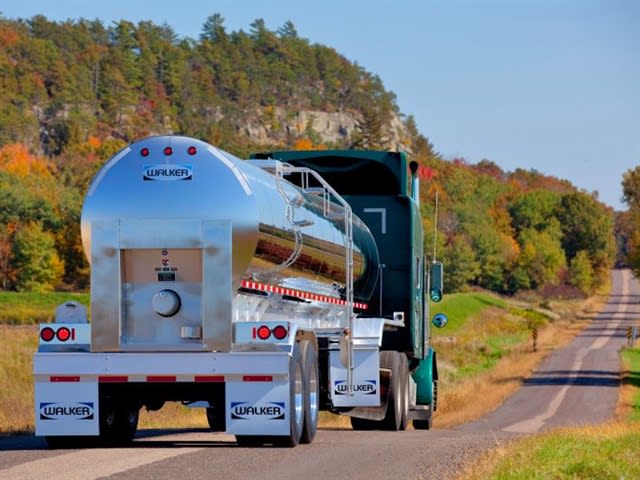
Roll stability control, air disc brakes, lightweight components and corrosion-resistant metals are all common on today’s tank trailers, says Wabash, which offers several tank trailer brands.Photo: Wabash
Aerodynamics
The skirts, tails and other aero devices that have become common on van trailers are less common in the tanker world, although Miller says customers continue to test and evaluate aero skirts.
“Aerodynamic devices are more difficult to use effectively on tankers, due to the various shapes and sizes,” says Polar’s Koll. But in addition to reducing height, he says, “we’ve worked to make surfaces smoother, less items sticking out in the wind, and more streamlined wherever possible.”
Bulkmatic’s Flanagan points out that most of their miles are not at highway speeds where aerodynamics makes a big difference — and adding trailer skirts would just add weight. However, he says, “MAC has a unique design we’re thinking about purchasing — it almost looks like a teardrop.”
Working with suppliers
“Build relationships,” says J&M’s Lollar. “Everybody makes good equipment nowadays,” he notes, but it’s the relationship that will take that spec’ing process to the next level. “Try to stay open minded. If you’re always looking to improve somewhere, you have to change something.”
Flanagan recommends getting engineers involved in addition to salespeople – and make sure to ask what’s available. “There’s a lot of variables out there, and unless you sit down every year and talk to your manufacturer and engineering group, you don’t know until you ask.”
More Equipment

How Volvo Updated Its D13 for EPA 2027 [Watch]
Volvo’s updated D13 promises lower emissions without sacrificing performance or fuel economy. Take a closer look at what changed inside the engine in this HDT Spotlight video.
Read More →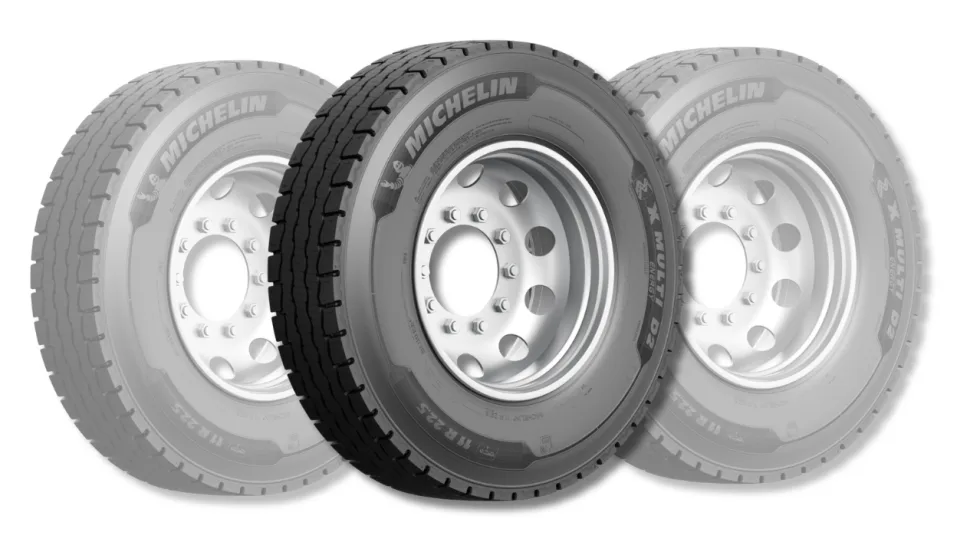
Michelin Tire Improves Efficiency and Durability for Regional Fleets
The Michelin X Multi Energy D2 is a regional haul drive tire engineered to help fleets improve fuel efficiency, durability and traction in demanding stop-and-go operations.
Read More →
ZF Expands Commercial Vehicle Push in North America
ZF is expanding its North American commercial-vehicle presence with new transmission applications, electrification, trailer technology and autonomous-driving systems.
Read More →
Tesla Wants a Self-Driving Semi. Are Cameras Enough?
Could Tesla’s camera-only autonomous driving technology work on an 80,000-pound Semi? In this commentary, HDT's Deborah Lockridge takes a look at Tesla, Cybercab, and how autonomous trucks see the road.
Read More →
Kodiak: Driverless Long-Haul Truck Launch on Track for 2026
Kodiak AI says its driverless long-haul safety case is 93% complete and it remains on track to begin commercial operations by year-end 2026.
Read More →
What DOT’s Automated Vehicle Strategy Means for Trucking
The U.S. Department of Transportation issued a new automated-vehicle strategy that outlines plans for driverless-truck regulations, cross-state freight corridors, and federal safety standards.
Read More →
East Coast Port Launches $45M Electric Truck Push
The Port Authority of New York and New Jersey announced millions in incentives for zero-emission drayage trucks, yard tractors, and new charging hubs near the port.
Read More →
PlusAI Going Public to Fund Autonomous Truck Launch
A SPAC deal could provide PlusAI with up to $300 million as it works toward a 2027 commercial launch of factory-built autonomous trucks.
Read More →
NHTSA Moves to Rewrite Truck Fuel-Economy Rules
The National Highway Traffic Safety Administration says it lacks authority to regulate medium- and heavy-duty truck engines separately from complete vehicles, but the existing standards have not yet been eliminated.
Read More →
Detroit Opens Orders for EPA 2027 Engines
Detroit isn’t starting from scratch to meet EPA 2027 diesel emissions standards. Its Gen 6 DD13 and DD15 engines keep much of today’s platform while updating the fuel and aftertreatment systems.
Read More →