




Trailer Report: Lightweight Flatbeds Allow Heavy Payloads, Help Fleet Grow
Five years ago, H. Wade Carden Jr. started HWC Transportation when his Philadelphia-area lumber business couldn't make economical shipments aboard heavy equipment then operated by for-hire carriers in the Northeast
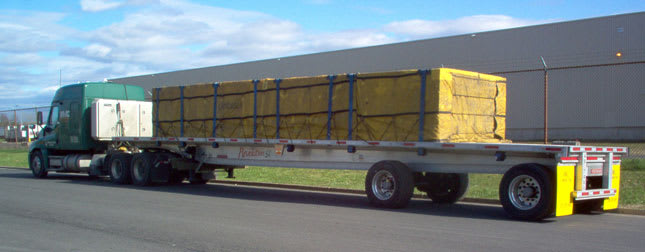
An HWC rig can carry up to 54,000 pounds of building supplies, thanks to the 8,000-pound tare weight of Fontaine Revolution flatbeds. The company began as a private carrier, and is now a for-hire fleet of 130 trailers and 100 tractors.
Five years ago, H. Wade Carden Jr. started HWC Transportation when his Philadelphia-area lumber business couldn't make economical shipments aboard heavy equipment then operated by for-hire carriers in the Northeast.
HWC has since become a for-hire carrier with a fleet now at 130 flatbed trailers and 100 tractors - all with special lightweight specifications.
"I've been in in the business of shipping heavy products for my whole career, and one thing the experience has taught me is that the more you can ship, the better off you are," Carden says. He started out with tractor-trailers as light as possible, so he could go beyond the 48,000-pound loads that were then standard.
His first trailers were Ravens 45-foot-long aluminum flatbeds, each of which weighed about 8,800 pounds. They were good trailers, but were too short for some loads, and he wanted still more capacity in pounds. A believer in the green movement, he joined EPA's SmartWay program, where he got ideas on equipment. Fontaine Trailer bought Ravens several years ago, he says, and that led to where he is now.
HWC's current platform trailers, Fontaine Revolution 48-foot by 102-inch-wide flatbeds, were bought because Carden wanted something both lightweight and different. Other builders can assemble a flatbed that about matches a Fontaine Revolution's 8,000-pound tare weight. But the Revolution, introduced in early 2009, boasts unitized construction using extruded aluminum members for the undercarriage and deck. They are friction-welded to form a rigid structure. Smooth surfaces cut wind drag and accumulation of ice and road grime.
An integrated L-section winch track on either side is easy to work with, as are a pair of channels in the top deck that accommodate sliding tie-down fixtures. Damage to conventional siderails is common during forklift loading and unloading, so Revolution trailers have routed, extruded-aluminum rubrails. Because the siderail is strong and load-rated from front to back, HWC eliminated chain tie-downs to save weight.
To reduce rolling resistance and cut weight, Carden chose Michelin wide-base single tires on aluminum wheels, and tires are protected by a Hendrickson TireMaax inflation system. The spread tandem axles ride on a Hendrickson Intraax air suspension.
Rigidity of the chassis keeps wheels running straight and true, further reducing rolling resistance and adding to tread life by 30 to 45 percent, HWC managers say. The combination of all features improves fuel economy by 3 percent. Chassis stiffness also improves handling and smooths the ride at highway speeds, which drivers notice, Carden says.
Of course, the lightweight trailers are pulled by lightweight, fuel-saving tractors. The company's current standard tractor is a 2010 Freightliner Cascadia with a 72-inch sleeper compartment, spec'ed with the help of Penske Leasing for durability, long life and fuel savings. Engine is a Detroit Diesel DD15 Multi-Torque rated at 455 horsepower and 1,550/1,750 pounds-feet.
Transmission is an Eaton 10-speed overdrive, and Meritor rear axles have a 3.36 ratio in their differentials. Top speed is electronically limited to 65 mph and idle shutdown is set for 5 minutes. A Thermo King TriPac auxiliary power unit runs "house" appliances and cools the interior without drivers needing to run the main engine.
To reduce weight, wide-base singles on aluminum wheels are on rear axles and a pair of 80-gallon aluminum saddle tanks are used instead of 100-gallon tanks. Front tires are a low-rolling-resistance design to further save fuel.
Carden has high praise for his drivers and other employees, who make extra efforts to satisfy customers and get loads across the road safely and efficiently. This has helped HWC grow as it diversified from the original private fleet to a general hauler of building materials like lumber, shingles, gypsum, steel, pipe and conduit. It also operates distribution centers for Lowe's Home Improvement.
Diversification includes customers, and "no one customer represents more than 25 percent of the total business," Carden says. Even during the recession when other fleets cut back, HWC continued its average growth of 35 percent a year. That, he says, is due to employee dedication that results in a high level of service, as well as the weight savings and high payloads from his lightweight trailers.
From the October 2010 issue of Heavy Duty Trucking magazine.
More Equipment

Tesla Wants a Self-Driving Semi. Are Cameras Enough?
Could Tesla’s camera-only autonomous driving technology work on an 80,000-pound Semi? In this commentary, HDT's Deborah Lockridge takes a look at Tesla, Cybercab, and how autonomous trucks see the road.
Read More →
Kodiak: Driverless Long-Haul Truck Launch on Track for 2026
Kodiak AI says its driverless long-haul safety case is 93% complete and it remains on track to begin commercial operations by year-end 2026.
Read More →
What DOT’s Automated Vehicle Strategy Means for Trucking
The U.S. Department of Transportation issued a new automated-vehicle strategy that outlines plans for driverless-truck regulations, cross-state freight corridors, and federal safety standards.
Read More →
East Coast Port Launches $45M Electric Truck Push
The Port Authority of New York and New Jersey announced millions in incentives for zero-emission drayage trucks, yard tractors, and new charging hubs near the port.
Read More →
PlusAI Going Public to Fund Autonomous Truck Launch
A SPAC deal could provide PlusAI with up to $300 million as it works toward a 2027 commercial launch of factory-built autonomous trucks.
Read More →
NHTSA Moves to Rewrite Truck Fuel-Economy Rules
The National Highway Traffic Safety Administration says it lacks authority to regulate medium- and heavy-duty truck engines separately from complete vehicles, but the existing standards have not yet been eliminated.
Read More →
Detroit Opens Orders for EPA 2027 Engines
Detroit isn’t starting from scratch to meet EPA 2027 diesel emissions standards. Its Gen 6 DD13 and DD15 engines keep much of today’s platform while updating the fuel and aftertreatment systems.
Read More →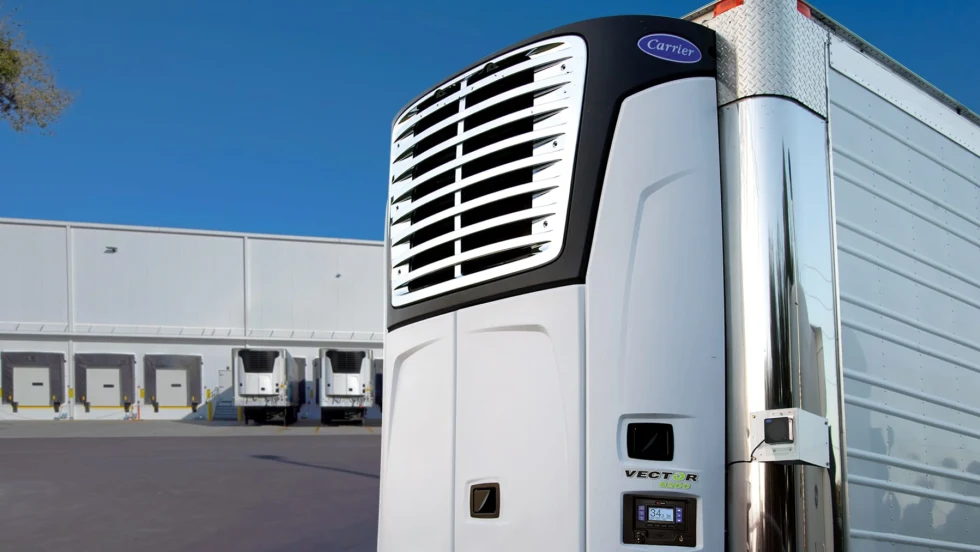
Carrier Transicold Adds All-Electric TRU for Stationary Cold Storage
Carrier Transicold’s new Vector 8200 all-electric transport refrigeration unit gives fleets a diesel-free option for temporary refrigerated and frozen trailer storage.
Read More →
A Closer Look at Kenworth’s Electric T880E Vocational Truck [Video]
Learn more about Kenworth's T880E battery-electric vocational truck at the Paccar Technical Center, including its range, applications, upfitting considerations, and PTO options, in this HDT Spotlight video.
Read More →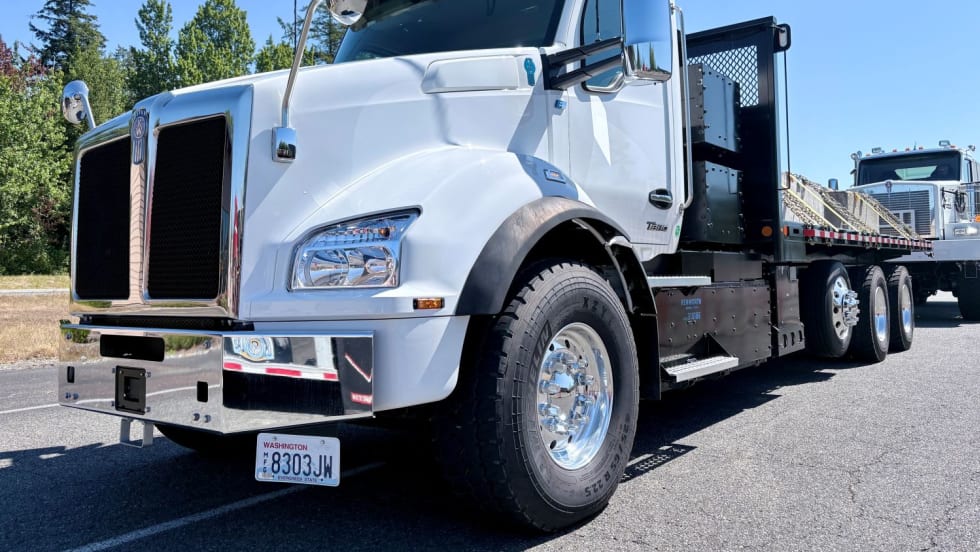
Kenworth T880E Brings EV Power to Vocational Trucks
A closer look at the Kenworth T880E’s range, charging, powertrain and upfit options — and where fleets are showing the most interest.
Read More →