




The Next Generation of Oils: New API oil category will help meet fuel economy/GHG regs
Three years from now, you'll see a new API diesel engine oil-service category, designed to help meet federal greenhouse gas/fuel economy standards, which have a final phase-in date set for model year 2018 trucks.


Three years from now, you'll see a new API diesel engine oil-service category, designed to help meet federal greenhouse gas/fuel economy standards, which have a final phase-in date set for model year 2018 trucks.
At the request of engine makers, the American Petroleum Institute formed a team to develop the new oil category to replace the current CJ-4.

And for the first time, there will likely be two standards - one designed for improved fuel economy in new engines, the other designed for backwards compatibility.
"One of the ways we know we can get improved fuel economy and lower CO2 emissions is going with a lower viscosity," explains Dan Arcy, global OEM technical manager for Shell Lubricants. "But the real key here is, there can be no compromise in the durability of the engine."<!break>
Arcy is heading up the API committee developing the new oil category, currently referred to as PC-11, for proposed category 11. It's about a five-year process, and the schedule calls for it to be ready by January 2016.
The API committee works hand in hand with a committee from ASTM International, formerly known as the American Society for Testing and Materials. Jim McGeehan, manager, heavy-duty diesel engine oil technology for Chevron, is chairman of the ASTM heavy-duty engine oil classification panel.
"We've had seven new categories driven by emissions, from CE in 1988 to CI-4 Plus and CJ-4 today," McGeehan says.
Fuel economy and more
There's more than fuel economy behind the new category.
Since the current category was developed and put in place in 2006, there have been a lot of changes in engine hardware, including types of injection systems, increased combustion temperatures and pressures, even the metallurgy and coatings used. Plus, parts for the engines used for some of the current industry-standard tests will no longer be available by 2016.
In addition to better fuel economy, the new category will be designed to improve oxidation stability, shear stability, scuffing/ adhesive wear, aeration and compatibility with biodiesel blends - in both new and older engines.
For instance, "For next-generation engines, EMA has said there's going to be an increase in engine operating temperature up to 10 degrees," Arcy says. For every 10-degree increase in engine heat, he said, you double the rate of oxidation. Oxidation, a reaction between oxygen and the lubricant, can cause acidic compounds to form in the oil.
Another key improvement will be shear stability.
Shearing occurs in multigrade oils when the long-chain polymers in the viscosity index improvers are mechanically broken down, or sheared, into smaller molecules that are less effective in maintaining the oil's viscosity.
"Some oils are seeing greater shear than engine makers would like," Arcy says. So the committee will re-evaluate the test used to measure resistance to shearing.
That's just one of the many tests the ASTM committee is evaluating, McGeehan explains. There are currently nine tests used for CJ-4. Some of those will be carried over to the new category. There are also new tests the ASTM committee is considering, including ones using EPA-2010-compliant engines that measure oxidation that causes bearing corrosion, and scuffing between the rings and the liner.
McGeehan says a decision will be made by mid-year which old and new tests to include.
Temperature and shear
Instead of opting for another engine test or an on-road test such as SAE/TMC Type II fuel economy testing, McGeehan explains, EMA asked for what's called a bench test.
That test, key to the new oil category, measures high temperature/ high shear viscosity - the ability of the oil to maintain its thickness under high-temperature/high-shear conditions. Lower HTHS viscosity tends to improve fuel economy and lower GHG, but higher HTHS viscosity affords better wear protection. Therefore, a careful balance must be found when formulating an engine oil.
Regular viscosity grades are determined through tests that measure the viscosity of the oil at 100 degrees C, or 212 degrees F, for the upper number. A 30-weight oil is thinner at that temperature than a 40-weight oil.
The HTHS bench test measures the oil film at 150 degrees C, or just over 300 degrees F, while mechanically shearing the oil.
"It's a parameter that's always been there, but it's never been known to the outside customer so much," McGeehan says.
Right now, the CJ-4 category requires an HTHS score of better than 3.5. The proposed PC-11 category will reduce that to 2.9. The lower score will result in better fuel economy.
A tale of two oils
A PC-11 10W-30 oil would get better fuel economy than a current 10W-30 CJ-4 oil, which already offers fuel economy benefits over traditional 15W-40 oils.
You can't just look to the viscosity rating, Arcy explains. You could have two oils that are both SAE 10W-30, but one might be blended to meet the lower HTHS numbers and therefore offer higher fuel efficiency, while the other might be blended to work in older engines with a higher HTHS number. In other words, one is at the bottom of the HTHS viscosity number range for a 10W-30 and the other is at the top of that range.
Oils with the higher HTHS number will still be usable in older engines. Oils meeting lower HTHS numbers will be in the new fuel-efficient oil category.
Of course, having two different standards raises a host of other questions the API committee is grappling with. For instance, do you come up with two completely different category names, like CK4 and CL4? Or do you use some sort of sub-category designation, such as CK4 and CK4-HT (for high-temp)?
"The customer clearly has to know this 10W-30 oil is different from the previous 10W-30 oil," McGeehan says.
From the January issue of HDT magazine.
More Aftermarket
What Three Fleets Are Doing Differently When Buying Truck Parts in 2026
With freight improving but costs still climbing, fleet maintenance executives explain how they're balancing price, quality, and supplier relationships.
Read More →
ConMet Expands Aftermarket Brake Drum Lineup With TruCast
A new heavy-duty truck brake drum option in the aftermarket gives customers more flexibility within the ConMet product family.
Read More →
Phillips Opens High-Tech Distribution Center for Faster Parts Delivery
Phillips Industries’ new Cincinnati-area distribution center is now shipping aftermarket trucking parts nationwide, aiming to speed up delivery times for customers.
Read More →
Volvo to Sponsor America’s Road Team for 2025
Volvo Trucks announced that it is extending its exclusive sponsorship of America’s Road Team for 2025.
Read More →
Webb to Start Taking Orders for UltraSet Pre-Adjusted Wheel Hubs
Webb, which recently acquired the Stemco Trifecta pre-adjusted hub program, will soon start taking orders for its replacement pre-assembled hub, the UltraSet.
Read More →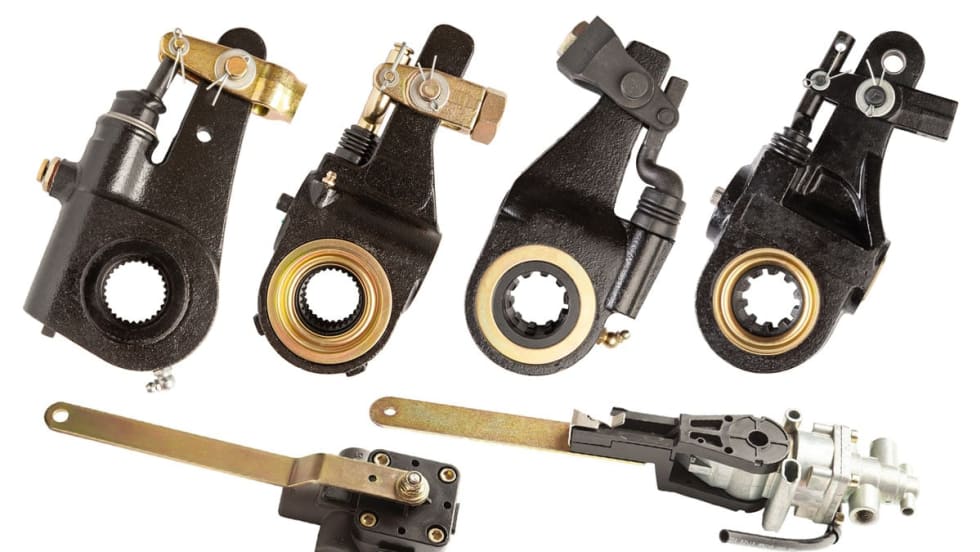
All-Makes Automatic Brake Adjusters, Ride Height Control Valves from Midland
SAF-Holland has added automatic brake adjusters and ride height control valves to its Midland All-Makes Program.
Read More →
ZF Aftermarket Expands [pro]Academy Training
ZF Aftermarket said it is expanding its ZF [pro]Academy training and will be adding 40 new modules this year.
Read More →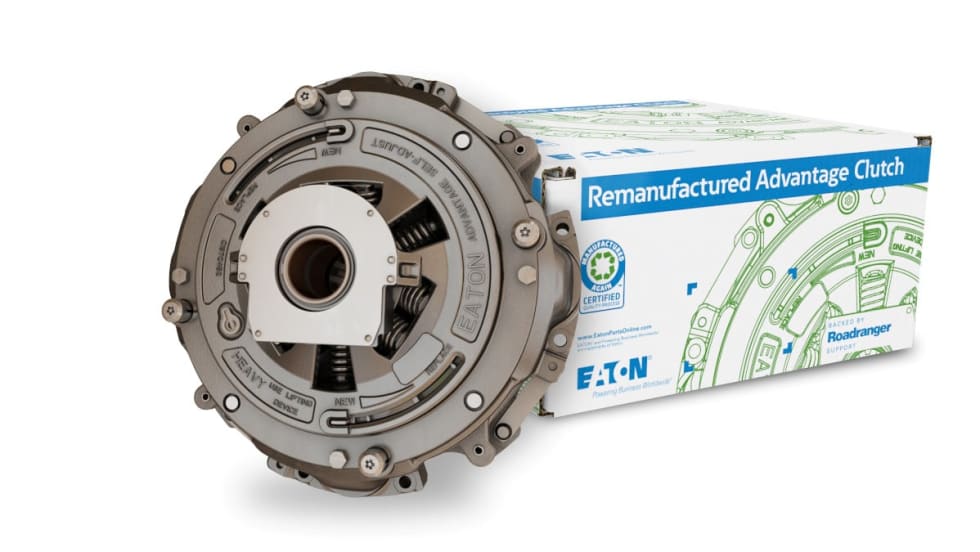
Eaton Adds Remanufactured Advantage Line of Clutches
Eaton has added its Advantage clutches to its remanufactured product line. The clutches feature a unique strap drive intermediate plate designed to allow customers to choose the latest OE specification
Read More →
ConMet Acquires TruckLabs, the Creator of TruckWings
Commercial truck and trailer parts provider ConMet acquired TruckLabs, the company that created TruckWings, an aerodynamic device that attaches to truck cabs and deploys to close the gap between truck and trailer. TruckLabs now operates as a subsidiary of ConMet.
Read More →
Diesel Laptops Releases Fault-Code-to-Part-Number Tool
Diesel Laptops said its Truck Fault Codes allows users to input a fault code and immediately identify and order the parts needed to complete repair work.
Read More →