




The Latest in Trailer Advances
Over the years, advances in trailer materials and design have added life, cut maintenance and operating costs and even improved safety. Based on our observations at trade shows, new product announcements and conversations with manufacturers and fleets, we came up with the following list of significant trends

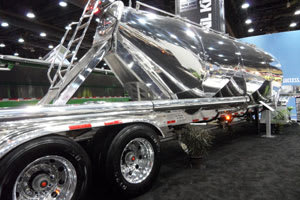
Lightweight corrosion-resistant aluminum continues as a leading material for components and complete trailers, like this Trail King pneumatic dry bulk tanker with a tare weight of 8,450 pounds, 500 less than usual.
Over the years, advances in trailer materials and design have added life, cut maintenance and operating costs and even improved safety. Based on our observations at trade shows, new product announcements and conversations with manufacturers and fleets, we came up with the following list of significant trends.
Clever design details
All engineers try to constantly improve things, and the fruits of their labors and cleverness show up in products at trade shows. Each spring at the Mid-America Trucking Show in Louisville, Ky., builders display their latest ideas. (Read more in the "What's Inside" trailers article in HDT's May issue.)
- Composite door and wall panels that are sandwiches of foam and thin steel sheeting, making them compact, strong and light in weight
- Scuff liners of tough, puncture-resistant plastics that hold off assaults from forklift drivers
- Gaskets that absolutely seal swing doors by proper shaping and material choice, and an inflatable gasket that presses against roll-up doors to keep it from rattling itself to death
- Stout floors that hold up to high loadings and resist deterioration because materials are inert or, in the case of wood, bonded to inert plastics
- Fasteners and adhesives that inexpensively but securely bond materials and parts
- LED lamps that last about 10 times as long and use one-tenth the electric current as incandescent lamps.
Aluminum parts
For many years aluminum has been a good-looking, lightweight material for vehicles. Recently it has become more popular for certain trucking applications. One is flatbed and drop-deck trailers, which often carry heavy and outsized cargoes. Lower tare weight allows higher legal payloads. Long items need longer trailers, and, depending on specifications, an all-aluminum 53-foot flatbed can weigh less than a 48-foot "combo" trailer made of aluminum and steel. That's what Boyd Bros. Transportation in Clayton, Ala., found when it bought 90 aluminum 53-footers.
Aluminum adds several thousand dollars to the price of a trailer compared to steel. Businesspeople compare that to the potential extra payload and revenue the vehicle can generate in a given amount of time to arrive at a payback or return-on-investment number. If it's more than a few years, the extra cost might not be worth it. But throw in extra life because aluminum resists corrosion, and the investment begins to shine.
Corrosion protection
Corrosion eats the life out of steel components on trailers and everything else, and it sometimes raises safety concerns. Brake shoes, for instance, can suffer "jacking," where rust pushes linings away from metal tables. Shoes treated to resist rust are the answer here.
In other areas of a vehicle, there are materials and methods that are traditional and rather new-found. The trick is picking the right solution for the application, and that includes the ability or willingness to pay for protection that costs hundreds or thousands of dollars per vehicle. Following are several methods and materials.
Stainless steel is actually an alloy of steel and chromium. It doesn't rust, but it's heavy and expensive. It's most cost-effective at a trailer's rear, where salt clouds form, so it's often used for door sills and rear impact guards. These are available from many builders, especially for reefers.
Galvanized steel stands up well to corrosion and is less costly than stainless. Galvanized steel parts are now standard or optional from some trailer builders. This requires large tanks to dip long, wide parts into the molten zinc. Entire galvanized frames and door sills are standard with Vanguard National and some other builders. Composite wall panels have been newly introduced by Hyundai Translead.
Great Dane uses galvanized steel in its new standard dry van swing-type rear doors and rear door frame, EnduroGuard.
Surface coatings range from basic paint to tar-like substances to specialty chemicals. Spraying on enamel helps a little, but even powder coating can be rather short-lived.
Manufacturers and suppliers have developed special products that bond to surfaces and hold up even when dinged by debris. These are best applied at the trailer factory, where parts are still clean and workers are trained to spray on the stuff. Great Dane offers such an option, called CorroGuard, and Wilson just made a similar treatment standard on the frames of many of its trailers. Aftermarket products are also available.
AR steel
Abrasion-resistant steel is the biggest advancement for dump trailers in years, according to Tiger General, a Clement dealer in Medina, Ohio.
As its name implies, AR steel resists damage and extends vehicle life. This product is 125 times stronger than mild carbon steel, as measured in psi, so the builder can reduce wall and floor thickness to save weight and carry more payload. A number of manufacturers have adopted it for bodies that haul rock, rubble, scrap and other commodities that gouge interiors and "dimple" exteriors.
AR is given numbers, from 400 to 600, to express its hardness as measured on the Brinell scale, devised by Swedish engineer Johan August Brinell in 1900. This involves banging a steel ball with measured force against the material, then observing the size and depth of a resulting dent. AR 450 steel provided by one supplier has a Brinell score of 410 to 490, making it 138% harder than AR 400, with a Brinell range of 360 to 440, according to a trailer builder that uses AR 450 in a side-dump model.
Aerodynamics
Although they've been used on road tractors since the '70s oil crisis, aerodynamic fairings on trailers have been slow to catch on - until California's Air Resources Board mandated them for many large trailers starting in 2010.
The U.S. Department of Energy is now sponsoring SuperTruck development projects that are measuring benefits of various combinations of devices. In past decades, several research efforts pointed out the fuel-saving benefits of smoothing out the boxy shape of van-type trailers, but the trucking public viewed them as too radical and expensive to be useful or practical.
Gap sealers, side skirts and variations on the boat tail theme have proven effective in saving fuel and reducing greenhouse gases - but only at highway speeds. While sitting still, as many trailers are doing at any given time, aero improvers save nothing.
Fairings always risk being damaged in everyday operation, so newer products are coming out that are flexible enough to give under stress then return to their original shapes.
Possible next step: Build streamlined designs into trailers and truck bodies.
Wide-base single tires
Also usable on tractors, wide-base single tires and wheels save about 400 pounds per tandem over traditional dual-wheel fitments. Wide-base tires also roll more easily because their sidewalls are stiffer and flex less, reducing energy needed to pull them. This makes them among the items favored by CARB in its regulations. However, when one goes flat, the truck must stop - an argument against using them, unless trailers also have automatic tire monitoring and inflation systems.
Tire-pressure monitoring and inflation
Proper air pressure extends tire life and prevents expensive flats and blowouts as well as boosts fuel economy. Keeping tires properly inflated is a pain for drivers, but it's easy if the vehicle has a device that does just that.
More Equipment

Tesla Wants a Self-Driving Semi. Are Cameras Enough?
Could Tesla’s camera-only autonomous driving technology work on an 80,000-pound Semi? In this commentary, HDT's Deborah Lockridge takes a look at Tesla, Cybercab, and how autonomous trucks see the road.
Read More →
Kodiak: Driverless Long-Haul Truck Launch on Track for 2026
Kodiak AI says its driverless long-haul safety case is 93% complete and it remains on track to begin commercial operations by year-end 2026.
Read More →
What DOT’s Automated Vehicle Strategy Means for Trucking
The U.S. Department of Transportation issued a new automated-vehicle strategy that outlines plans for driverless-truck regulations, cross-state freight corridors, and federal safety standards.
Read More →
East Coast Port Launches $45M Electric Truck Push
The Port Authority of New York and New Jersey announced millions in incentives for zero-emission drayage trucks, yard tractors, and new charging hubs near the port.
Read More →
PlusAI Going Public to Fund Autonomous Truck Launch
A SPAC deal could provide PlusAI with up to $300 million as it works toward a 2027 commercial launch of factory-built autonomous trucks.
Read More →
NHTSA Moves to Rewrite Truck Fuel-Economy Rules
The National Highway Traffic Safety Administration says it lacks authority to regulate medium- and heavy-duty truck engines separately from complete vehicles, but the existing standards have not yet been eliminated.
Read More →
Detroit Opens Orders for EPA 2027 Engines
Detroit isn’t starting from scratch to meet EPA 2027 diesel emissions standards. Its Gen 6 DD13 and DD15 engines keep much of today’s platform while updating the fuel and aftertreatment systems.
Read More →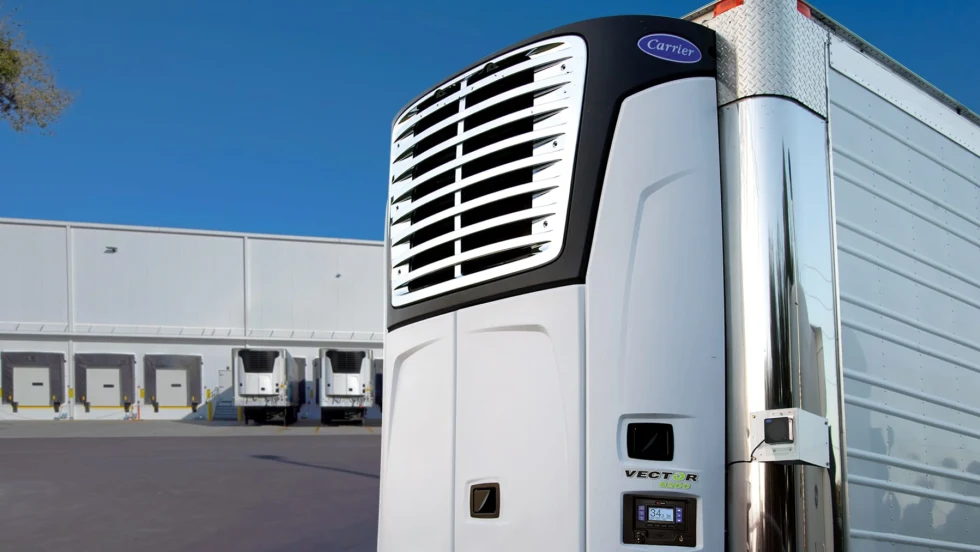
Carrier Transicold Adds All-Electric TRU for Stationary Cold Storage
Carrier Transicold’s new Vector 8200 all-electric transport refrigeration unit gives fleets a diesel-free option for temporary refrigerated and frozen trailer storage.
Read More →
A Closer Look at Kenworth’s Electric T880E Vocational Truck [Video]
Learn more about Kenworth's T880E battery-electric vocational truck at the Paccar Technical Center, including its range, applications, upfitting considerations, and PTO options, in this HDT Spotlight video.
Read More →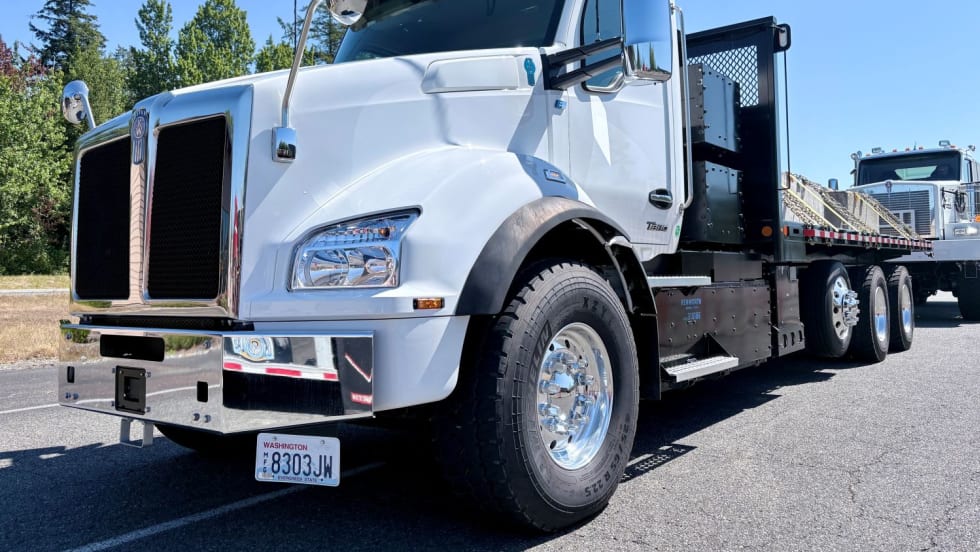
Kenworth T880E Brings EV Power to Vocational Trucks
A closer look at the Kenworth T880E’s range, charging, powertrain and upfit options — and where fleets are showing the most interest.
Read More →