





Are Electric Reefer Units in Your Future?
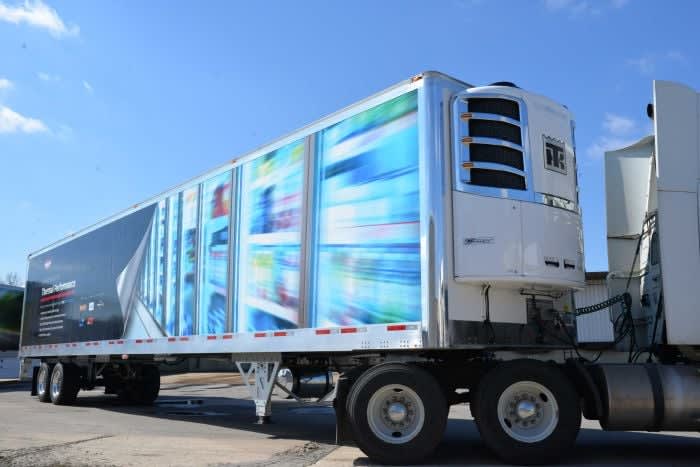
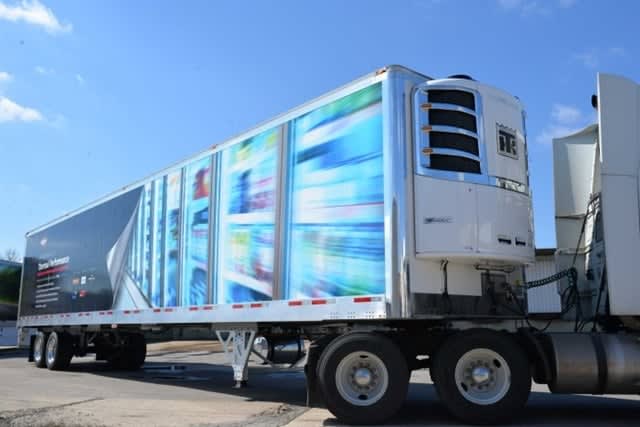
If you don’t already run them, electric transport refrigeration units are probably in your future, said a panel of specialists at TMC’s fall meeting in September. And solar-generated electricity to support trailer accessory loads is catching on. Both save fuel and money, and make reefer trailers more reliable.
Electric “standy” mechanisms are an effective way to cut exhaust fumes and greenhouse gases, according to Bill Maddox, Carrier Transicold’s service and training manager. “There’s infrastructure around the country, and it’s established, straightforward technology that’s been around for decades,” he said. Standby reefers are common in Europe where fuel is more expensive. They can be used for single- and multi-temp and stationary cold storage.
All-electric components run from an engine-generator setup, or plug into shore power. Electricity runs the compressor and fans for cooling, or the heater only. Cost is $1.10 to $1.15 per hour (at 15 cents per kW-hour) vs. $2.10 an hour for diesel (at $2.85 per gallon), according to the panel. And there’s 30% less maintenance per run-hour. On trailers, the plug is at the front in about 20% of installations — convenient for the driver, but requiring a long cable with all its attendant problems. So 80% are at rear, requiring only a 10-foot cable.
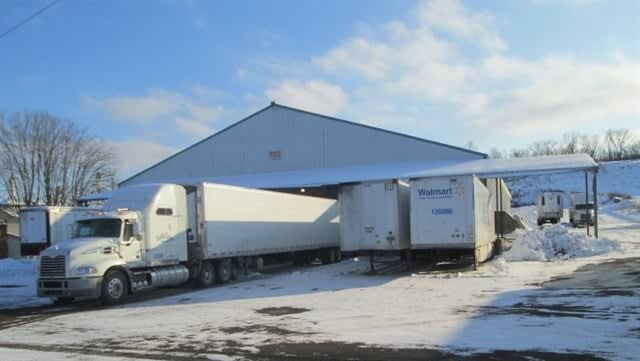
Use of shore power is easy at docks but expensive in yards, where long stretches of wiring must be buried and plug-ins installed. Human error — drivers moving away without unplugging — is the most common problem. That happens less often when a cord is plugged in at the trailer’s nose, where drivers can more readily see it, than with rear receptacles; back there, the receptacles are also more subject to damage from salt spray.
Mike Cornett, vice president, sales, for Thermo King Temperature Control Solutions, said TRUs can be ordered with electric standby in a 230-volt, 3-phase, 70-amp configuration, or with 460-volt, 3-phase, 40- or 60- amp. “It does add weight to a TRU, so it cuts capacity, but resale is good.” He advised fleet managers to order trailers with prep packages for shore-power receptacles and wiring.
Solar panels are being more widely used to generate power aboard the trailer, said Bob Doane of eNow, a maker of panels and electrical control systems. In addition to charging TRUs, he said, “Lift gate batteries are always charged, so trailers don’t have to be taken off a run and dropped at the terminal for plug-in charging.” Solar panels also charge pallet jacks, electric roll-up doors, lighting, start-up batteries, and tractor accessories, especially cab comfort items like HVAC.
To properly employ solar charging, Doane said:
Understand the application and know the energy needs.
Evaluate the geographic area and potential energy available (more is available in Southwest-style steady sunshine).
Size panels to the need (many sizes are available).
Make sure panels themselves and nearby components are flexible, tough, and don’t interfere with aerodynamics.
One Canadian company, Volta Air, is using solar panels to offer an all-electric TRU for medium-duty trucks. D&D Wholesale Distributors in City of Industry, Calif., recently installed one on a Hino box truck and is so far happy with its performance and quietness.
“If you’re stopped, you leave your engine off and the solar panels kick in to charge the batteries,” explains Volta Air’s Peter Johnston.
Solar panels go on the roof of the box, two to four panels depending on the size of the unit and the demand. A controller will send alerts if the power level is getting too low or the refrigeration box temperature is too high, and will monitor idle time and fuel saved.









