




Test Drive: Western Star 4900FA with Allison 2nd Reverse
Steep hills can be tough on trucks, even if their manual transmissions have sufficiently low gearing and drivers are adept with the clutch

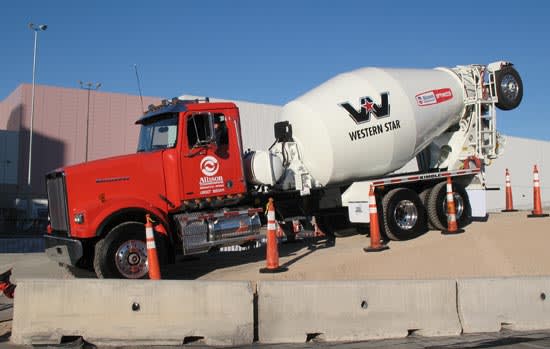
Steep hills can be tough on trucks, even if their manual transmissions have sufficiently low gearing and drivers are adept with the clutch.
If not, drivelines can be shaken and damaged, sometimes leaving vehicles crippled and, in the case of concrete mixers, their loads spoiling fast.
A fully automatic transmission cushions the driveline in such cases, but low-low gearing is not included in the usual 6-speed Allison that's finding increasing use among owners of heavy construction trucks. That means the torque converter heats up, the driveline strains and wheels might slip as the engine struggles to overcome gravity.
Allison has remedied that with an optional 2nd Reverse, a low-low ratio for its Rugged Duty Series automatics.
The company announced this last year, and my first opportunity to drive one was courtesy of Western Star Trucks during January's World of Concrete show. The day before it opened, Akbar Ghous, Western Star's southeastern regional manager, invited me to try my luck on an orange-coned course laid out in a convoluted oval on a vacant parking lot near the Las Vegas Convention Center.
The course included several backing exercises, the final one being a big pile of dirt with a 40-foot trail on a 15-percent grade. I scooted through the course - not much work with the Allison and its familiar push-button selector on the dashboard. The truck's power steering made for quick, low-effort turns.
The Western Star 4900FA (for forward-set axle) had a 20,000-pound steer axle with wide tires. But the wheels cut surprisingly sharp in either direction, though I still had to spin the steering wheel early into any turn. All in all, I managed to get the bulky mixer chassis into backing slots without too many adjustments or rolling over too many cones. Punching D or R is infinitely easier than punching a clutch pedal and manipulating a shift lever in a manual tranny, even one that's otherwise fun to drive.
At the hill I got the truck into position, then, remembering Ghous's instructions, chose 2nd Reverse like so: With foot on the brake pedal, punch the R button once, and "R R" - which I'll call regular Reverse - appears on the selector screen. Punch R again and "r r" appears, and the truck lurches gently as the low-low ratio engages. Release the brakes and the truck begins moving back. Tap the gas pedal and the engine revs noticeably higher and the truck backs a bit faster.
"You can idle up the hill like that," Ghous had said of 2nd Reverse, and he was right. With the Detroit Diesel DD13 engine idling at about 700 rpm, the truck slowly moved up the grade with no further nudging of the accelerator. I ran the hill several times, using the accelerator and not. If I had backed down the hill, "r r" would've given me better control without touching the brakes.
For comparison purposes, I also used regular Reverse, and saw that the truck would move up the hill if the engine were revved a bit, but not at idle speed. It'd probably do that even with a load in the Kimble barrel, which was empty for this demo, but it wouldn't be as smooth, and the wheels might lose their grip in loose rock or dirt.
At 17.12 to 1, 2nd Reverse's ratio is over three and a half times deeper than regular Reverse's 4.80 to 1. At startup, the torque converter does its multiplication, and the low-low ratio can really twist the driveline. But torque drops fast as engine revs climb, so the chance for damage quickly dissipates unless the wheels are really bogged. Then it's time to call for a dozer-tow.
Aside from 2nd Reverse, the 4700RDS has seven forward gears instead of an Allison's usual six. First gear's ratio is 7.63 to 1, followed by second's 3.51, third's 1.91, fourth's 1.43, fifth's 1.00, sixth's 0.74 and seventh's 0.64. So this truck will start a heavy load easily and then cruise with it on freeways at more relaxed engine speeds.
However, first is not engaged when D is punched. Second is, and the selector screen shows "2 7," meaning the 2nd of 7 available gears is engaged. The first digit climbs as the tranny upshifts out on the street or the freeway. If you need first gear, punch Mode and push the down-arrow button, and "1" appears on the selector. Once you take off, punch the up-arrow and it'll shift into second and hold there, then go for third and so on. Or just punch D and it'll come out of first (or wherever the tranny is) and upshift normally.
So while this special Allison RDS is easy to drive, the operator should be told about some things to get the most out of the machine. However, the reality in many fleets is the boss handing a driver the keys to a new truck along with the day's first assignment, telling him or her to get busy, and see ya later. The beauty of the Allison and most other automatics is that drivers can jump in and be on their way, and no harm will ensue.
Thanks to Ghous, I was educated to the point of smugness, and took the truck off the course and onto nearby streets. With him riding shotgun, we charged west on Convention Center Drive to Las Vegas Boulevard - The Strip - where I hung a right and cruised north. The tranny went as high as fifth and sixth gear as the truck accelerated to 40 or so mph, but revs dropped quickly when my foot moved away from the gas pedal or only touched it lightly.
I hung a right on Sahara Avenue, then went east a block to Paradise Road, then another right and south on that wide boulevard for a return to the convention center area. Doing this I watched the tachometer swing up and down as the Allison went through its smooth shifting.
During this joy ride I could appreciate the truck's attributes: roomy cab, nicely trimmed interior, and impressive quietness - all standard on a Western Star, Ghous said, because "this is a premium truck." The 4900's cab sits high, and you climb three big steps before getting inside. The hood is wide but it slopes downward, helping with forward visibility. The windshield and side windows are about as big as any you'll find on a heavy truck, so you know what's going on around you.
Back at the course, we chatted with a couple of Allison representatives, Dan Murphy and Jerry Hacker, about the Optimized tuning that the builder's been promoting. Specifically, how does it differ from what's come before? Optimization, they explained, pairs the automatic transmission and its electronic controls with the engine, taking the truck's application fully into account, so everything operates at peak efficiency.
"Isn't this done on any truck with an Allison?" I asked persistently. After all, Allisons are available on most heavy and medium-duty models these days.
"It's done more carefully with Allison Optimized," they said almost in unison. Among its features is a standard five-year/unlimited-mile warranty, which is several years longer than usual. Murphy further listed several performance features included with an Optimized Allison-DTNA truck combination: low base shift schedule, which causes the tranny to "short shift," or upshift at low revs when the truck's empty; shift energy management, which adjusts torque to allow smooth shifts; and prognostics that monitor the transmission fluid condition and advise technicians when to change it.
There's also auto-Neutral with Parking, which prevents a forgetful driver from running the drum outside with the tranny in gear. I tried this later and sure enough, the tranny went from R to N when I set the parking brake. As with any Allison, while under way you can jab at any button you want, including R while doing 65 mph down the freeway, and it won't respond unless it's safe for the transmission and engine.
Optimized tuning was an exclusive with Daimler Trucks North America, parent of Western Star and Freightliner, through March. With the exclusive now done, the Optimized treatment is likely to spread to other truck makes. You ought to drive one, in forward and reverse, on hills and on t
More Equipment
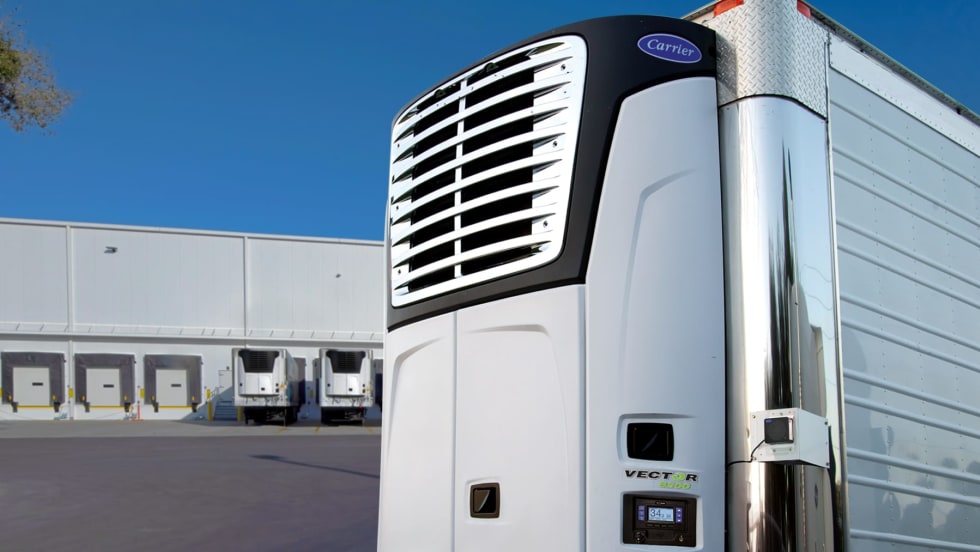
Carrier Transicold Adds All-Electric TRU for Stationary Cold Storage
Carrier Transicold’s new Vector 8200 all-electric transport refrigeration unit gives fleets a diesel-free option for temporary refrigerated and frozen trailer storage.
Read More →
A Closer Look at Kenworth’s Electric T880E Vocational Truck
Learn more about Kenworth's T880E battery-electric vocational truck at the Paccar Technical Center, including its range, applications, upfitting considerations, and PTO options.
Read More →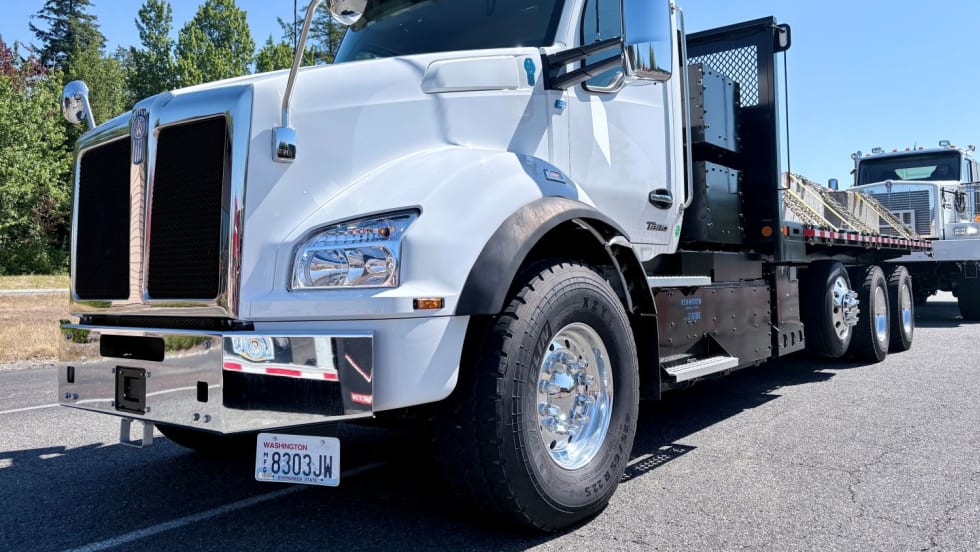
Kenworth T880E Brings EV Power to Vocational Trucks
A closer look at the Kenworth T880E’s range, charging, powertrain and upfit options — and where fleets are showing the most interest.
Read More →
What the U.S.-Canada Trade War Means for Trucking
Escalating U.S.-Canada tariffs could disrupt cross-border freight, reduce truck volumes, raise costs, and create new uncertainty for carriers on both sides of the border.
Read More →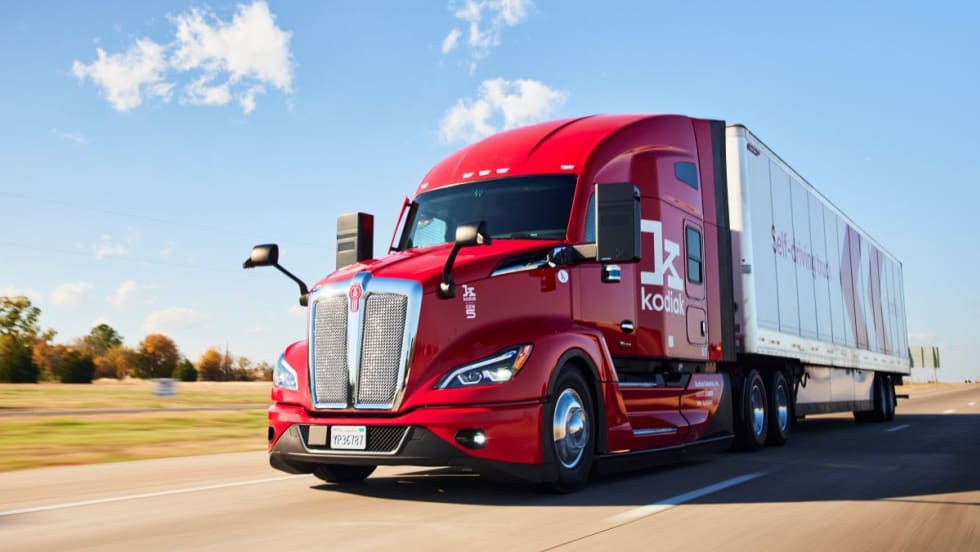
Autonomous Truck Testing Moves Ahead in California as Teamsters Challenge Rules
California has begun permitting heavy-duty autonomous truck testing, with Aurora and Kodiak among the first to receive approval, as the Teamsters sue the DMV over the new regulations.
Read More →
Behind the Wheel of the New Mack Anthem [Video]
HDT takes the new Mack Anthem around Mack’s Pennsylvania test track to see how its driver-focused design, technology, visibility and handling perform from behind the wheel.
Read More →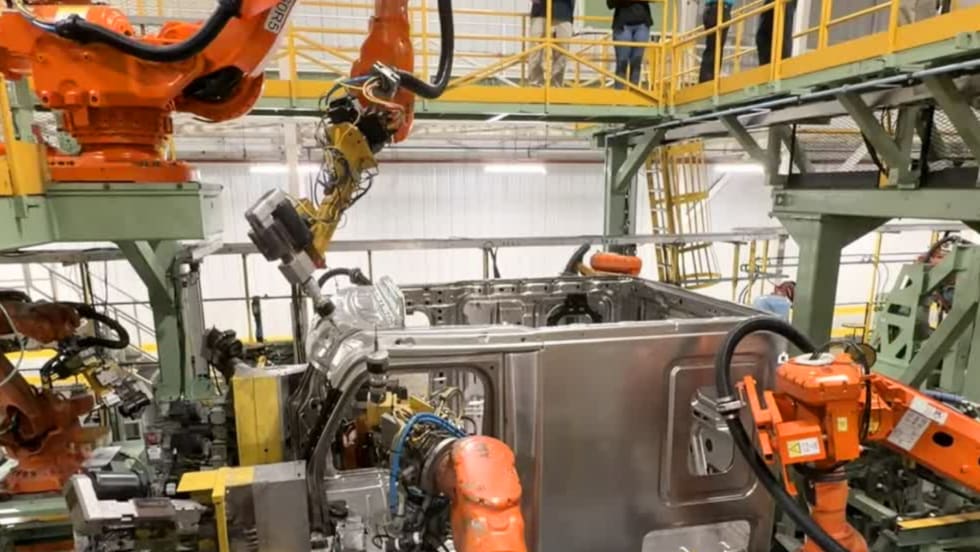
DTNA Plans New U.S. Truck Plant as Manufacturing Footprint Shifts
Daimler Truck North America is evaluating sites for a new assembly plant expected to open in 2029 while winding down operations at its longtime Portland manufacturing facility.
Read More →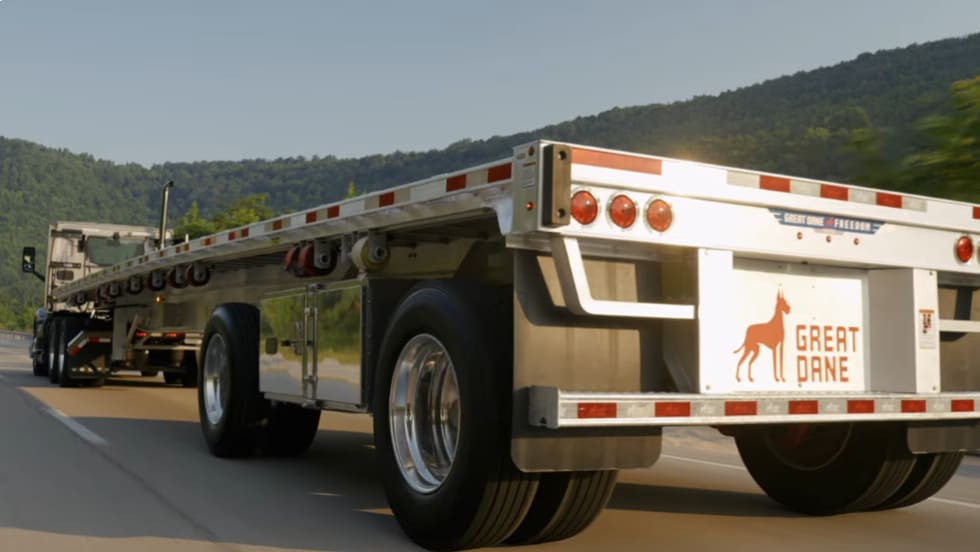
Great Dane Flatbed Trailer Offers Light Weight and Strength
Freedom Ultra is designed for a wide range of open-deck applications, including building materials, lumber, machinery, steel products, industrial freight, and coil hauling.
Read More →
What It's Like Inside this Custom 2025 Peterbilt 589?
Take a driver's-eye tour of this customized 2025 Peterbilt 589 in this video, as longtime driver Ingrid Brown explains its features, compares it to previous models, and shares plenty of personality along the way.
Read More →
Drivers Put Western Star Trucks to the Test at Star Nation Experience
Watch to get an inside look at the Western Star trucks, technology, and community behind the Star Nation Experience 2026!
Read More →