




Test Drive: Kenworth K270
If the Kenworth K270 had been introduced in time to be judged for the medium-duty Commercial Truck of the Year award, it might have given the Model 210 from KW's sister company, Peterbilt, a run for the title

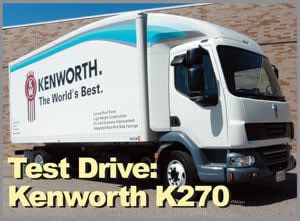
If the Kenworth K270 had been introduced in time to be judged for the medium-duty Commercial Truck of the Year award, it might have given the Model 210 from KW's sister company, Peterbilt, a run for the title.
The low-cabover Model 210 won this year's contest, sponsored by the American Truck Dealers division of the National Automobile Dealers Association. If Kenworth had entered the K270, a virtual clone of the Model 210, I've wondered how the judges could have picked one over the other.
Like the Pete 210, the Class 6 K270 is quick and nimble, is easy to get in and out of, and has an attractively appointed interior that makes a driver comfortable and productive. I drove this one on a pleasant spring day in and around Chillicothe, Ohio, the site of Kenworth's Midwest heavy-duty truck plant. That's not where it was built, but it was where this truck and a pair of T-series mediums were temporarily residing.
Parent company Paccar assembles these low cabovers at its Kenmex plant in Mexicali, Baja California, Mexico, from components that originate in Europe and the United States. Each one gets a Kenworth or Peterbilt badge and is shipped off to a KW or Pete dealer. They're all but identical - unlike other Kenworth and Peterbilt medium- and heavy-duty truck products, which have significant differences.
What set the Peterbilt 210 cabover apart from Japanese imports entered in the Truck of the Year competition, in the collective opinion of the judges (of which I was one), was its handsome, comfortable interior and the power from its six-cylinder diesel. The competitors were as technically advanced and capable, but most had less gutsy four-cylinder engines and plainer interior trim, and were a little harder to climb into and out of. So, I was prepared to be impressed with this K270, and I was.
A Kenworth engineer, Ben Eilers, met me at the plant and rode along as a local guide. He directed me down the U.S. 23 freeway, the main north-south highway in these parts, then into the city proper, then out and back on state and county highways, where the K270's ride was almost glassy and wind noise inside the cab was minimal.
We cut through parking lots and made several U-turns to get a feel for the truck's maneuverability, which was terrific. We smoothly cruised on the kind of residential and commercial streets this truck might see in pickup and delivery service.
Many drivers believe sitting above the axle in a COE makes for a rough ride. That's not true of modern cabovers, which have long taperleaf springs that absorb a lot of shock. The ride with this truck was very good, except when the rear end bounced over sharp speed bumps in a parking lot.
Standard (and only) power for this Class 6 model is the Paccar PX-6 diesel (a private-branded Cummins ISB6.7), and the only transmission is an Allison 2100HS (highway series) 5-speed automatic. This engine was rated at 250 horsepower and 660 pounds-feet. With about 4,000 pounds of ballast in the van body, that was more than enough to propel us around town or out on the road.
The transmission shifted smoothly and appropriately, so I left its stick-type selector alone. The selector was sticky; it was not clear from its detents or its label where it was gear-wise. However, one notch down from Neutral was Drive, and that was all I needed. The selector was a glitch in what otherwise seemed a very well-built vehicle.
This truck had air brakes - unusual for a Class 6 model - and they were sure and strong. The parking brake actuator was a stubby joystick-like lever with a finger collar that you pull up, then move forward to release or backward to apply. This is so much easier to use than the North American yellow push-pull valve. I wish this Euro style were installed on all air-braked trucks built here.
It's easy to get in and out of the cab. The first step is wide and fairly close to the ground and is vertically in line with the floor ahead of the seat. It's almost a ladder-like climb to the interior, but not a high one, because the cab does not sit high. The term low-cab-forward really fits here.
The cab, by the way, was built by Renault in France and sent to Paccar's Leyland division in Great Britain, where it was painted and trimmed, then shipped to Mexicali for installation on a North American chassis. It was solid and tight.
Outward visibility was excellent, as there's no nose to peer over, and large windows and large, remotely adjustable mirrors help with views to the sides and rear. The mirrors had big aero housings for the glass panes, and each fixture was supported by a long, single arm that seemed to stick out farther than it did. I prefer the old multi-bracketed West Coast mirrors even if they're not as aerodynamic, and they are available on these trucks as an option.
With an air system for the brakes, the seat can be an air-ride, and was: an Isringhausen with many adjustment possibilities. I moved it back a couple of inches, but otherwise left it alone because it was already just right for me. I also lowered the steering column to get the wheel a little farther down. Gauges were attractive and easy to read, and many switches were amply proportioned rotaries that were clearly labeled and simple to use.
The tachometer's needle was lively, as the PX-6 runs at high speeds common to this size of truck. It cruised at about 1,900 rpm at 60 mph, and revved willingly to 2,500 rpm and more while accelerating. Yet the cab's interior was quiet so Eilers and I could converse easily.
One cause for head-scratching was how to tilt the cab. After a few minutes, we figured out that a two-way valve needs to be flipped forward, then the pump handle exercised, and up it went. Now we had a complete view of the engine and its accessories. Flicking the valve rearward, then pumping again, brought the cab downward until it clicked into place. Easy.
Perched on the frame was a Paccar Aero Experimental van body. A curve in the forward section of it roof matches the aerodynamic fairing attached to the cab's top. This arrangement saves 8% in fuel at highway speeds, Kenworth says. The body was built by Leyland and is available on trucks made by DAF, another Paccar division in Holland - but not yet in North America, where it's considered a concept.
We returned to the plant grounds. While making a sharp right turn and an easy left, then backing it along a curb to its temporary parking place, I was again impressed with the truck's great maneuverability.
I reflected on why the majority of Americans continue to favor the conventional cab-and-hood style: slightly lower prices and perceived greater safety with the engine and steer axle ahead of the cab to absorb a frontal impact. But for urban and suburban duties, I still prefer cabovers. You might too, if you drove this winner - even if it didn't win that contest.
More Equipment

Tesla Wants a Self-Driving Semi. Are Cameras Enough?
Could Tesla’s camera-only autonomous driving technology work on an 80,000-pound Semi? In this commentary, HDT's Deborah Lockridge takes a look at Tesla, Cybercab, and how autonomous trucks see the road.
Read More →
Kodiak: Driverless Long-Haul Truck Launch on Track for 2026
Kodiak AI says its driverless long-haul safety case is 93% complete and it remains on track to begin commercial operations by year-end 2026.
Read More →
What DOT’s Automated Vehicle Strategy Means for Trucking
The U.S. Department of Transportation issued a new automated-vehicle strategy that outlines plans for driverless-truck regulations, cross-state freight corridors, and federal safety standards.
Read More →
East Coast Port Launches $45M Electric Truck Push
The Port Authority of New York and New Jersey announced millions in incentives for zero-emission drayage trucks, yard tractors, and new charging hubs near the port.
Read More →
PlusAI Going Public to Fund Autonomous Truck Launch
A SPAC deal could provide PlusAI with up to $300 million as it works toward a 2027 commercial launch of factory-built autonomous trucks.
Read More →
NHTSA Moves to Rewrite Truck Fuel-Economy Rules
The National Highway Traffic Safety Administration says it lacks authority to regulate medium- and heavy-duty truck engines separately from complete vehicles, but the existing standards have not yet been eliminated.
Read More →
Detroit Opens Orders for EPA 2027 Engines
Detroit isn’t starting from scratch to meet EPA 2027 diesel emissions standards. Its Gen 6 DD13 and DD15 engines keep much of today’s platform while updating the fuel and aftertreatment systems.
Read More →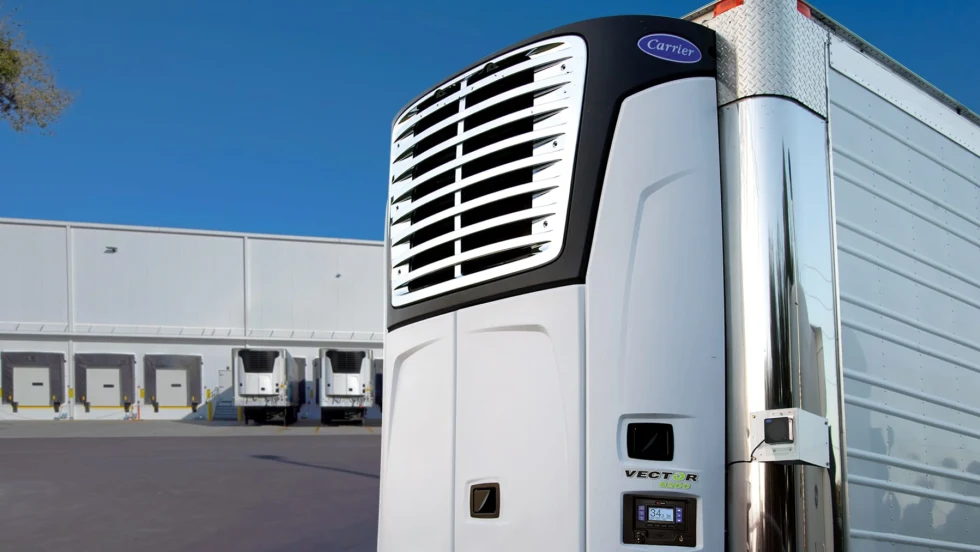
Carrier Transicold Adds All-Electric TRU for Stationary Cold Storage
Carrier Transicold’s new Vector 8200 all-electric transport refrigeration unit gives fleets a diesel-free option for temporary refrigerated and frozen trailer storage.
Read More →
A Closer Look at Kenworth’s Electric T880E Vocational Truck [Video]
Learn more about Kenworth's T880E battery-electric vocational truck at the Paccar Technical Center, including its range, applications, upfitting considerations, and PTO options, in this HDT Spotlight video.
Read More →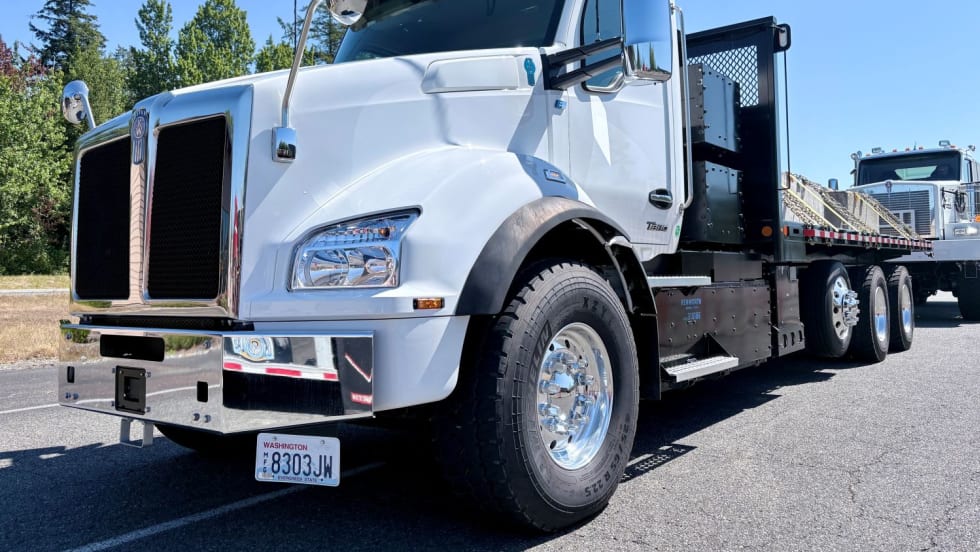
Kenworth T880E Brings EV Power to Vocational Trucks
A closer look at the Kenworth T880E’s range, charging, powertrain and upfit options — and where fleets are showing the most interest.
Read More →